Skip to content

Coverage desk

Southeast Asia Supply Chain

143 published stories

EU Targets Indonesia’s Critical Minerals, $13.6B Investment in 5 Years
Southeast Asia Supply Chain

EU Targets Indonesia’s Critical Minerals, $13.6B Investment in 5 Years

The European Union is deepening economic ties with Indonesia to diversify critical mineral and energy supply chains. Over the past five years, EU investment in Indonesia totaled USD13.6 billion, generating over 245,000 jobs. Priority sectors include electric vehicles, battery ecosystems, renewable energy, digital industry, advanced manufacturing, critical mineral processing, water management, and sustainable infrastructure. Indonesia and the EU aim to sign the IEU-CEPA agreement by October 2026. Coordinating Minister Airlangga Hartarto emphasized that economic security requires trusted, diversified partnerships — not fragmentation.

Bac Ninh Targets $330M Revenue for SMP Holdings by 2030
Southeast Asia Supply Chain

Bac Ninh Targets $330M Revenue for SMP Holdings by 2030

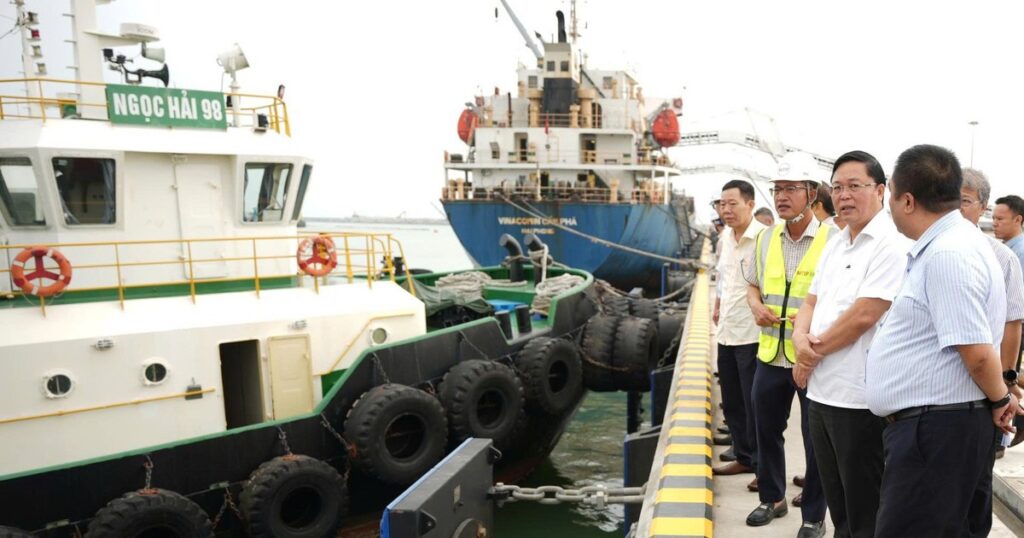
Bac Ninh provincial leaders visited domestic suppliers including SMP Holdings—a Tier-1 Samsung assembler with $50 million invested across two factories and 4,000 employees—to resolve barriers to global supply chain integration. SMP Holdings targets $330 million revenue and 30,000 workers by 2030. Bac Ninh has drawn 33 semiconductor projects totaling $2.742 billion, including Amkor Technology’s $1.6 billion investment. The province operates 23 of 39 approved industrial parks and has launched ‘24-Hour’ and ‘60%’ green channel administrative reforms for high-tech projects.

ASEAN-5 Trade Surplus Hits $156.6B Amid 8.3% CAGR Growth
Southeast Asia Supply Chain

ASEAN-5 Trade Surplus Hits $156.6B Amid 8.3% CAGR Growth

The ASEAN-5 bloc — Indonesia, Singapore, Malaysia, Thailand, and Vietnam — posted a $156.6 billion trade surplus in 2025, extending an 11-year growth streak. United Overseas Bank reports an 8.3% compound annual growth rate since 2014, with intra-ASEAN trade generating a $63 billion surplus. Driven by AI-related semiconductor and electronics demand, ASEAN’s total trade surged 13.7% in 2025. UOB revised its long-term forecast: trade is now expected to reach $6.6 trillion by 2030 and surpass $9.0 trillion by 2035 — up from prior estimates of $5.3 trillion and $7.1 trillion, respectively.

Indonesia Seeks Industrial Upgrading Amid China+1 Shift
Southeast Asia Supply Chain

Indonesia Seeks Industrial Upgrading Amid China+1 Shift

Indonesia is leveraging the global 'China Plus One' manufacturing diversification strategy to pursue industrial upgrading — not just low-cost assembly. The approach retains China as the core hub for R&D and complex components while expanding final assembly and volume production across partner countries. For Indonesia, success requires domestic supplier development, technology transfer, and full use of trade pacts like RCEP to secure tariff preferences. Without policies ensuring >15% domestic value added, investments risk delivering only re-labeling operations vulnerable to anti-circumvention sanctions. Critical infrastructure and regulatory reforms must be accelerated before 2026.

Vietnam Farm Export Logistics Costs Surge 66.6%, Domestic Share Hits 17%
Southeast Asia Supply Chain

Vietnam Farm Export Logistics Costs Surge 66.6%, Domestic Share Hits 17%

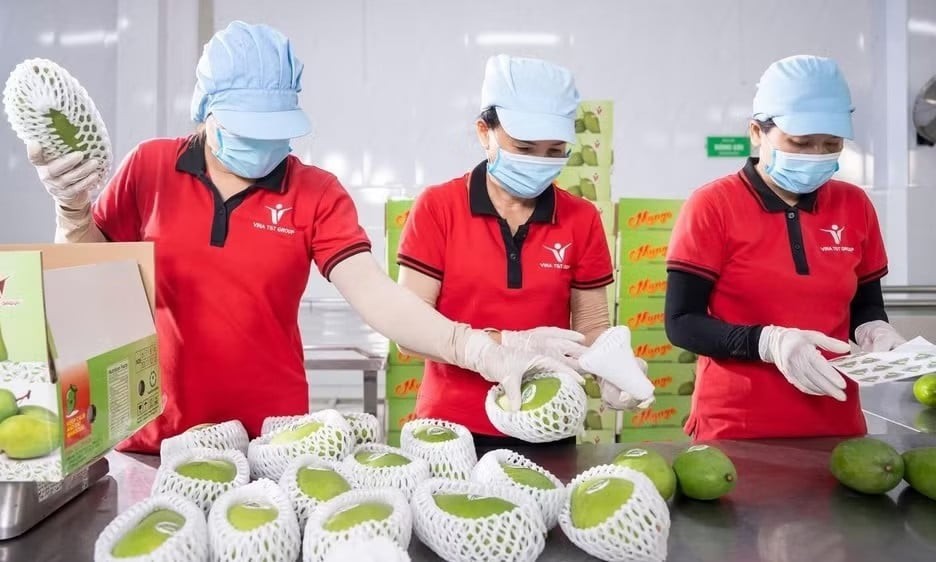
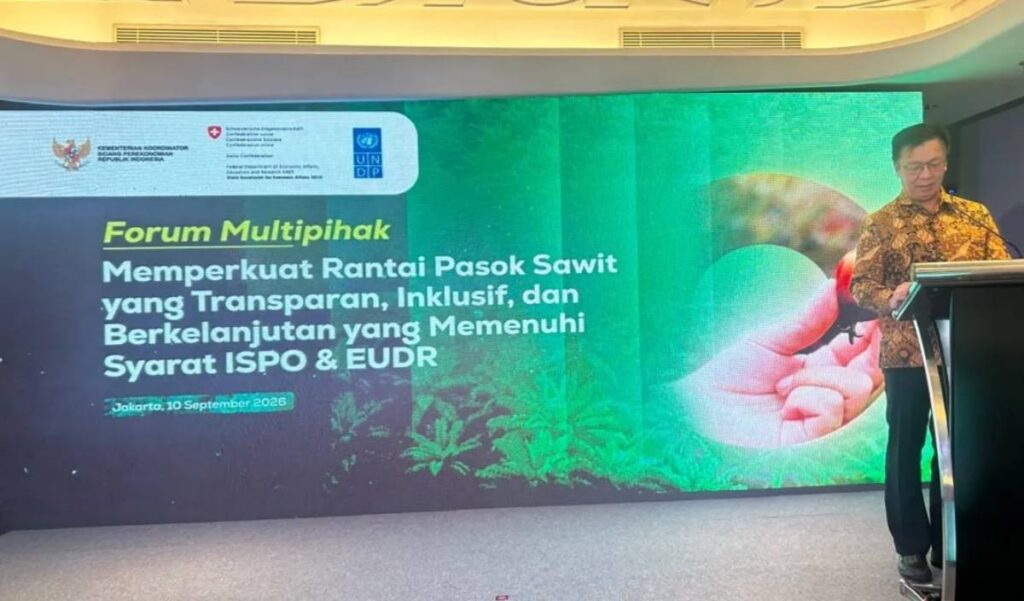
Vietnam’s agricultural exports now reach over 200 countries, but soaring logistics costs threaten competitiveness. Container rates to the U.S. West Coast hit $7,072/FEU in July 2026 — up 66.6% monthly — while domestic logistics consumes 17% of total fruit and vegetable costs. Experts cite fragmented infrastructure, outdated inland transport (80% road-dependent), lack of certified data systems, and new EU rules like CBAM and EUDR as key constraints. Solutions include national cold-chain vessel development, digital supply chain authentication, and strategic port diversification — such as shifting from the Strait of Hormuz to UAE’s Fujairah and Khor Fakkan ports.

COSCO Shipping International expands in Vietnam, Indonesia; H1 revenue hits SGD96.8M
Southeast Asia Supply Chain

COSCO Shipping International expands in Vietnam, Indonesia; H1 revenue hits SGD96.8M

COSCO Shipping International, the Singapore-listed logistics subsidiary of China COSCO Shipping Corporation, is expanding operations in Vietnam and Indonesia. All of its consolidated revenue currently comes from Singapore and Malaysia—with 87% from Singapore—and its associated companies in Vietnam and Indonesia contributed roughly 25% of pre-tax profit in H1 2026. Revenue rose 6% to SGD96.8 million (US$76 million) in the first half of 2026, supported by logistics, ship repair, and marine engineering. The Jurong Island Logistics Hub Phase II, its largest Singapore investment, is set for completion in Q4 2026. President Jiang Kai emphasized enduring confidence in Southeast Asia’s logistics growth amid resilient regional manufacturing and recovering dry-bulk shipping demand.

Ho Chi Minh City exports rise $9.9B in 7 months
Southeast Asia Supply Chain

Ho Chi Minh City exports rise $9.9B in 7 months

Ho Chi Minh City's import-export volume surged by 7.98% to 133.74 billion USD in the first seven months of 2026, driven by strong growth in electronics and machinery. Facing geopolitical headwinds and US tariff pressures, the city is accelerating logistics infrastructure reforms, including the establishment of the Cai Mep Ha Free Trade Zone, to enhance supply chain resilience and diversify international markets.

Hai Phong cuts logistics costs amid $36.8B export surge
Southeast Asia Supply Chain

Hai Phong cuts logistics costs amid $36.8B export surge

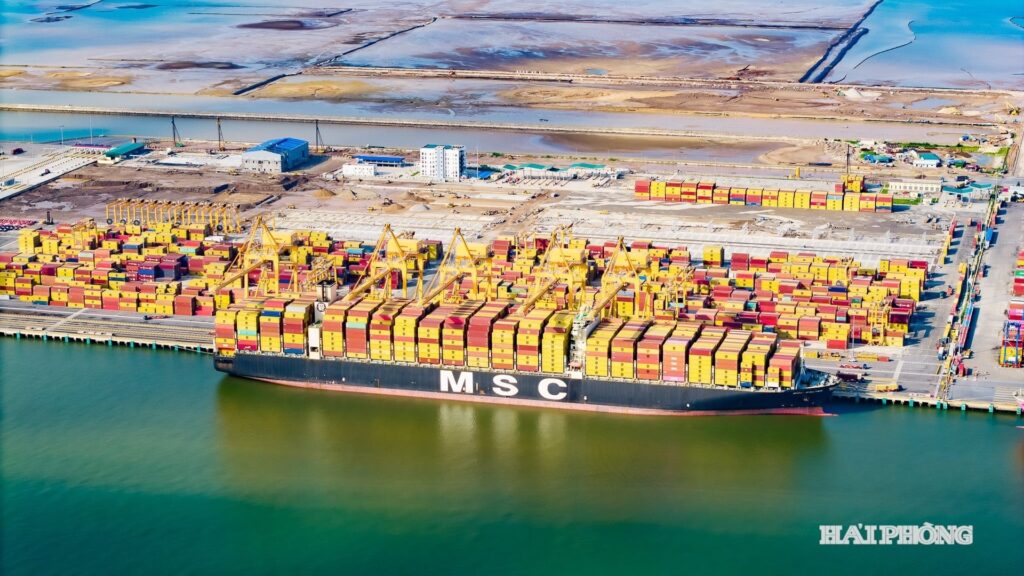
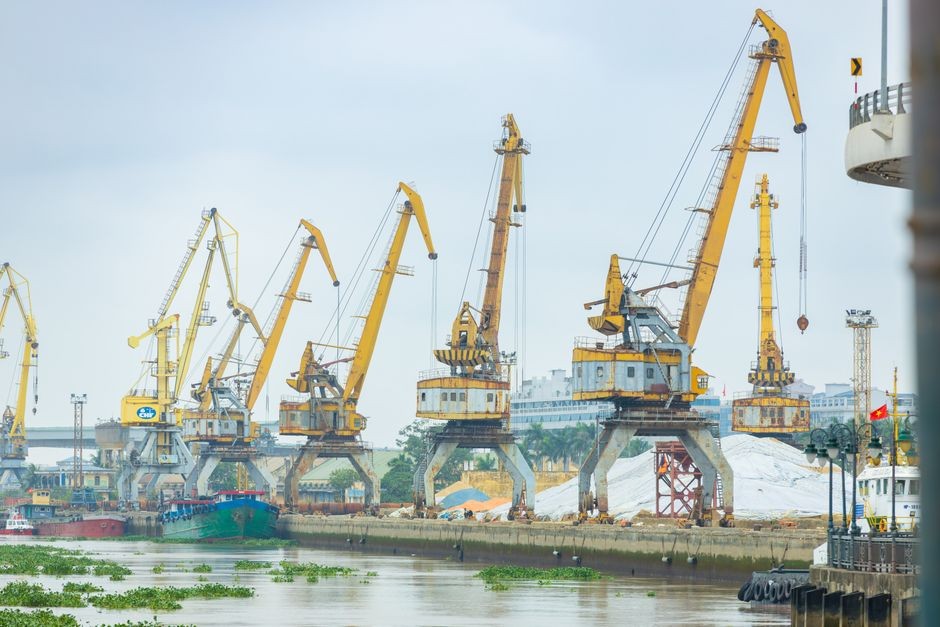
Hải province aggressively pursues strategies to reduce elevated logistics expenses for its exporters These measures involve strengthening connectivity among manufacturers within industrial zone key stakeholders including major seaports international shipping lines In just seven months of 2024 recorded an estimated export value $368 billion substantial increase 10% compared same period last year Cargo throughput local ports reached approximately 11536 million tonnes reflecting robust annual growth rate 1165%. This massive expansion continuous demands regional supply network Beyond physical infrastructure capacity variables freight rates transit times vessel schedules storage durations port handling efficiency directly influence operational effectiveness.

China-ASEAN trade hits $643B in H1, intermediate goods surge
Southeast Asia Supply Chain

China-ASEAN trade hits $643B in H1, intermediate goods surge

China-ASEAN trade reached $643B in H1, with intermediate goods up 24.5% to 2.86 trillion yuan, reflecting deep industrial integration. Guangxi-ASEAN trade hit 248.21B yuan in H1 2026, up 2.5%, while the China-Laos Railway recorded 17.17B yuan in cargo value, up 33.8%. RCEP and expanded rail networks are accelerating cross-border supply chain connectivity across the region.

Citi raises Vietnam GDP growth forecast to 8%
Southeast Asia Supply Chain

Citi raises Vietnam GDP growth forecast to 8%

Citibank has raised its gross domestic product growth forecast for Vietnam to around 8% for the year, following stronger-than-expected economic performance in the second quarter. The bank adjusted its forecast upward after Vietnam's GDP grew 8.5% year-on-year in the second quarter, accelerating from the 7.9% growth rate in the first quarter. Exports remain resilient, with the U.S. accounting for about 30% of total exports. Domestic demand has helped offset external pressures, though inflation remains a concern at 4.7% in June. Key risks include energy-price volatility and El Niño disruptions.

ITL Logistics Showcases Green Supply Chain Solutions at VILOG 2026
Southeast Asia Supply Chain

ITL Logistics Showcases Green Supply Chain Solutions at VILOG 2026

ITL Logistics showcased integrated supply chain solutions at VILOG 2026, highlighting digital transformation and green logistics amidst Vietnam's booming trade sector. The exhibition attracted over 450 enterprises from 22 countries, reflecting the industry's shift toward smart and sustainable practices. With the country's import-export turnover reaching $659.58 billion in the first seven months of 2026, the logistics sector faces new demands for speed, transparency, and emission reduction. ITL addressed these challenges through symposiums on cold chain logistics and AI automation, while also investing in workforce safety through its driving competition initiative.

Prabowo targets minerals exchange by 2027
Southeast Asia Supply Chain

Prabowo targets minerals exchange by 2027

Indonesian President Prabowo Subianto addressed the nation on the critical need for economic self-reliance amidst intensifying global conflicts that are severely disrupting supply chains. Speaking at the joint session of the MPR and DPR in Jakarta on August 14, 2026, the President outlined the administration's strategy to protect the country from external shocks. Prabowo emphasized that despite the volatility in the global economy, the fundamental strength of the Indonesian economy remains intact. He attributed this resilience to the collective hard work of the nation and the sustained confidence the public places in the government's direction. The President highlighted specific financial data to illustrate the economy's robust performance during a period characterized by trade wars and open conflicts in Europe and the Middle East. According to the report, the realization of investments in Indonesia reached Rp1.931 trillion in 2025. This substantial figure serves as a testament to the country's ability to attract and maintain capital flows even when global conditions are unfavorable. Prabowo argued that the current geopolitical climate necessitates a shift away from reliance on foreign supply networks. He stated that the nation must be capable of standing on its own two feet to ensure survival if the international situation deteriorates further. To support this vision of national independence, the Prabowo administration has embarked on an aggressive legislative and regulatory agenda. The government has successfully enacted and executed 121 transformative policies within the first 21 months of the administration, which amounts to approximately 663 days in office. These policies are specifically designed to resolve long-standing national issues that previous administrations were unable to solve. The administration views these measures as essential for building a resilient economy that can withstand the pressures of global conflicts and supply chain disruptions. Looking ahead, the administration has set specific targets for the development of the minerals exchange, which is scheduled to begin operations on January 1, 2027. This initiative is part of the broader strategy to leverage Indonesia's vast natural resources for domestic industrial growth and to reduce dependency on foreign imports. The government also aims to boost the macroeconomic growth rate to 6% by 2027, supported by the synergy between the state-owned holding company Danantara and the broader enterprise sector. Additionally, the state-owned enterprise market is projected to grow by 30%, indicating strong confidence in the domestic industrial ecosystem.

Welcome Back!

Login to your account below

Create New Account!

Fill the forms below to register

Retrieve your password

Please enter your username or email address to reset your password.

Add New Playlist