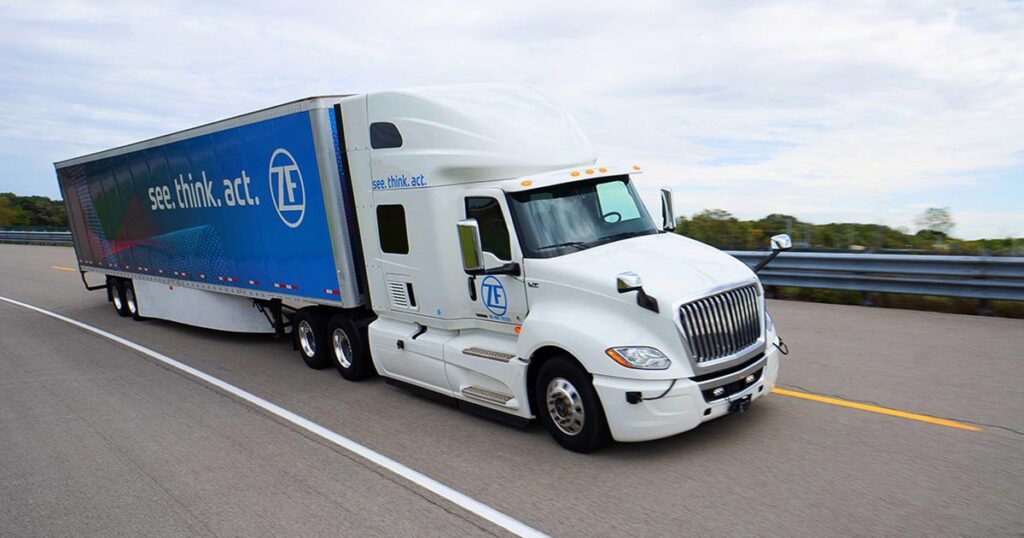
According to Phil Brink, nearly $110.6M in data center freight was stolen since June 3 using 'bump-and-run' tactics targeting tech shipments. Scott Cornell from SPG Cargo & Logistics explains how criminals bypass security escorts by compromising drivers and falsifying paperwork.
Former Williams-Sonoma VP Eric Marsiglia pleaded guilty to a $16 million fraud scheme involving kickbacks from warehouse vendors in New Jersey and the theft of $4.1 million in real estate broker commissions. Marsiglia, who served as VP of engineering and facilities, used a shell company called REM Group to conceal illicit transactions over a four-year period ending in 2022. He faces up to 20 years in prison and fines totaling over $1 million upon his sentencing in California on Nov. 3.
A fire destroyed Texas Gulf Seafood’s Galveston warehouse on Friday, August 7, 2026, halting operations at a key Gulf Coast distribution hub. The 12,000-square-foot facility supported daily throughput of 8,500 pounds of seafood. With no injuries reported, the company activated contingency plans using its Houston site, though cold-storage capacity there is insufficient. Full recovery is not expected before Q3 2026. The incident compounds broader 2026 supply chain pressures, including a 12% decline in Gulf dock availability and tightening cold-chain capacity ahead of Louisiana’s August 17 shrimp season.
A July 21, 2026 webinar by Kardex and AutoStore exposed how 3% inventory inaccuracy — often masked behind a 97% accuracy rate — drives $10 million in hidden annual costs across warehouses. Root causes include receiving errors, cycle count gaps, and WMS-data lag. Pilots show AI-assisted validation and goods-to-person automation cut mispicks by 68% without sacrificing throughput. Operational confidence, measured via fulfillment confidence scores, is emerging as a key differentiator in US and EU markets.
American Industrial Partners has unified Intelligrated, Trew, and Transnorm into a single warehouse automation provider following its acquisition of Honeywell’s Warehouse and Workflow Solutions business. The combined entity generated over $1 billion in revenue in 2025 and employs more than 3,700 people across North America, South America, Europe, and Asia. Alfred Rebello, with 35+ years in material handling, serves as CEO. The integration preserves all existing customer contracts and brands while expanding capabilities in AS/RS, robotics, sortation, and software. Industry forecasts project double-digit warehouse automation growth into the 2030s.
CeMAT Australia 2026 drew 245 exhibitors and 6,156 attendees, spotlighting five warehouse trends reshaping supply chains: automation tied to ROI, robotics as daily operational tools, safety embedded in facility design, electrification scaling beyond pilots, and connected fulfilment requiring system integration. James Redshaw identified labour, space, throughput, and cost as key drivers behind technology adoption. Electric forklifts represented 37% of equipment demos, while AMR deployments correlated with 18% faster order processing and 22% fewer manual handling injuries. Safety innovations included pedestrian protection systems and real-time forklift fleet analytics.
American Eagle Outfitters is investing $41 million to build a new distribution center in North Carolina, set to open in early 2027. The 650,000-square-foot facility will serve the southeastern U.S., generate over 200 jobs, and feature automated sortation and energy-efficient systems. It marks the retailer’s largest logistics infrastructure investment since 2024 and aligns with broader industry trends: L Brands and Gap Inc. have committed $35 million and $52 million, respectively, to Southeast distribution expansions in 2026. The project responds to rising East Coast drayage costs — up 37% from 2023 to 2025 — and supports faster replenishment for high-turnover apparel lines.
Schnuck Markets will close its only company-owned warehouse — a 600,000-square-foot facility in Bridgeton, Missouri — in March 2027. The move follows a multi-year strategic shift away from owned logistics infrastructure toward third-party distribution partners. The site, operational since 2004, served over 120 stores across four states. Industry data shows U.S. supermarket reliance on third-party logistics rose from 51% in 2019 to 68% in 2025, reflecting broader sectoral trends toward flexible, scalable fulfillment.
A fallen power line near Washington, DC triggered a grid instability event on July 25, 2026, causing 3.1 gigawatts of AI data center load to disconnect simultaneously across the PJM Interconnection — resulting in voltage spikes from Northern Virginia to Chicago. The incident, twice the scale of a 2024 event involving 60 data centers and 1.5 GW, exposed critical vulnerabilities in grid synchronization. With data centers projected to supply 24% of PJM’s load by 2040, solutions like ON.Energy’s 3-GW battery-integrated power management systems — now being deployed across four campuses — aim to replace abrupt disconnections with millisecond-level grid responsiveness.
A Warehouse Specialists LLC (WSI) survey of 306 U.S. manufacturing leaders finds 75% of warehouse networks evolved organically—not by strategic design—leaving them unprepared for today’s volatility. Eighty-eight percent plan footprint changes within 18 months; 53% experienced a warehouse-related compliance or safety incident in the past two years; and 67% are more likely to switch 3PL providers after 12 months of friction. The report underscores urgent need for network redesign over incremental optimization.
PepsiCo will shut down warehouse operations at its Tulsa, Oklahoma, production site on November 15, 2026, laying off 184 employees. Production will continue at the facility, while warehousing functions shift to a new Tulsa-area location. The move follows a July 14, 2026, WARN Act filing and aligns with industry-wide consolidation trends—Coca-Cola and Kellanova recently executed similar regional warehouse reductions. The impacted roles include 16 checkers and other warehouse staff, all with separation dates set for November 15. No financial figures were disclosed, but the decision reflects a strategic focus on operational efficiency amid flat beverage volumes and high labor turnover.
Freight demand is splitting sharply: consumer sectors like beverages and appliances face volume declines, while industrial freight for AI data centers, batteries, and electrical infrastructure surges. Dr. Jason Miller of Michigan State University warns the data center boom may be an 'absolute bubble,' citing $4.2 billion in federal infrastructure grants and 142 new U.S. data center projects in H1 2026. Heavy-haul trucking rates rose 18.7% YoY, while dry van rates fell 9.1%. SONAR data shows 37% YoY growth in construction-related trailer use and 22% growth in battery freight. Upcoming FreightWaves events in Chattanooga (October 26–28, 2026) focus on AI infrastructure logistics implications.
Instacart has acquired Israeli computer vision firm Arpalus to boost real-time shelf inventory accuracy to more than 95%, leveraging its network of 600,000 shoppers and smartphone-based video scanning. The technology addresses persistent online grocery pain points — including undetected out-of-stocks and catalog gaps — that drive substitutions, cancellations, and eroded consumer trust. Developed specifically for complex grocery environments, Arpalus’ platform runs on any camera-equipped device and integrates with Instacart’s 'Physical AI' strategy. Announced on July 20, 2026, the deal strengthens Instacart’s value proposition to retailers and CPG brands while enabling capital-light, scalable shelf intelligence across its U.S. footprint.
Cushman & Wakefield reports U.S. industrial real estate fundamentals strengthened in Q2 2026: national vacancy fell to 4.2%, net absorption hit 52.3 million sq ft, and construction starts dropped 18% YoY. Leasing momentum was strongest in Sun Belt markets, while average lease terms extended to 6.2 years. Rent growth slowed to 2.1% QoQ, signaling market stabilization after years of rapid expansion.
CMA CGM has agreed to acquire FedEx Supply Chain for $1.4 billion, expanding its North American logistics presence with over 100 facilities and 30 million square feet of warehouse space. The deal, expected to close in late 2026, follows CMA CGM’s prior acquisitions of CEVA Logistics ($3.7 billion, 2019) and Bolloré Logistics (2022). Integration into CMA CGM Logistics aims to deliver $150 million in annual synergies by 2029. Rodolphe Saadé, CMA CGM’s CEO, emphasized the move’s role in building end-to-end ocean-to-door capabilities.