C.H. Robinson’s acquisition of RXO marks the largest truck brokerage M&A in history, anchored by $300 million in projected synergies. Analysts note the deal’s $1-per-share break fee signals minimal risk of competing bids, while the pro forma valuation stands at 10x EBITDA. With U.S. truckload brokerage outsourcing at just 25% to 30%, the market remains in “the middle innings” of growth. Several billion-dollar logistics firms—including Redwood Logistics and Mode—are expected to trade within 24 months. International players like DSV, underrepresented in North America post-Schenker, may enter. Mid-market consolidation is anticipated to accelerate fastest.
Source:SCI.AI Editorial·
Ask SCI.AI
Answers are based on published site content and include source links. AI can make mistakes.
Brazil’s grain exports to China fell 7.6% in September 2026, totaling US$ 7.89 billion, while imports from China rose 12.6% to US$ 7.06 billion—yielding a US$ 830 million bilateral surplus. Beef exports collapsed 93.5%, driven by China’s tariff quota ceiling; China had purchased 53% of Brazil’s beef in 2025. Year-to-date, Brazil’s exports to China reached US$ 84.64 billion (+12%), with a cumulative surplus of US$ 26.05 billion. Corn demand fell due to domestic absorption, while soy remains globally competitive.
Ho Chi Minh City targets a 12.2% Industrial Production Index (IIP) increase for 2026, requiring 15–16% growth in Q4. Nine-month IIP rose 11.3% in September 2026, with processing and manufacturing up 12.2%. Three priority sectors — machinery (+14.1%), chemical-pharmaceutical-rubber-plastics (+12.8%), and food processing (+11%) — achieved double-digit growth. Electronics-ICT grew only 1.4% but shows recovery signs, with consumption up 12.7% and inventory down 31.7%. Local content targets aim for >30% in electronics and >15% in high-tech industry by 2030.
The first Global Sustainable Logistics Survey (GSLS), released by Kühne Logistics University and the Kuehne Climate Center, polled 1,085 professionals across 64 countries. It finds strong consensus on sustainability solutions—including fleet electrification and low-carbon fuels—but reveals scaling barriers rooted in infrastructure gaps and misaligned policy. Eighty-three percent expect climate adaptation to force fundamental network redesign, yet only 45% deem current efforts adequate. The report positions 2026 as a critical inflection point aligned with the UN’s Decade of Sustainable Transport (2026–2035).
Maersk has launched a new India–UAE container shuttle from Nhava Sheva to Khor Fakkan, starting 24 September aboard the 2,600 teu Maersk Namibia. Spot rates on this route now range from $6,000 to $7,000 per 40ft, with even higher rates reported to Dammam ($9,500) and Umm Qasr ($10,000). MSC has introduced a $1,000/teu and $2,000/40ft regional cost recovery surcharge for Europe–UAE shipments. CULines plans an Asia–Middle East service in late 2026 or early 2027, while UAE-based Marsa Ocean Shipping recently linked Indian ports to Fujairah and Sohar.
The WTO has raised its 2026 global merchandise trade volume growth forecast to 3.9%, up from 1.9% in March, citing AI-driven demand and supply chain adaptability. Trade in AI-enabling goods surged 67% year-on-year in early 2026 and contributed 47% of merchandise trade growth. Asia leads export growth at 9.9%, while West Asia exports are projected to fall 17.2%. Services trade growth is downgraded to 3.3% for 2026. WTO Director General Ngozi Okonjo-Iweala highlighted resilience but warned of unequal access to AI opportunities.
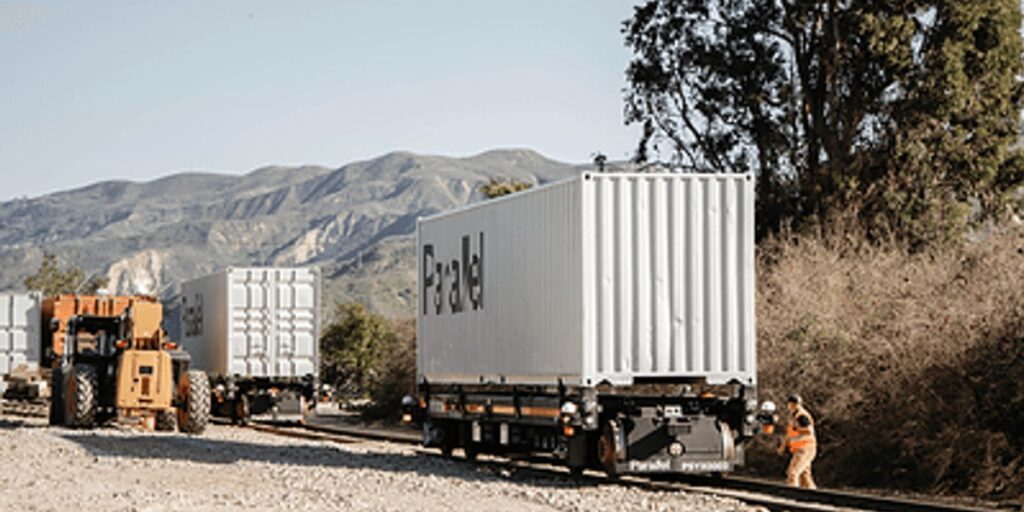
Parallel Systems, a Los Angeles-based autonomous freight rail company, has raised $100 million in Series C funding to scale production of its Panther battery-electric rail vehicle and expand internationally. The financing follows a $38 million Series B round in 2025. Parallel targets the underutilized short-haul rail segment — routes under 500 miles, which constitute 60% of the $1 trillion surface freight market. CEO Matt Soule called the round "the strongest market signal to-date that autonomous freight rail is ready for its moment." Investors include AVP, Hillspire, Agility Global, Cobalt Capital, Anthos Capital, and Congruent Ventures.
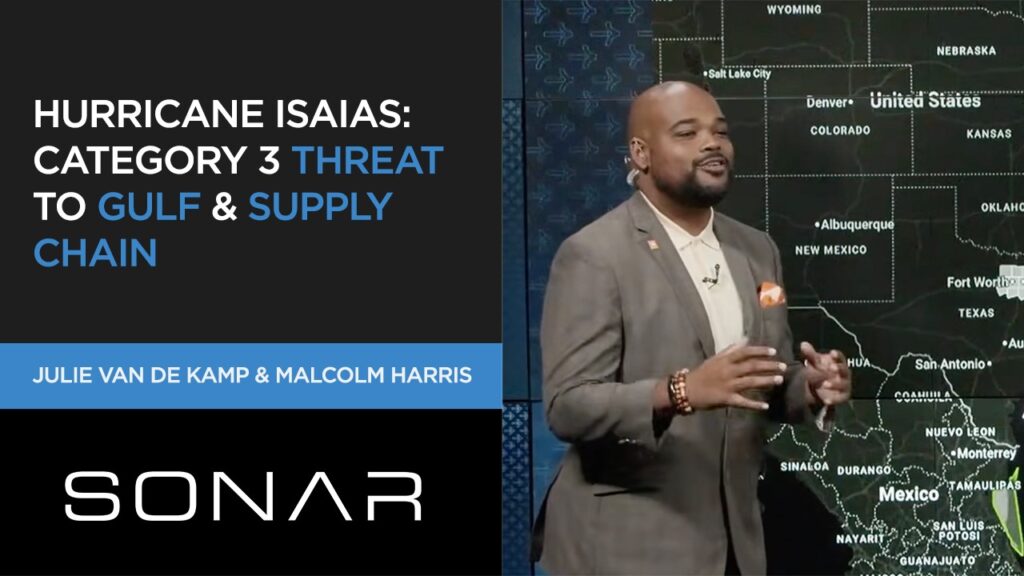
Hurricane Isaias is forecast to strengthen to Category 3 with 100 mph winds before landfall Friday at 2 p.m., threatening six Gulf Coast refineries that represent 50% of U.S. refining capacity (18.2 million barrels per day). Tender rejections in New Orleans, Mobile, and Montgomery are already at 17–19%, while truckload volumes rise ahead of the storm. Ports of Mobile and New Orleans face potential slowdowns; FEMA staging in Jacksonville and Atlanta may spur emergency freight demand. Rainfall totals of 3–6 inches are expected, with localized amounts reaching 10 inches. Meteorologist Malcolm Harris stressed flooding as the top risk.
Abu Dhabi-based LODD Autonomous will conduct a cross-border cargo drone test flight from the UAE to a neighbouring country in 2026. The trial involves its Hili hybrid eVTOL aircraft, which has secured more than 330 orders since its September 2025 unveiling — with over 70 percent from international buyers. The Hili carries up to 250kg over ~700km. UAE regulators approved Dubai’s first commercial vertiport in July 2026, and Abu Dhabi has identified 10 vertiport sites, including Zayed International and Al Bateen airports. Joby Aviation plans a Dubai air taxi launch this year.