Skip to content

Coverage desk

Supply Chain Finance

89 published stories

72% of Fashion Firms Diversify Sourcing Amid Tariff Concerns
Supply Chain Finance

72% of Fashion Firms Diversify Sourcing Amid Tariff Concerns

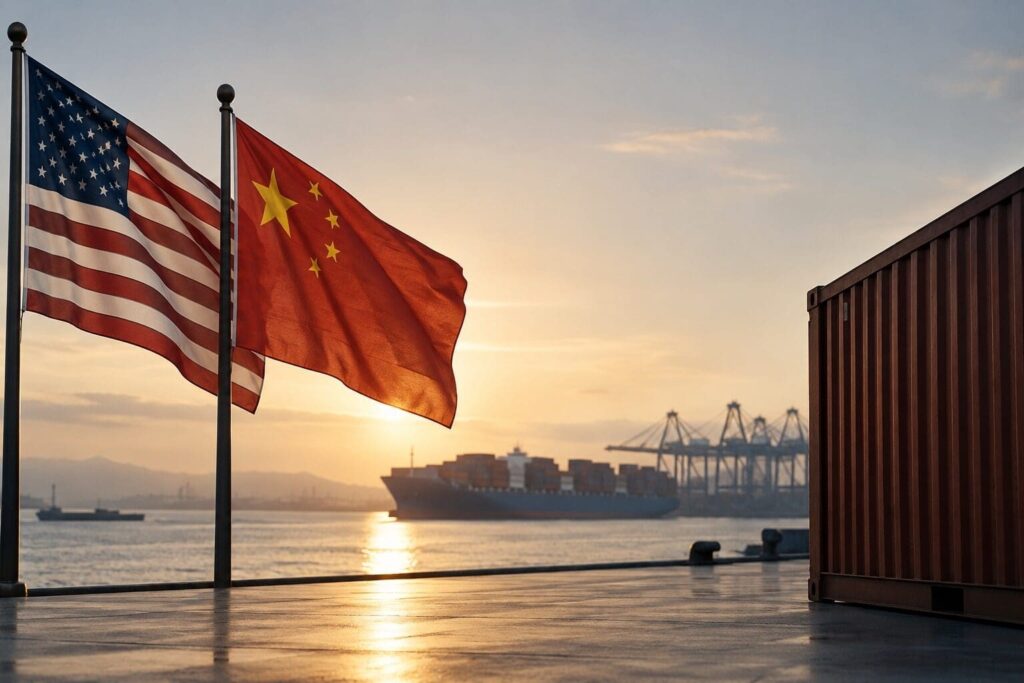
Tariff and trade policy concerns top the 2026 agenda for fashion sourcing executives, according to the USFIA Fashion Benchmarking Study 2006. Seventy-two percent of firms are accelerating sourcing diversification, shifting volumes from China (27%) toward Vietnam (29%) and Bangladesh (23%). Contract renegotiations now take 14 fewer days on average, while 65% have added trade compliance roles since Q1 2025. Landed costs rose 5.3% in H1 2026 amid air freight premiums and MOQ constraints. A Tier-1 brand executive noted trading "8–10% margin compression today to avoid a potential 25% tariff shock tomorrow."

Taiwan Semiconductor Supply Chain Revenue Rises YoY in June
Supply Chain Finance

Taiwan Semiconductor Supply Chain Revenue Rises YoY in June

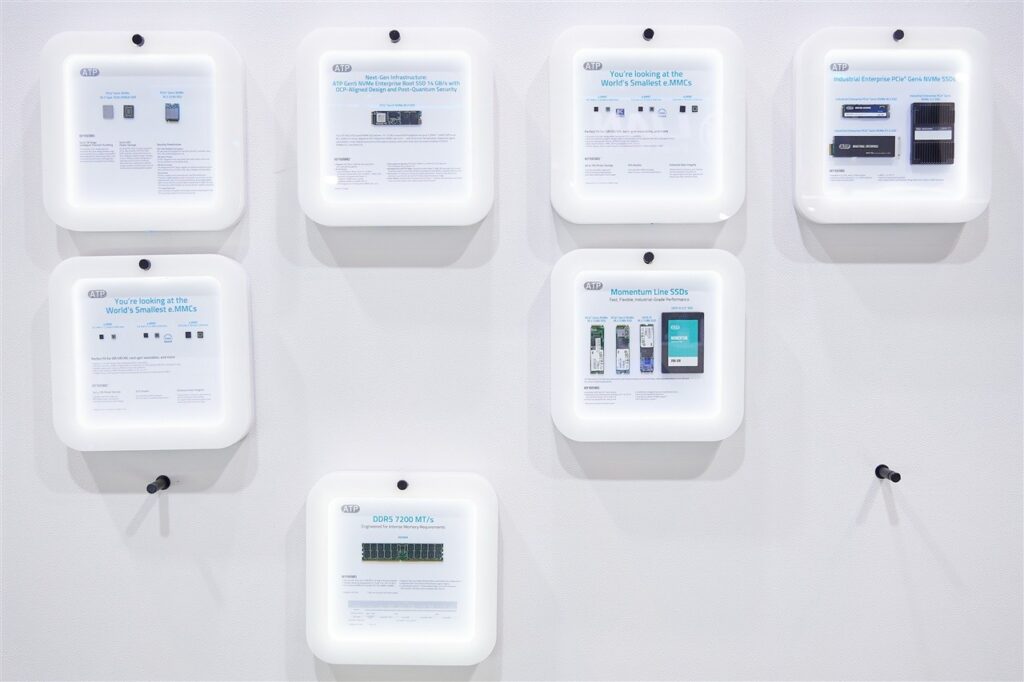
All 13 sub-sectors of Taiwan’s semiconductor supply chain posted year-over-year revenue growth in June 2026, per DIGITIMES. Memory revenue nearly quadrupled YoY, while TSMC and Vanguard lifted silicon foundry revenue 54% YoY. Advanced packaging rose 37% YoY, and logic IC design grew 22%. The surge reflects broad-based AI infrastructure demand — from cloud servers to automotive AI — driving synchronized capacity expansion across design, fabrication, packaging, and test. Industry-wide coordination has tightened lead times for substrates and thermal materials.

EcoVadis: 80% of Firms Lack ESG Supply Chain Strategy
Supply Chain Finance

EcoVadis: 80% of Firms Lack ESG Supply Chain Strategy

EcoVadis’ latest Sustainability Ratings Index — based on nearly 200,000 scorecards across 100,000+ companies rated from 2021–2025 — reveals that 80% of firms lack documented ESG supply chain strategies. Critical gaps include 73% without Scope 3 upstream emissions reporting, 77% lacking downstream tracking, and only 2% operating functional external grievance mechanisms. Just 20% conduct on-site audits, while 42% rely on unverified supplier questionnaires. Among corporate buyers, 68% use AI in sustainable procurement, yet 30% of suppliers provide no carbon data — highlighting a systemic data readiness shortfall threatening ESG tech ROI.

Apple acquires Broadcom AI team for $3 billion, boosts U.S. chip supply chain
Supply Chain Finance

Apple acquires Broadcom AI team for $3 billion, boosts U.S. chip supply chain

Apple has acquired Broadcom’s AI chip design team for $3 billion, integrating approximately 1,200 engineers into its Silicon Engineering Group. The move supports Apple’s goal of sourcing 50% of its custom silicon from U.S. fabs by 2030 and includes a $1.5 billion, five-year U.S. R&D investment. The company plans to qualify three new U.S.-fabricated chip processes by 2027 and will conduct final test and assembly in San Jose, California. This reflects a broader industry shift toward on-device AI hardware and domestic semiconductor supply chain resilience.

EcoVadis: 80% of Firms Lack Supply Chain ESG Risk Processes
Supply Chain Finance

EcoVadis: 80% of Firms Lack Supply Chain ESG Risk Processes

EcoVadis’ latest Sustainability Ratings Index — based on nearly 200,000 scorecards from 100,000+ companies rated between 2021 and 2025 — reveals that 80% of firms lack documented processes for managing supply chain ESG risks. Only 2% offer usable grievance mechanisms for workers deeper in the supply chain; 73% lack Scope 3 upstream emissions reporting, and 77% have no downstream tracking. Meanwhile, 68% of corporate buyers deploy AI in sustainable procurement, yet 30% of suppliers provide no carbon data — exposing a critical data-readiness gap.

Mynd Fintech acquires C2FO India, handles ₹60,000 crore in SCF annually
Supply Chain Finance

Mynd Fintech acquires C2FO India, handles ₹60,000 crore in SCF annually

Mynd Fintech, a subsidiary of RBI-licensed TReDS platform M1xchange, acquired C2FO India for an undisclosed sum. The deal brings 100 employees and 140 clients into Mynd’s fold, enabling it to process ₹60,000 crore in annual supply chain finance transactions. The combined platform serves ~50% of Nifty50 firms and ~200,000 suppliers across cement, pharma, and manufacturing sectors. C2FO India’s Gurugram-based operations will integrate with Mynd’s tech stack and regulatory infrastructure.

Toyota reshuffles supply chain leadership in North America
Supply Chain Finance

Toyota reshuffles supply chain leadership in North America

Toyota Motor North America announced executive changes effective July 13, 2026, expanding Kevin Austin’s role to include quality oversight and appointing Kensuke Morita to lead strategy, project planning, demand-supply management, and tech transformation. Austin, with over 20 years at Toyota and group VP since 2024, now supervises Tom Trisdale, while Morita gains reporting lines from Jamese Olayiwola and Michael Schad. The moves, announced June 19, 2026, support Toyota’s 'build where it sells' strategy across North America and follow industry-wide trends toward integrated supply chain and quality governance.

CMA CGM deploys 16,136-teu methanol ship on China-India routes
Supply Chain Finance

CMA CGM deploys 16,136-teu methanol ship on China-India routes

New container ship deliveries are increasingly directed toward the China–India and Far East–Mediterranean trades, reflecting surging demand and rate strength. CMA CGM deployed its 16,136-teu methanol-powered Cyrano on the BEX2 loop; Wan Hai added the 8,710-teu Wan Hai 902 to its revived FM1 service; Interasia introduced the 7,092-teu Ambition on its China–India ICI loop; Maersk activated the 5,915-teu Ferrato for extra sailings; and Yang Ming took delivery of the 15,500-teu YM Wayfinder for North Europe. Six vessels were commissioned in February 2023 at $175M each, while four others were ordered in September 2024 at $127M apiece.

Starbucks Ditches AI Inventory System After 9 Months — Supply Chain Dive
Supply Chain Finance

Starbucks Ditches AI Inventory System After 9 Months — Supply Chain Dive

Starbucks has discontinued its AI-powered computer vision inventory system after only nine months, reverting to traditional stock-keeping methods amid employee feedback labeling the tool "unreliable." The system—announced in September 2025—was intended to simplify record-keeping and prevent stockouts but reportedly miscounted or mislabeled items. Internal employee comments praised leadership for prioritizing staff judgment over "unreliable spatial recognition." CEO Brian Niccol reaffirmed broader supply chain ambitions, including daily replenishment by end of 2026, to support expanded food offerings and reduce stockout-related customer uncertainty. The move underscores ongoing challenges in deploying AI for frontline retail operations.

Q2 2026 Carrier Rate Report — FreightWaves
Supply Chain Finance

Q2 2026 Carrier Rate Report — FreightWaves

FreightWaves has released its Q2 2026 Carrier Rate Report, sponsored by Trimble and Cargowise Landside. The report synthesizes carrier survey responses and proprietary SONAR data to deliver actionable intelligence on freight rate trends, market dynamics, and strategic outlooks for the remainder of 2026. Key sections include emerging themes for Q2 2026, survey-derived insights from active carriers, and forward-looking takeaways. Complimentary access is available via form submission. The report coincides with two major upcoming FreightWaves events: the Supply Chain AI Symposium on July 15, 2026 in Chicago, and the F3: Future of Freight Festival on October 27–28, 2026 in Chattanooga.

Freight Rates Set for Spike Amid Liner Network Pressures — The Loadstar
Supply Chain Finance

Freight Rates Set for Spike Amid Liner Network Pressures — The Loadstar

Freight rates are poised for a material spike in the coming weeks amid mounting global supply chain pressures, according to Jacob van Rensburg of the South African Association of Freight Forwarders (SAAF). His analysis links rising Global Supply Chain Pressure Index (GSCPI) readings — driven by Red Sea Crisis disruptions and Panama Canal draught restrictions — to renewed carrier pricing power. After a post-Covid normalization period weakened carriers in Q3 2024 and Q2 2025, GSCPI and Drewry World Container Index (WCI) trends have re-synchronized since late 2025, with both now trending upward. Carrier profits, previously in freefall, have stabilized — reinforcing expectations of imminent rate increases triggered by rerouting, port congestion, and tighter effective capacity.

India pledges up to $60B for semiconductor supply chain by 2035
Supply Chain Finance

India pledges up to $60B for semiconductor supply chain by 2035

India plans to invest $45–60 billion by 2035 to build a domestic semiconductor supply chain, targeting a $120–150 billion value chain. The NITI Aayog roadmap cites $150 billion in semiconductor imports over eight years, 23% annual growth, and warns imports could hit $240 billion by 2035 without action. The global chip market is projected to grow from $631 billion in 2024 to $1.547 trillion by 2035. Partnerships with the U.S., Japan, and South Korea are central to mitigating Taiwan-related supply risks.

Welcome Back!

Login to your account below

Create New Account!

Fill the forms below to register

Retrieve your password

Please enter your username or email address to reset your password.

Add New Playlist