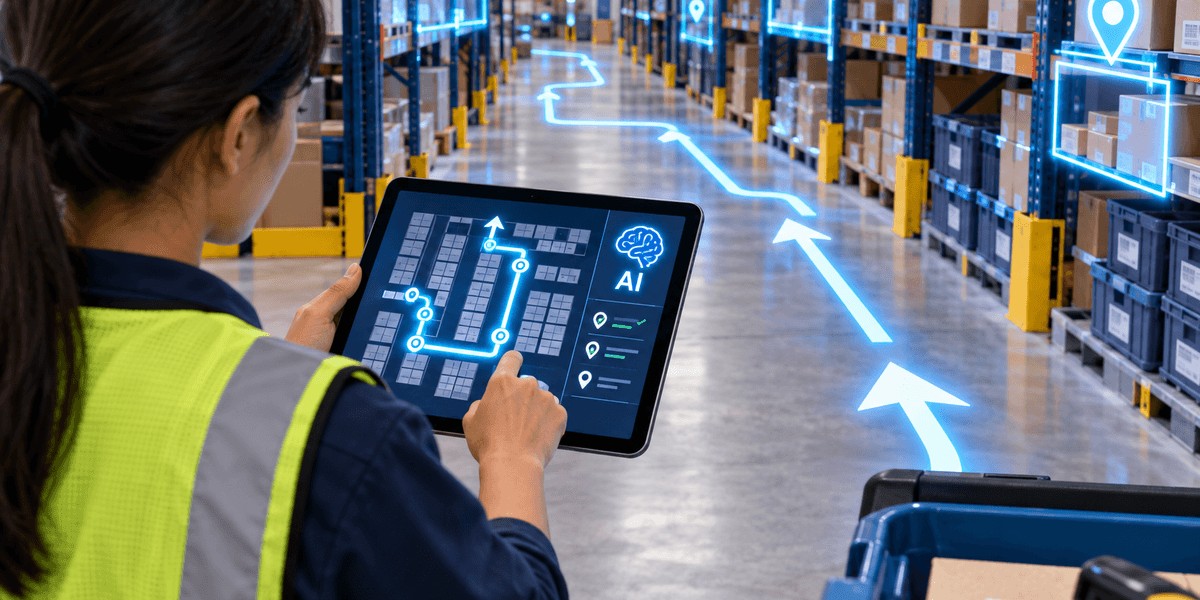
A 2026 PwC survey found 89% of supply chain leaders say AI investments haven’t delivered expected results, citing poor frontline adoption. Only 39% of frontline workers feel hopeful about AI versus 53% of knowledge workers. A 2026 PwC–Manufacturing Institute study attributes 45% of AI failures to excluding frontline leaders from design and rollout, while 40% cite insufficient training as a key barrier. Successful deployments involve workers early, deliver immediate individual value — like optimizing pick paths or guiding new hires — and prioritize transparent communication over technical announcements.
According to thescxchange.com, a 2026 PwC survey found that 89% of operations and supply chain leaders reported their technology investments had not fully delivered expected results — with frontline user adoption cited as a leading challenge.
Why frontline workers resist AI deployment
Resistance stems from early messaging and exclusion. A 2026 Qualtrics report revealed only 39% of frontline workers felt excited or hopeful about AI’s impact on their work — compared with 53% of knowledge workers. By the time systems arrive on the floor, many associates have already formed strong, often skeptical, opinions.
Compounding this is decision-making opacity: a 2026 joint study by PwC and the Manufacturing Institute found 45% of leaders identified the exclusion of frontline leaders from AI design and rollout as a significant contributor to failed initiatives. When workers lack visibility into why a tool was chosen or how their input could shape its use, deployments begin with a credibility deficit before login.
This skepticism reflects a rational response — not resistance for its own sake — to adopting tools never designed around actual workflows, physical constraints, or shift-based realities.
The adoption problem is organizational, not individual
Framing low adoption as a worker issue misdiagnoses the root cause. The 2026 PwC and Manufacturing Institute study also found 40% of leaders cited insufficient training as a top concern among frontline employees — highlighting systemic gaps in preparation and support.
A common failure pattern emerges: the AI system is technically implemented, training covers features, and the rollout is announced — yet daily work remains unchanged. Associates continue picking paths manually, dispatchers build routes by instinct, and the AI runs silently in the background while real operations happen elsewhere.
This disconnect persists because value is rarely delivered at the individual level. If dashboards benefit only managers and no tool helps an associate locate a mislabeled pallet or guides a seasonal hire through putaway, trust cannot take root.
What successful frontline AI adoption looks like
Organizations achieving high frontline adoption treat AI deployment as a workforce initiative supported by technology — not a technology initiative imposed on the workforce. Workers involved in pilots, feedback sessions, or early testing develop ownership and become internal champions — a shift that begins with feeling heard.
For example, a global retailer introduced an AI assistant across four distribution centers after implementing a warehouse management system (WMS). The assistant enabled warehouse managers and logistics operators to retrieve operational data, create support tickets, and access dashboards using natural language — resulting in increased user autonomy, faster issue resolution, accelerated decision-making, and more streamlined workflows.
Communication is equally critical. Workers need honest answers to questions like: Will this change my hours? Who decided this and why? What happens if I raise a concern? Transparency about purpose and limits builds trust far more effectively than feature announcements.
Source: thescxchange.com
Compiled from international media by the SCI.AI editorial team.