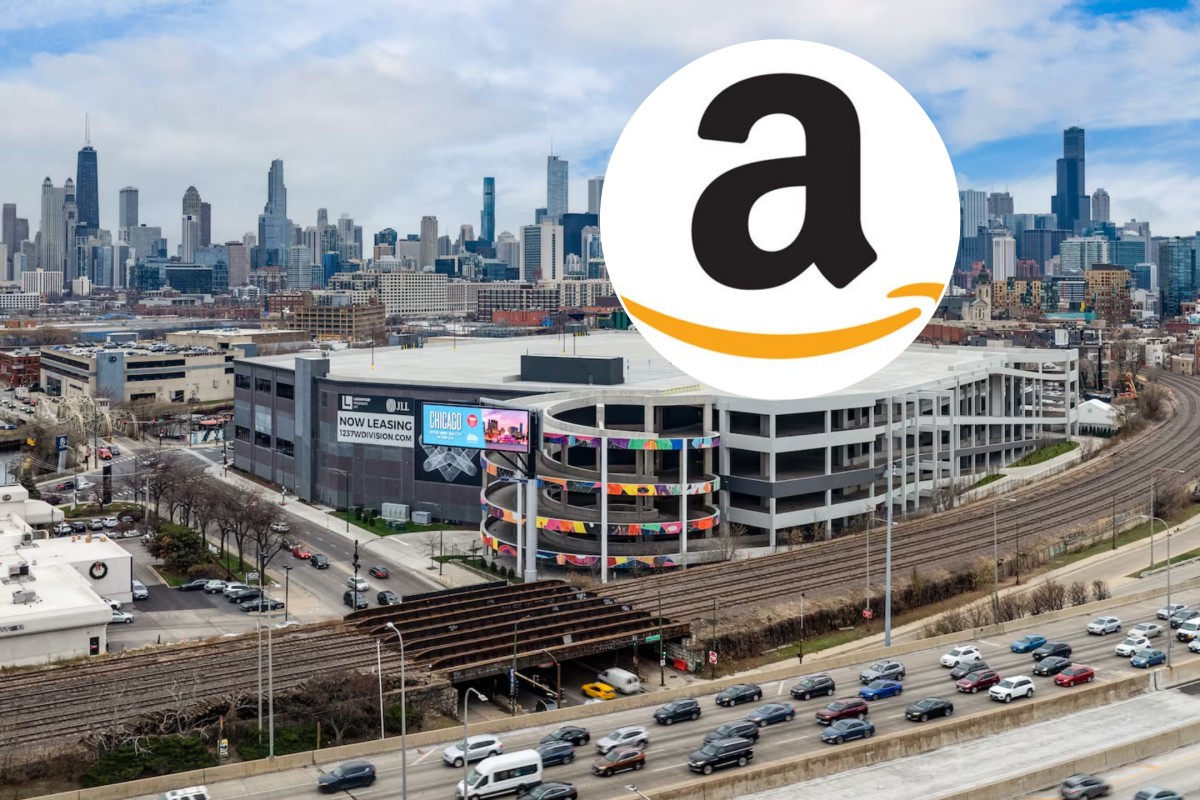
According to secretchicago.com, Amazon has acquired a five-level vertical warehouse at 1237 W. Division St. near Goose Island in Chicago for $195 million. The facility — Chicago’s first modern multistory warehouse — spans 1.2 million square feet and was completed in late 2024. After sitting vacant for nearly two years, the building now serves as a strategic hub to accelerate same-day package delivery across dense urban neighborhoods.
Vertical logistics meets urban density
The warehouse adopts a vertical stacking model inspired by high-density logistics infrastructure in Asian cities, where land scarcity drives innovative spatial design. Rather than occupying sprawling suburban acreage, the structure uses internal ramps to enable delivery vans to access each of its five levels. This configuration functions like a parking garage — but for packages. Vertical warehouses using similar principles are already operational in San Francisco, Seattle, and New York, and Chicago’s addition marks a deliberate expansion of this model into the Midwest.
The site’s location places it approximately one minute from I-90/94 and five minutes from the Loop — enabling rapid dispatch to neighborhoods including Wicker Park, Lincoln Park, West Town, and River North. Amazon’s return to Goose Island also represents a geographic recommitment: the company previously operated its first Chicago warehouse on nearby Cherry Avenue before closing it in 2024.
New jobs and local economic impact
The operation is expected to generate 600 to 800 new positions for Chicago residents, spanning roles from warehouse associates and delivery drivers to logistics and operations specialists. Hiring has not yet launched, but the scale of the facility underscores its significance as a labor anchor in the area. With no prior tenant since its completion in late 2024, the building’s activation signals an immediate uptick in local employment demand tied directly to Amazon’s same-day delivery ambitions.
The timing aligns with heightened consumer expectations for speed — especially for urgent household needs. As the source notes, “if you’re rush-ordering toilet paper at 11 p.m. because you realized, mid-crisis, that you’re out, your emergency is about to be fixed more quickly than ever.” That capability is now anchored in a physical asset valued at $195 million and built to serve urban density without expanding outward.
Source: secretchicago.com
Compiled from international media by the SCI.AI editorial team.