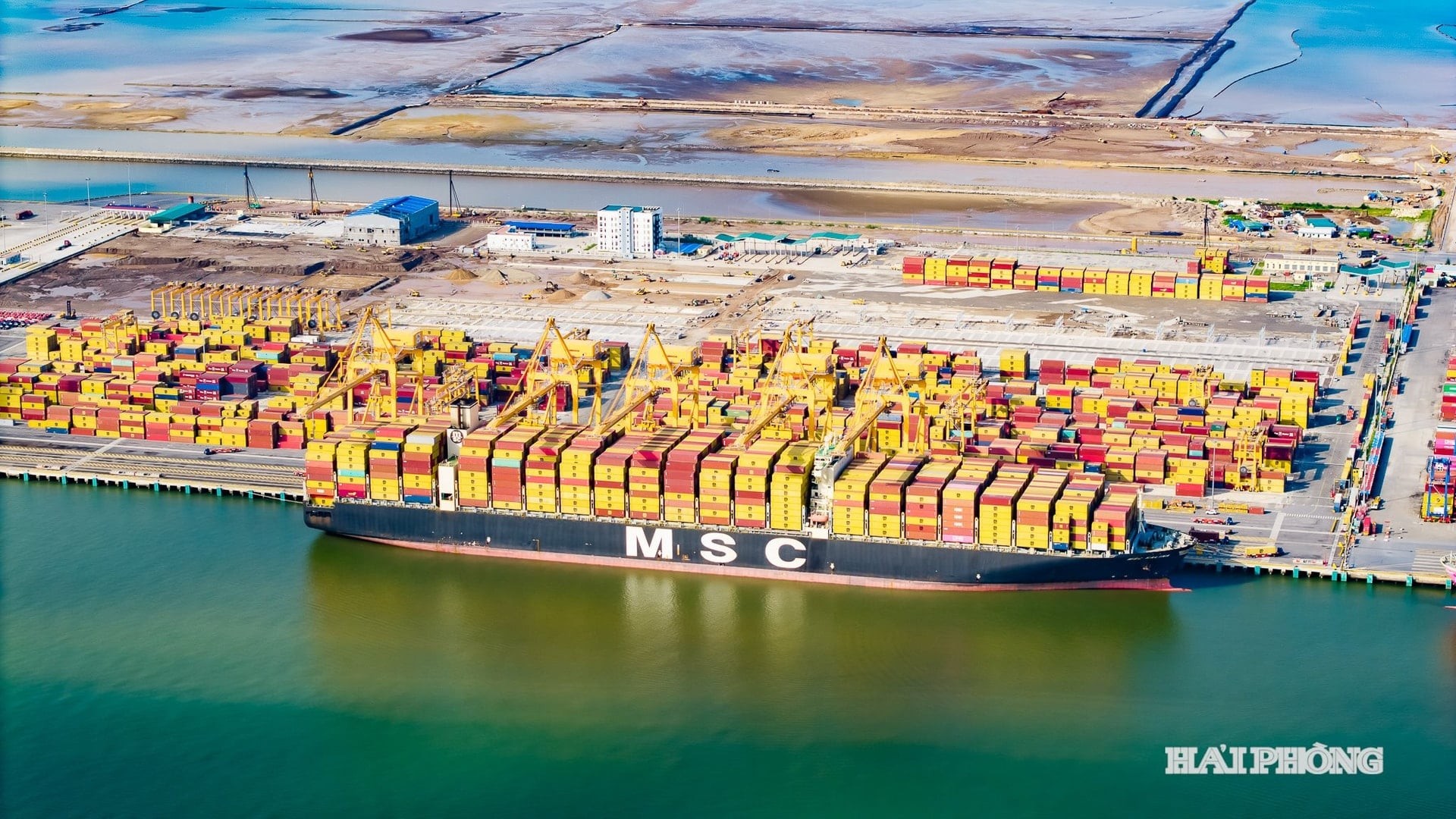
According to vietnam.vn, Hai Phong’s Lach Huyen deep-sea port complex has achieved a design capacity of 4.7 million TEU/year, yet multimodal connectivity and inland logistics infrastructure lag behind port expansion.
Port Capacity Surges Amid Infrastructure Gaps
Between 2021 and 2025, Hai Phong’s logistics sector grew at an average annual rate of over 10%, contributing approximately 11.5% to the city’s GRDP. Six berths at Lach Huyen are now operational, with a total quay length of 2.4 km. However, as Phung Ngoc Minh, Deputy General Director of Saigon New Port Corporation, observed, road connectivity and post-port infrastructure have failed to keep pace with berth capacity growth — particularly the reliance on the Tan Vu–Lach Huyen highway, while inland waterway transport remains underutilized.
Underused Inland Waterways and Fragmented First/Last Mile
Inland waterway container transport in northern Vietnam accounts for only 2–2.3% of total volumes, according to Macstar Group representatives. This low uptake stems from bottlenecks at both ends: vessels wait for berthing slots or cargo handling schedules at ports, while industrial zones lack dedicated container consolidation/distribution points and waterside yards. Additional costs — including transshipment, handling, and first/last-mile transport — erode freight-rate advantages. Imbalanced cargo flows (outbound vs. return) further hinder regular service viability.
Integrated Logistics Hubs Needed Across Production Zones
Tan Cang Saigon’s consolidated data shows that the combined 2025 export-import value of six provinces — Bac Ninh, Hai Phong, Hanoi, Ninh Binh, Hung Yen, and Quang Ninh — reached approximately $416.5 billion. To capture this volume, Hai Phong must develop dry ports, logistics centers, and distribution hubs near industrial parks. As Dinh Huu Thanh, CEO of Bee Logistics, emphasized during the Seventh Regional Logistics Forum in 2026:
“How many supply chains of Vietnamese enterprises and multinational corporations are actually organized from Hai Phong?”
He stressed that logistics centers must evolve into supply chain coordination nodes — managing inventory, value-added services, customs clearance, and consolidated distribution.
Data Integration and Regulatory Modernization
Effective coordination requires unified digital visibility: vessel schedules, yard status, empty container locations, and transport assets must be shared across stakeholders. Currently, fragmented systems limit planning accuracy and prolong waiting times. Tan Cang Saigon reported that inter-port or port-to-dry-port container movements still require separate transport declarations — prompting calls for end-to-end electronic management of sealed, unbroken containers with real-time tracking. At the same forum, Deputy Prime Minister Ho Quoc Dung directed Hai Phong to pursue an integrated development model linking seaports, logistics, industry, trade, and urban planning — especially in Lach Huyen, Nam Do Son, and the Dinh Vu–Cat Hai Economic Zone — while shifting logistics strategy from administrative boundaries to economic corridors and supply chains.
Source: vietnam.vn
Compiled from international media by the SCI.AI editorial team.