According to vietnam.vn, Vietnamese spice exporters are adjusting production and testing protocols to meet Japan’s proposed 80% reduction in the maximum residue limit (MRL) for chlorothalonil on ginger — from 0.05 mg/kg to 0.01 mg/kg.
Japan’s Tightening Residue Limits
Le Viet Anh, Secretary General of the Vietnam Pepper and Spice Association, emphasized that new MRL proposals require upstream control: “Exporters must proactively review pesticide use at growing areas and coordinate with labs on appropriate limits of quantification (LOQ) — especially where MRLs fall as low as 0.01 mg/kg for chlorothalonil and 0.05 mg/kg for boscalid on ginger.” He stressed that residue management must begin at the farm level, not just during final product testing.
The source states that Japan also proposed cutting the boscalid MRL on ginger by 97.5%, from 2 mg/kg to 0.05 mg/kg, while reducing its MRL on other spices from 50 mg/kg to 40 mg/kg. These changes reflect intensifying regulatory scrutiny across high-value export markets.
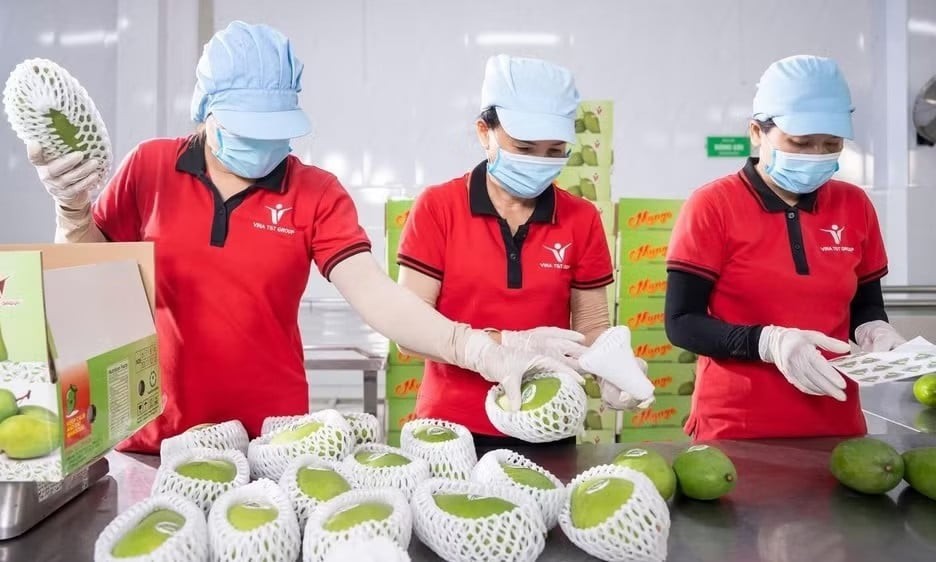
Such shifts directly impact sourcing strategy: companies like Vina T&T Group — shown packaging mango exports in the source — now face tighter timelines and higher compliance costs for traceability, testing, and farm-level coordination.
EU Regulatory Shifts Effective August 2026
The European Commission published new import rules for animal products in July, effective 12/8/2026. According to the report, the regulation updates requirements for dairy, meat, eggs, composite products, and lists disease-prone aquatic species while identifying intermediate host organisms — signaling deeper scrutiny of ingredient-level origin and processing structure.
Tran Hoang Luan, Sales Director of An Hai Seafood Co., Ltd., confirmed that the EU accounts for 20–25% of his company’s export revenue, second only to the U.S. at 42%. As EU compliance complexity rises, the firm is actively expanding into Russia and South America to diversify risk.
The source notes that Vietnamese exporters increasingly ship deep-processed and convenience foods to the EU — making precise technical documentation, correct import certificates, and pre-clearance readiness critical to avoid port-side document rejections.
Standardization Through Producer Engagement
Ngô Tường Vy, CEO of Chanh Thu Fruit Import-Export Group, argued that exporters must shift from a “sell what we have” mindset to proactive market alignment. She explained that individual farmers cannot feasibly meet stringent demands — including pesticide controls, fertilizer standards, harvest intervals, traceability, and registered planting codes — without enterprise-level support.
“Businesses must embed technical teams in farming communities and partner with local governments and extension services,” she said. “But SMEs lack resources for long-term investments — such as overseas IP registration, brand building, certification, or origin-tracing systems.”
“Policies must pivot from post-order support to pre-market capacity building — providing market intelligence, foreign distribution linkages, and targeted funding for standards, technology, and raw-material zones.” — Ngô Tường Vy, CEO, Chanh Thu Fruit Import-Export Group
Automation and Breeding to Secure Supply
Minh Phu Seafood Group is responding with vertical integration and automation. According to CEO Le Van Quang, the company aims to automate 70–80% of production, using robots capable of replacing three workers per shift and operating continuously across three shifts.
The firm is also trialing fast-growing shrimp breeds to lower feed and labor costs — an effort intended to offset Vietnam’s rising production expenses and preserve price competitiveness. These upgrades are described as essential to meeting year-end order surges while maintaining delivery speed, cost control, and quality consistency.
Source: vietnam.vn
Compiled from international media by the SCI.AI editorial team.