Ha Tinh Province, Vietnam, aims to attract $600 million in FDI in 2027, prioritizing semiconductors, AI, data centers, and other high-tech sectors. The strategy emphasizes proactive investor targeting, infrastructure readiness—including land clearance in zones like Bac Thach Ha and Vinhomes in Vung Ang—and regional specialization. It seeks firms that anchor supply chains and integrate with domestic enterprises, while setting parallel goals of launching 2,000 new local businesses and achieving over 11% private-sector growth. Digital tools and multilingual resources enhance transparency and accessibility.
According to www.vietnamplus.vn, Ha Tinh Province in Vietnam has set a target of attracting approximately $600 million in foreign direct investment (FDI) in 2027, with strategic emphasis on semiconductors, artificial intelligence, data centers, and other high-tech sectors.
Targeted Industrial Priorities
Rather than pursuing broad-based investment promotion, Ha Tinh is shifting toward a focused, proactive model centered on strategic investors and high-value, technology-intensive industries. The province identifies three core industrial groups: processing and manufacturing; energy; and seaport, logistics, industrial services, and supply chain operations. Within processing and manufacturing, it targets large-scale projects in metallurgy, machinery, advanced materials, deep processing, post-steel industries, automobile assembly, and industrial equipment production — leveraging existing advantages at the Vung Ang-Son Duong Economic Zone.
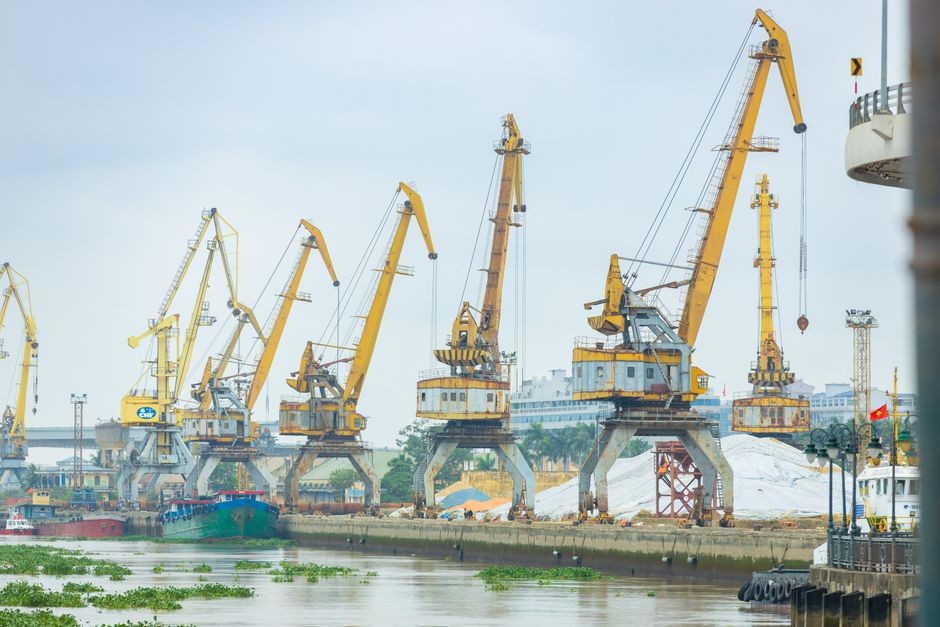
In the energy sector, Ha Tinh prioritizes clean and efficient projects, including LNG, renewable energy, energy storage, and related technical services. Its port infrastructure and geographic position along key trade routes underpin its logistics and supply chain development strategy. Alongside these pillars, the province selectively pursues emerging growth drivers such as data centers, AI, semiconductors, electronics, cloud computing, IoT, blockchain, R&D, and biotechnology — while explicitly discouraging projects using obsolete technology, high energy consumption, resource intensity, or posing environmental pollution risks.
A key criterion for investor selection is the potential for domestic integration: projects must demonstrate tangible linkages with Vietnam’s domestic economy, including opportunities for local enterprises to participate in upstream or downstream activities.
Infrastructure Readiness and Land Preparation
Ha Tinh treats infrastructure and land readiness as decisive enablers for new investment. The province is accelerating land clearance and technical infrastructure completion across multiple industrial zones, including Bac Thach Ha (Viet Xuyen), Gia Lach Expansion (Nghi Xuan), Vinhomes in the Vung Ang Economic Zone, Hung Long (Toan Luu), and Bac Hong Linh. It also actively seeks investors to develop industrial park and cluster infrastructure, partnering with existing infrastructure firms to prepare land banks, utilities, and prerequisite conditions — thereby enabling faster onboarding of secondary investors.
This approach redefines investment promotion as beginning long before site visits — starting instead with clearly defined, pre-vetted investment products that specify location, zoning, land availability, infrastructure status, and policy frameworks.
At the Vung Ang Economic Zone, growing numbers of investors are already constructing industrial factories, confirming the zone’s increasing appeal as a manufacturing hub.
Proactive, Data-Driven Investor Outreach
In 2027, Ha Tinh plans to execute around 20 targeted investment promotion activity groups — spanning market research, prospective partner identification, site surveys, investor matchmaking, database development, project catalog standardization, promotion, and staff training. Instead of passive outreach, the province proactively maps target markets, industries, value chains, and enterprise groups for direct engagement.
Traditional partners — including Japan, Korea, Singapore, Thailand, China, and Taiwan — remain priorities, while new focus areas include the United States, the EU, G7 countries, OECD economies, and others with strengths in technology, governance, and ESG standards. The goal extends beyond capital inflow: Ha Tinh seeks firms capable of anchoring or leading regional supply chains — enabling local enterprises to join material, component, service, and production processes.
To support this, the province aims to build a database of local enterprises qualified for supply chain participation and facilitate connections between FDI firms, lead firms, SMEs, cooperatives, and potential entrepreneurs.
Regional Specialization and Digital Enablement
Ha Tinh’s 2027 strategy spatially differentiates investment promotion by region. The central area focuses on urban development, finance, science-technology, innovation, education, and clean industry. The north emphasizes cultural-historical tourism, riverside and coastal services, and ecological urbanism. The south serves as the industrial, energy, port, logistics, and production-support engine. The west prioritizes high-tech agriculture, sustainable forestry, carbon credits, medicinal plants, and eco-tourism. The marine economy zone concentrates on fisheries, fishing logistics, marine tourism, and marine energy. At the Cau Treo International Border Gate Economic Zone, priority sectors include cross-border trade, logistics, tourism, and high-tech agro-forestry aligned with the Ha Tinh–Borikhamxay border cooperation framework.
The province also promotes key tourism projects, urban developments, and service hubs linked to new transport nodes — including transit-oriented development (TOD) models near high-speed rail stations. Concurrently, Ha Tinh is digitizing its investment promotion: building and updating databases on projects, planning, land, infrastructure, and policies; standardizing its investment project catalog; and preparing multilingual promotional materials — including videos, QR codes, e-books, and digital maps — to let investors access verified information remotely.
Digital tools aim to reduce initial information-gathering time and increase transparency on land availability, zoning, and investment opportunities. Alongside overseas missions and specialized conferences, the province strengthens on-site promotion, direct administrative guidance, and interdepartmental task forces to resolve implementation bottlenecks — shifting from a narrow “invitation-only” mindset to end-to-end accompaniment across site selection, permitting, execution, and expansion.
Broader Economic Development Goals
Beyond FDI, Ha Tinh sets parallel objectives for domestic enterprise development: establishing 2,000 new enterprises in 2027 and achieving over 11% growth in the private economic sector. It also targets improvements in competitiveness indices, administrative reform, public governance efficiency, and citizen and organizational satisfaction with state agencies — embedding investment promotion within a holistic business environment upgrade.
By combining proactive investor targeting, pre-positioned infrastructure, high-tech prioritization, domestic linkage requirements, and digital transparency, Ha Tinh is advancing a selective, capability-building model of FDI attraction — aiming not just for more projects, but for those that catalyze value-chain formation, upgrade local productive capacity, and sustainably drive provincial growth through 2026 and beyond.
Source: vietnamplus.vn
Compiled from international media by the SCI.AI editorial team.