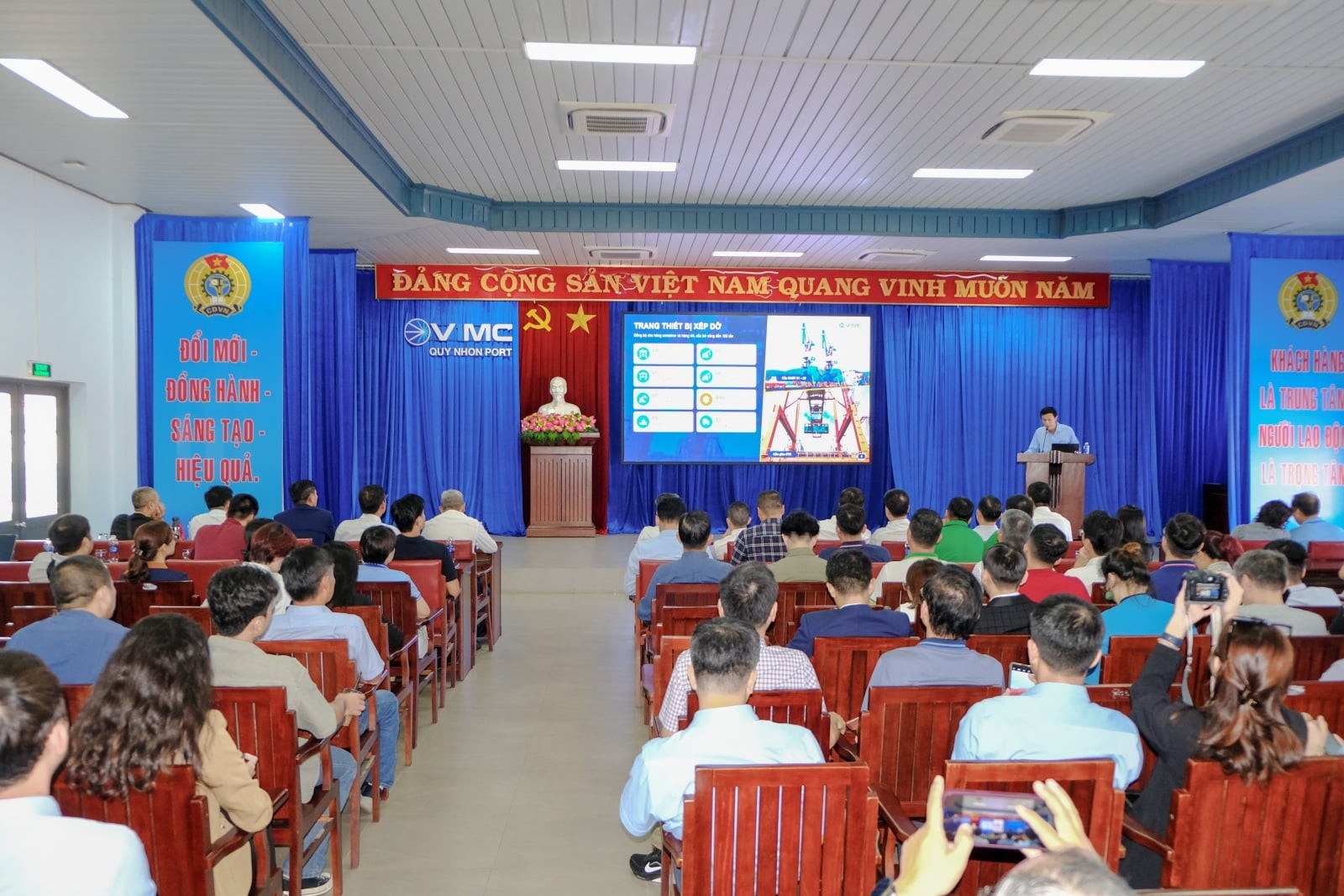
Delegates at the Vietnam Logistics Forum 2026 surveyed Quy Nhon Port and the Becamex VSIP Binh Dinh industrial park on November 6, 2026, the first day of a two-day event co-hosted by the Ministry of Industry and Trade and Gia Lai province. Quy Nhon Port, a VIMC member since 1976, operates five berths totaling nearly 1,200 m, 400 reefer plugs and about eight container vessel calls per week, and sits 165 km from Pleiku and 237 km from the Le Thanh border gate. The 1,425-hectare Becamex VSIP Binh Dinh project lies 22 km from the port and 32 km from Phu Cat Airport.
According to vietnam.vn, delegates at the Vietnam Logistics Forum 2026 toured Quy Nhon Port and the Becamex VSIP Binh Dinh industrial park on the afternoon of November 6, 2026, the first day of a two-day event co-hosted by the Ministry of Industry and Trade and the Gia Lai provincial government.
Port gateway and highland production link
The site visits were part of a forum program themed “Connecting highland logistics, advancing into the global value chain,” organized across November 6-7, 2026. Delegates examined how cargo moves between the Central Highlands and the central coast, meeting port operators and industrial-park manufacturers directly.
Quy Nhon Port, established in 1976 and a member of state shipping group VIMC, sits at the start of National Highway 19. That position gives it a route linking the coast to the Central Highlands and a sea gateway for parts of southern Laos and northeastern Cambodia, according to the presentation to delegates.
The distances cited at the working session show the port’s reach inland: roughly 165 km to Pleiku, about 237 km to the Le Thanh border gate and around 272 km to the Bo Y border gate. The Becamex VSIP Binh Dinh industrial park lies about 25 km from the port.
Quy Nhon capacity: five berths, 400 reefer plugs
Port representatives described infrastructure built to handle both container and bulk cargo. Quy Nhon currently operates 5 berths with a total length of nearly 1,200 m, supported by a mix of general cargo yards, container yards and warehouses.
Equipment includes STS gantry cranes, mobile harbor cranes, RTG gantry cranes and forklifts for container and bulk handling. Notably, the terminal has 400 reefer plugs, allowing it to serve temperature-controlled goods such as agricultural produce and fruit.
Container handling productivity reaches about 60 moves per hour per vessel, enough for an ordinary container ship to finish cargo work within a day, according to the company. The port maintains around 8 container vessel calls per week, with roughly 20 shipping lines operating or buying slots.
Cargo can move directly or be transshipped through regional logistics hubs including Hong Kong and Shanghai in China, Cai Mep-Thi Vai in Vietnam and Singapore before reaching international markets. For Central Highlands goods, these sea routes could diversify export options for farm produce, raw materials and industrial products that need large, stable volumes.
The cargo mix still needs broadening. Bulk non-container volumes depend heavily on wood chips and compressed wood pellets, while the port wants to attract more agricultural cargo from the Central Highlands. Container exports dominate, led by wood products, fruit and cassava starch.
“The site visit was organized to clarify the connection between production areas in the highlands and the coastal seaport system. From the actual handling, storage, loading and transport of goods, we can identify which stages are working well, which points need improvement, and opportunities for cooperation between cargo owners, logistics firms and port operators.” — Representative of the survey delegation
Becamex VSIP Binh Dinh: 1,425 hectares
The delegation then moved to Becamex VSIP Binh Dinh in Canh Vinh commune, Gia Lai province, to hear from the project’s investor, Becamex Binh Dinh JSC. The project combines an industrial park, urban area and services across roughly 1,425 hectares.
Of that total, the industrial park accounts for about 1,051 hectares and the urban area about 374 hectares. The developer presented the master plan, infrastructure layout and transport connections serving production and business operations.
The site links to National Highway 1A, National Highway 19, the North-South expressway and the railway network. According to the presentation, the industrial park is about 8 km from National Highway 1A, 18 km from National Highway 19, 22 km from Quy Nhon Port and 32 km from Phu Cat Airport.
Those links matter because an industrial park generates large demand for transport, warehousing, receiving and inventory management. As production scale and investment grow, logistics services must keep pace so materials arrive on schedule, products ship on time and circulation costs stay controlled.
“For businesses in international supply chains, a good production plan must come with a reliable warehousing, transport and delivery plan.” — Representative of the survey delegation
The delegation said information and recommendations gathered at the sites will be recorded and compiled to support the forum’s discussions, tying logistics development to the specific needs of enterprises and operating conditions in each locality.
Source: vietnam.vn
Compiled from international media by the SCI.AI editorial team.