A baseline review under the EU-funded SustainCoffee project finds that only about 30% of Vietnam's coffee output in 2025 came from supply chains with certification or geolocation-backed traceability, while 70% still moves through paper-based traditional channels. The EU, which took 38% of Vietnam's coffee exports in the 2025-2026 crop year, is tightening rules including the EUDR. The report also flags governance gaps: 84% of surveyed cooperatives and SMEs adopted environmental and social measures, but only 44% practice formal governance and just 1% have accessed green credit.
According to vietnam.vn, roughly 70% of Vietnam’s coffee output still moves through traditional channels that rely on paper records, leaving the sector exposed as the European Union tightens traceability and deforestation rules on imports.
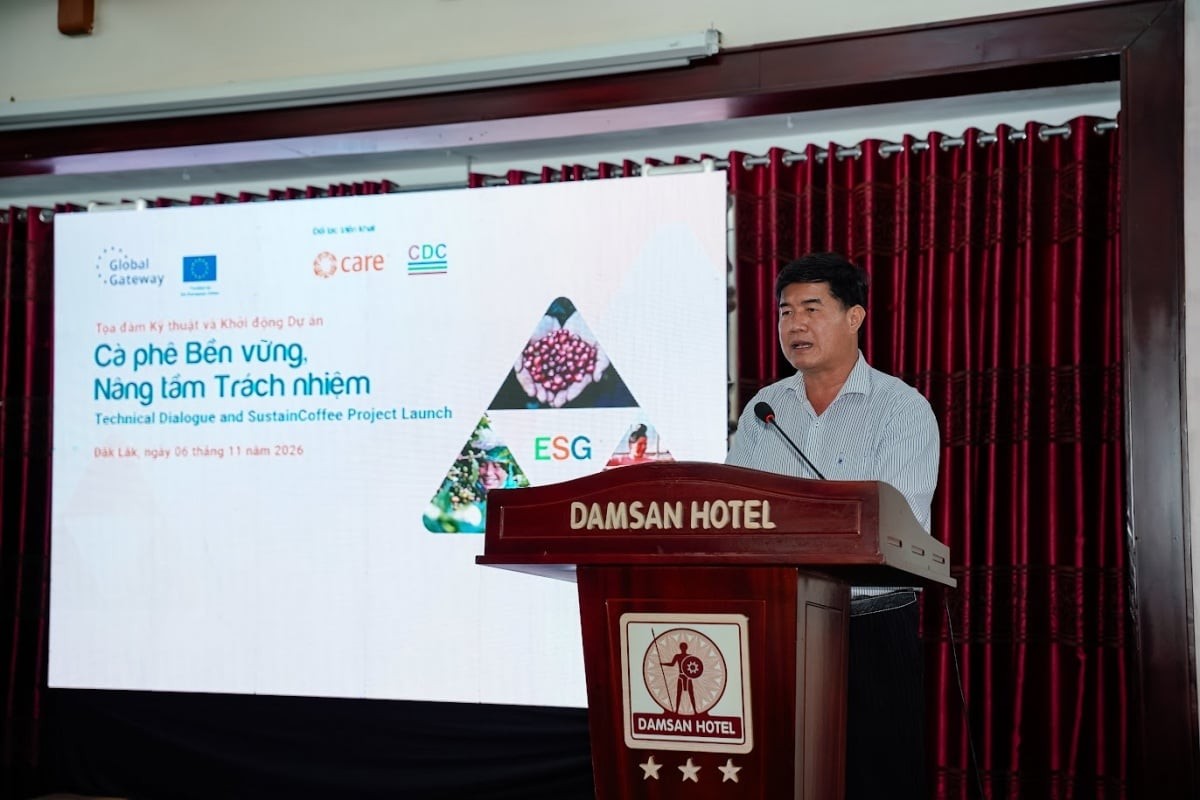
The finding comes from a baseline data review by management consultancy MCG, carried out under SustainCoffee, a project launched in Đắk Lắk by CARE International in Vietnam, local authorities and partners. The project is funded by the European Union under the Global Gateway initiative and runs from December 2025 to May 2029 in Đắk Lắk and Sơn La provinces.
SustainCoffee aims to support more than 400 micro, small and medium-sized enterprises and cooperatives in the coffee value chain, with indirect benefits expected for around 1.4 million farmers and workers.
EU takes 38% of exports as traceability gap widens
In the 2025-2026 crop year, the EU accounted for 38% of Vietnam’s total coffee exports, according to the report. That makes the bloc a critical market, but one that is imposing increasingly strict requirements on imported goods.
The study estimates that in 2025 only about 30% of Vietnam’s coffee output came from supply chains with certification or traceability backed by geolocation data. The remaining 70% still flows through traditional channels, typically dependent on paper files and documents.
New requirements, including the EU Deforestation Regulation (EUDR), stress the need for reliable traceability systems, geolocation data and evidence that production is legal. The capability gap forces businesses and producers to both defend export markets and invest to meet the new standards, the source states.
Governance and finance emerge as bottlenecks
The traceability shortfall is not the only constraint. A survey of cooperatives and micro, small and medium-sized enterprises found that 84% had adopted environmental and social sustainability measures, but only 44% practiced formal corporate governance.
None of the businesses in the survey sample published a sustainability report, and only 1% had ever accessed green credit, according to the report. The figures suggest that sustainable practices at the farm level do not yet translate into full management systems, evidence files and financial resources to meet market requirements.
Technology access also varies sharply between producing regions. In 2024, 29.8% of smallholder households surveyed in the Central Highlands were aware of EUDR requirements, compared with 19.2% in the Northwest region. Although smartphones are widely used, only 2% of surveyed households said they used them to map the geolocation of their cultivated plots.
Social sustainability gaps test inclusive transition
Social sustainability is another concern. Industry studies cited in the report show that 93% of surveyed coffee workers have health insurance, but only 24% have social insurance. Some 25.9% of hired agricultural laborers earn less than the regional minimum wage.
Women are estimated to contribute about 60-70% of labor on coffee farms in the highland region, the report adds. The transition therefore needs to be inclusive, with attention to the interests of smallholders, women and workers, according to the source.
“Sustainable trade not only creates long-term development opportunities for businesses and communities, but must also protect the environment and respect human rights.”
— Gonzalo Serrano de la Rosa, Deputy Head of Cooperation, EU Delegation to Vietnam
Nguyễn Thiên Văn, Vice Chairman of the Đắk Lắk Provincial People’s Committee, said coffee is a key economic sector for the locality and is tied to the livelihoods of thousands of farming households. Promoting sustainable production and responsible business practices is a priority as the industry adapts to new international market requirements, he said, adding that the project creates opportunities to connect businesses, cooperatives and farmers with knowledge, resources and practical partnerships.
ESG tools and local associations at the core
SustainCoffee will focus on strengthening ESG (environmental, social and governance) practices, providing advice, technical guidance and financial support so businesses can carry out concrete improvement plans, according to the source.
The project will also build three self-assessment toolkits tailored to different target groups, helping businesses and cooperatives improve governance and prepare ESG records and reports. Local business associations, including the Buôn Ma Thuột Coffee Association, will be supported to strengthen ESG advisory capacity and traceability assistance.
“SustainCoffee is designed to narrow this gap, turning ESG requirements into practical solutions while ensuring that smallholder farmers, women and workers are not left behind.”
— Lê Kim Dung, Head of the CARE International Representative Office in Vietnam
Trần Hồng Nhật, Deputy Director of the Community Development Center (CDC), said many cooperatives and small businesses in Đắk Lắk already carry out sustainability activities in their daily work, but turning those practices into measurable results that meet market requirements remains a challenge. Through the project, CDC will work directly with businesses, cooperatives and farmers to identify practical improvements and strengthen ESG management capacity, he said.
Source: vietnam.vn
Compiled from international media by the SCI.AI editorial team.