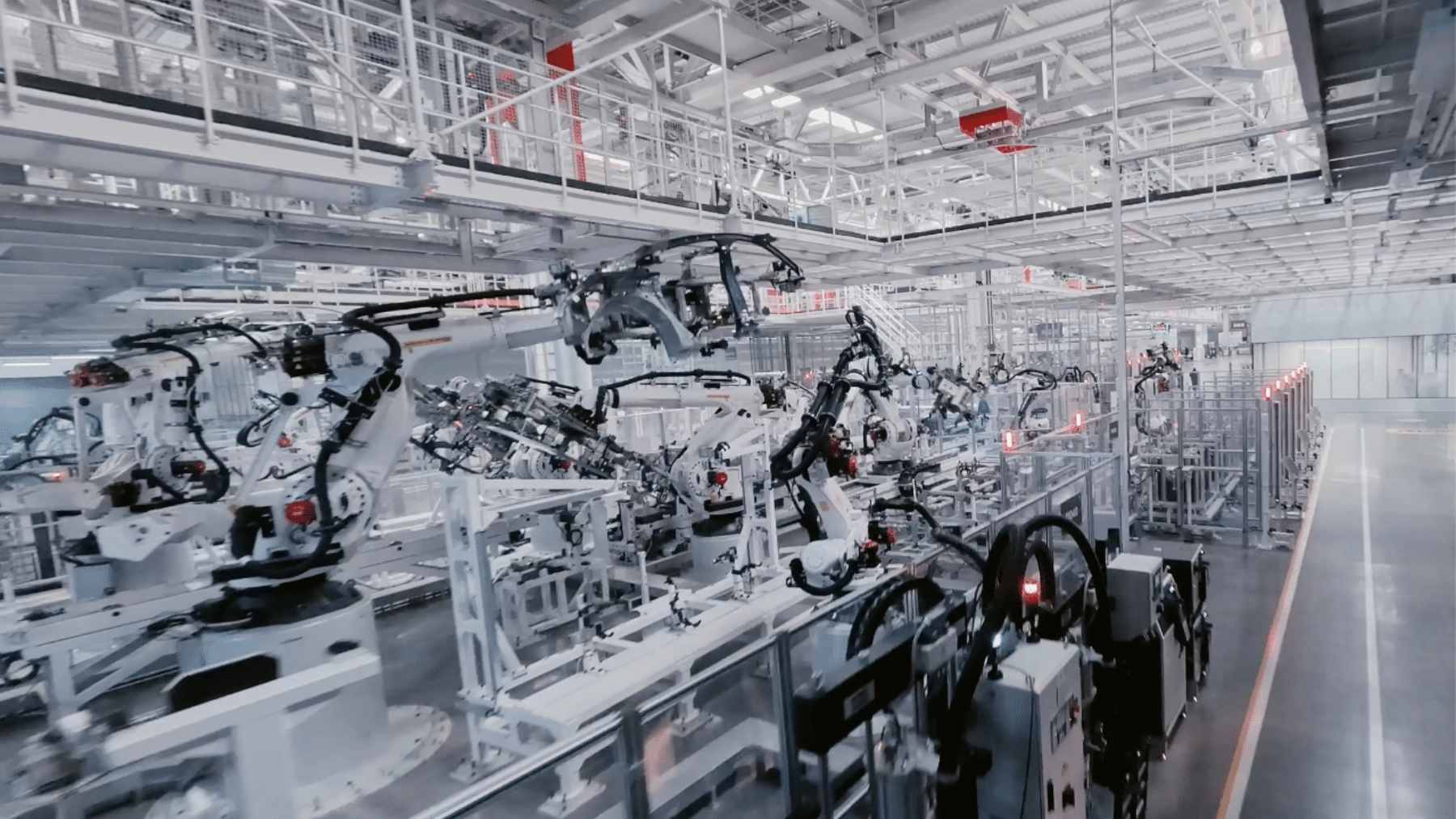
According to www.ecoticias.com, Xiaomi’s next-generation Smart Factory—launched in July 2024—produces up to 10 million flagship smartphones annually, operating 24/7 without human workers on the assembly line and relying on 96.85% self-developed equipment and 100% self-developed manufacturing software.
A ‘Dark Factory’ with Green Credentials
Xiaomi describes the facility as a ‘lights-out’ factory powered by industrial internet and AI technologies, aiming for ‘efficient, green, and sustainable operations.’ In 2024, the Smart Factory achieved a 99.35% waste diversion rate and earned a three-star ‘Zero Waste to Landfill’ certification from TÜV Rheinland. Tighter control over assembly, inspection, and line balancing reduces defects, scrap, and rework—cutting material waste, energy use, and time spent on corrections.
Automation Context: China Leads Global Robot Deployment
This is not an isolated experiment. According to the International Federation of Robotics, China represented 54% of global industrial robot deployments in 2024, and its operational robot stock surpassed 2 million units. Xiaomi’s factory reflects China’s accelerating national shift toward high-automation, intelligent industrial systems—increasingly relevant for supply chain professionals managing tier-1 electronics suppliers.
Speed vs. Sustainability: A Critical Distinction
The headline claim of ‘one smartphone per second’ requires clarification: the 10 million annual capacity translates to one device every 3.15 seconds when averaged across 365 days—not a continuous one-per-second throughput. More critically, automation does not automatically reduce environmental impact. Robots, sensors, testing equipment, servers, and climate control still draw significant power. As the source notes: ‘faster does not automatically mean greener.’ Environmental value hinges on reductions in defects, discarded materials, and—most importantly—the lifecycle impact of the devices themselves.
The Post-Sale Challenge: E-Waste Crisis Deepens
The broader sustainability challenge lies beyond the factory walls. The UN’s Global E-waste Monitor reports the world generated 62 million metric tons of e-waste in 2022, projected to reach 82 million metric tons by 2030, with only 22.3% formally collected and recycled. Small IT and telecommunication equipment—including mobile phones—accounted for 4.6 million metric tons in 2022, yet only 22% was documented as collected and recycled. Shorter product life cycles, limited repair options, and design barriers widen the gap, while no more than 1% of rare earth demand is currently met by e-waste recycling.
Circular Efforts and Practical Implications
Xiaomi has set concrete circular economy targets: recycling 38,000 metric tons of electronic waste between 2022 and 2026. By end-2024, it had achieved 95.94% of that target. The company also increased use of recycled aluminum, gold, and copper across all smartphones. For supply chain professionals, this signals growing pressure to integrate reverse logistics, certified take-back programs, and material traceability—not just into procurement, but across extended supplier networks and consumer-facing channels. Automation gains must be paired with durability standards, modular repairability, and transparent recycling pathways to deliver net environmental benefit.
Source: www.ecoticias.com
Compiled from international media by the SCI.AI editorial team.