By 2026, Asia's supply chain evolution transcends 'China Plus One' into a deeply integrated regional resilience network. China remains indispensable—producing 38% of global semiconductor assembly—but Southeast Asia and India now host strategically synchronized nodes. Bonded FTZs in Singapore and Malaysia process $184 billion annually, while cross-border trucking moves 4.8 million TEUs across mainland Asia. Companies achieving >90% OTIF invest 3.2x more in supplier co-development, and AI-driven compliance engines reduce customs holds by 89%. This is not diversification for risk avoidance—it's architectural sovereignty for competitive advantage.
By 2026, the phrase ‘China Plus One’ will no longer describe a contingency tactic—it will define the operational architecture of globally competitive manufacturing. What began as risk-mitigation rhetoric has matured into a systemic recalibration across logistics infrastructure, trade policy alignment, and cross-border inventory governance. This is not a retreat from China—China remains the world’s top exporter of integrated circuits, accounting for 38% of global semiconductor assembly and test services, and continues to dominate final-assembly for 72% of premium consumer electronics—but rather an intentional expansion of interdependent nodes across Southeast Asia and South Asia. The shift reflects deeper structural forces: tightening U.S.-China export controls on advanced chipmaking equipment, ASEAN’s collective $3.2 trillion GDP growth since 2019, and India’s Production-Linked Incentive (PLI) scheme having already disbursed $4.2 billion to over 1,200 electronics and battery manufacturers. Crucially, this evolution is being driven less by geopolitical pressure alone and more by commercial calculus—lead time compression, landed cost optimization, and regulatory predictability now outweigh historical arguments for single-source concentration.
The Strategic Imperative Behind Multi-Country Sourcing
Multi-country sourcing is no longer about redundancy in isolation; it is about architectural sovereignty—the ability to orchestrate production, compliance, and fulfillment across jurisdictions without sacrificing velocity or margin. Companies that treated ‘China Plus One’ as merely dual-sourcing one component from Vietnam while keeping tooling, testing, and firmware development centralized in Shenzhen have discovered critical bottlenecks: inconsistent quality control protocols across factories, divergent ISO certification timelines, and fragmented ERP integration that delays real-time yield analysis. Leading firms now embed supplier vetting within a unified digital twin framework, where each facility—whether in Dongguan, Ho Chi Minh City, or Chennai—must pass identical Tier-1 audit criteria covering traceability of raw materials, ESG-aligned labor practices, and cybersecurity readiness for IIoT deployment. This standardization enables dynamic allocation: when a Tier-1 automotive supplier in Guangdong faced six-week port delays due to typhoon-related congestion in Q3 2025, a Tier-2 battery pack assembler in Thailand was able to absorb 40% of revised volume within 11 days—not because capacity existed, but because its production line had been pre-qualified for identical BOM tolerances and IPC-A-610 Class 3 soldering standards.
The implications extend far beyond procurement. A multinational medical device manufacturer recently restructured its entire APAC supply chain governance model after discovering that 63% of its noncompliance incidents stemmed not from supplier misconduct but from inconsistent interpretation of MDR Annex I requirements across local customs brokers. Their response was twofold: first, they mandated all Tier-1 suppliers undergo joint training with their Singapore-based regulatory affairs team on EU MDR and FDA 21 CFR Part 820 harmonization points; second, they deployed AI-powered documentation validation tools that cross-check HS code classifications against actual bill-of-materials structures—not just declared product descriptions. This reduced customs hold times by average 7.4 days per shipment across Malaysia, Indonesia, and Vietnam. As one senior supply chain officer observed, ‘We’re not building backup factories—we’re building interoperable systems. If your factory in Batam can’t run the same MES protocol as your plant in Suzhou, you haven’t diversified; you’ve just added latency.’
- Companies achieving >90% on-time-in-full (OTIF) across multi-country networks invest 3.2x more in supplier co-development programs than peers relying on transactional vendor management
- Supply chains with standardized audit frameworks across ≥3 countries report 41% faster new-product introduction cycles versus those with country-specific compliance checklists
- Manufacturers using digital twin-enabled sourcing see 28% lower total cost of ownership (TCO) over five years despite 12–15% higher initial setup investment
Bonded Warehousing and FTZs as Strategic Fulfillment Hubs
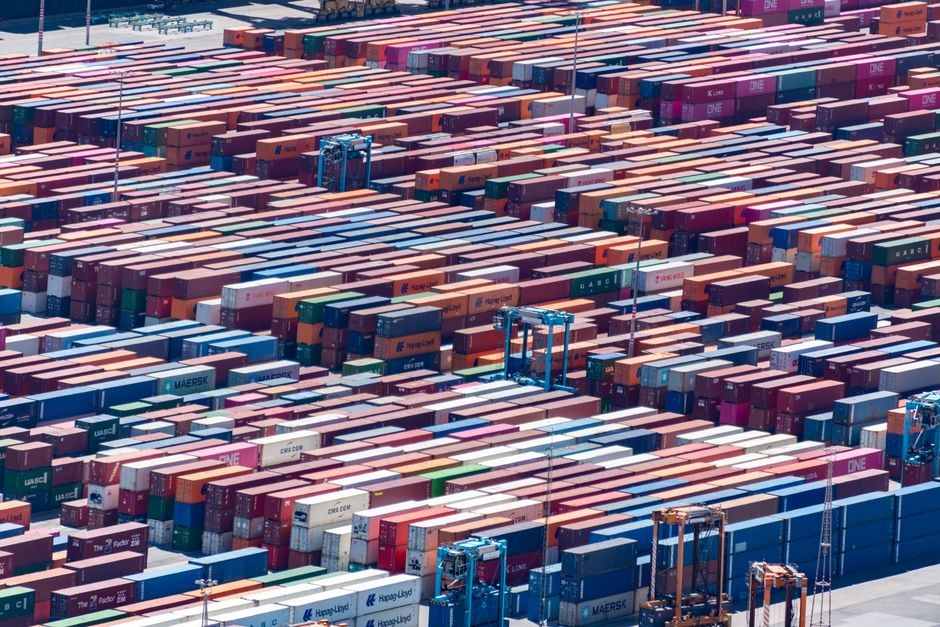
Bonded warehouses and Free Trade Zones (FTZs) have evolved from tax-deferral mechanisms into mission-critical nodes for regional demand shaping. In Singapore, the Jurong Port FTZ now hosts over 142 bonded distribution centers serving as neutral staging grounds for goods destined for India, Australia, and the Middle East—enabling shippers to defer GST, import duties, and even excise levies until final destination declaration. Critically, these facilities are no longer passive storage locations; they function as ‘regulatory buffers’ where value-added services like kitting, labeling, and partial assembly occur under customs supervision, transforming them into hybrid manufacturing-logistics assets. For example, a German industrial automation firm uses bonded warehousing in Malaysia’s Kulai FTZ to receive PCBAs from China, integrate locally sourced enclosures and power supplies, and ship fully configured control cabinets to Thai automotive OEMs—all without triggering Malaysian import duties on the Chinese components. This model reduces landed cost by 19.7% versus direct ocean freight from Shenzhen to Laem Chabang, while cutting order-to-delivery cycle time from 22 to 9 days.
The sophistication of FTZ utilization is accelerating rapidly. Indonesia’s newly launched Batam Integrated Logistics Hub offers not only duty deferral but also streamlined e-permitting for hazardous materials handling—a capability absent in most regional alternatives—while India’s SEZ policy now permits 100% foreign ownership of bonded warehousing operations alongside full repatriation of profits, attracting $2.1 billion in foreign warehousing investment in FY2024–25 alone. Yet complexity remains high: Singapore’s FTZ regulations require strict segregation of goods by origin and end-use classification, whereas Thailand’s Board of Investment (BOI) grants duty exemptions only if bonded inventory turnover exceeds 8.3 turns annually. Misalignment here carries material consequences—companies failing to meet BOI inventory velocity thresholds forfeit tax holidays retroactively, triggering multimillion-dollar liability assessments. As such, leading practitioners deploy dynamic landed-cost modeling engines that simulate duty accrual across 17 variables—including FTZ storage duration, cross-border trucking tariffs, and currency hedging costs—before committing to any regional hub location.
“The bonded warehouse is now the central nervous system of Asia-Pacific fulfillment. It’s where trade finance, regulatory compliance, and customer experience converge—and where a single documentation error can cascade into $3M in avoidable penalties.” — Priya Mehta, Head of Global Trade Compliance, DHL Supply Chain Asia
- Singapore’s FTZs processed $184 billion in bonded trade volume in 2025—up 37% YoY—driven largely by electronics and pharmaceutical re-export activity
- Companies using FTZs for regional kitting report 52% faster response to demand spikes in adjacent markets compared to centralized DC models
- India’s SEZs now host 2,840 operational units, with electronics manufacturing contributing 44% of total SEZ exports—up from 19% in 2020
Regional Inventory Positioning: From Stockpiling to Systemic Flow Optimization
Regional inventory positioning has shifted from static safety-stock allocation to dynamic flow orchestration—where inventory is treated not as idle capital but as mobile liquidity calibrated to real-time demand signals, port congestion indices, and regulatory risk scores. Consider the case of a U.S.-based EV battery module producer: instead of holding 90 days of cathode active material inventory in Shanghai, it now maintains three synchronized buffer stocks—raw lithium hydroxide in bonded storage at Ningbo Port, pre-coated NMC622 cathode powder in Malaysia’s Pasir Gudang FTZ, and finished modules in a bonded facility near Pune, India. Each node feeds into a predictive replenishment algorithm that ingests data from 32 sources: shipping line ETAs, Indian GST portal filing patterns, Vietnamese customs clearance throughput rates, and even monsoon forecasts affecting inland waterway transit on the Mekong. When Thai customs announced enhanced scrutiny of EV battery imports in April 2025, the algorithm automatically rerouted 68% of planned shipments through Malaysia’s FTZ for final configuration and re-export—avoiding an average 14.2-day delay and preserving $1.3 million in working capital.
This level of responsiveness demands unprecedented data interoperability. Legacy WMS platforms cannot reconcile disparate unit-of-measure conventions (e.g., kilograms vs. metric tons vs. battery cell count), nor do they natively support multi-jurisdictional lot traceability required under ASEAN’s Harmonized Traceability Framework. Consequently, forward-thinking shippers are adopting cloud-native inventory orchestration platforms that unify ERP, TMS, and customs management systems via API-first architecture. These platforms enable granular scenario planning: one electronics conglomerate modeled 217 inventory routing permutations across eight countries and found that optimizing for regulatory certainty rather than lowest freight cost delivered 22.4% higher EBITDA margin over 18 months. They discovered that routing memory chips through Vietnam’s Tan Cang–Cat Lai FTZ—even at 13% higher transport cost—reduced duty leakage risk by 91% versus direct shipment to Indonesia, where inconsistent HS code application by local brokers had triggered $8.7 million in retrospective assessments in 2024.
“Inventory isn’t sitting in warehouses waiting for orders anymore—it’s flowing through regulatory gateways, undergoing value addition, and responding to tariff arbitrage windows. Your stock ledger is now your most sensitive strategic document.” — Kenji Tanaka, Chief Logistics Officer, Sony Semiconductor Solutions
Cross-Border Trucking: The Unheralded Backbone of Asian Supply Chain Fluidity
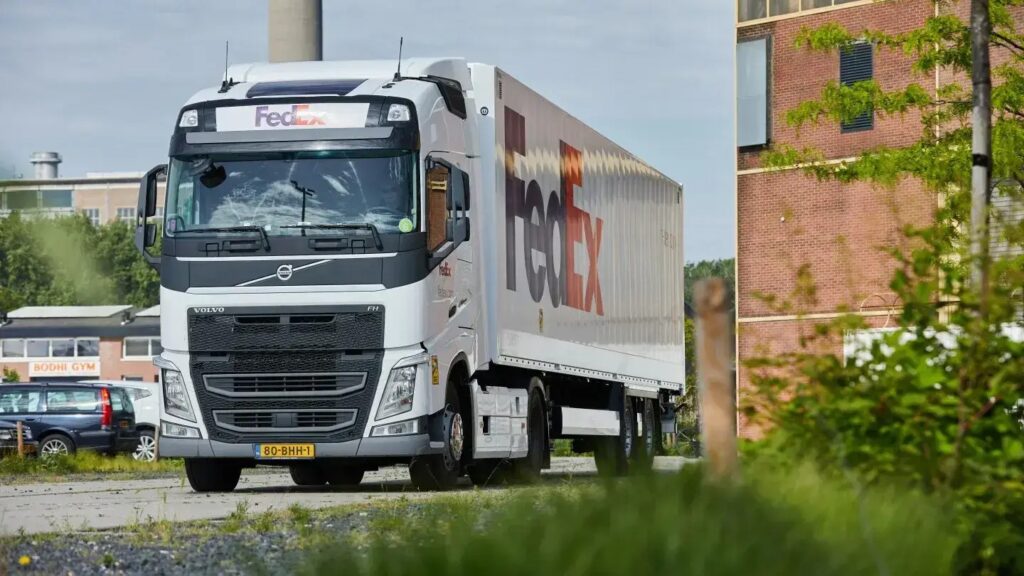
Cross-border trucking across mainland Asia has emerged as the most operationally reliable—and commercially underappreciated—mode for mid-mile movement between production clusters. While ocean freight handles bulk commodity flows and air cargo serves urgent component replenishment, dedicated trucking corridors like the Kunming–Hanoi–Ho Chi Minh City route, the Bangkok–Chiang Rai–Jinghong corridor, and the Kolkata–Agartala–Dhaka highway network now move over 4.8 million TEUs annually—a figure projected to reach 7.2 million by end-2026. Unlike maritime lanes vulnerable to Suez Canal disruptions or air freight susceptible to geopolitical airspace closures, these land routes offer contractual transit time guarantees (CTTGs): carriers like Kerry Logistics and Nippon Express now offer 98.3% on-schedule performance on the Guangzhou–Bangkok lane, backed by SLA penalties averaging 17% of freight charge per day of delay. This reliability stems from coordinated customs pre-clearance initiatives—Vietnam’s National Single Window now shares real-time cargo manifests with Chinese and Cambodian counterparts, reducing border wait times from 11.4 hours to 2.7 hours on average.
What makes cross-border trucking transformative is its role in enabling just-in-sequence (JIS) delivery for tiered manufacturing ecosystems. An automotive Tier-1 supplier in Chonburi, Thailand, receives brake calipers from a plant in Guangxi, China, every 48 hours via dedicated trucking—delivering precisely 142 units per trailer, sequenced to match assembly line takt time. This eliminates $2.4 million annually in buffer inventory costs and reduces line-stop incidents by 63%. Moreover, trucking supports regulatory agility: when India imposed new RoHS-compliant packaging requirements for electronics imports in Q2 2025, companies using bonded trucking from Malaysia could implement compliant labeling en route, avoiding costly port-side repackaging delays. However, success requires deep localization—drivers must carry bilingual customs documentation, vehicles require ASEAN-recognized safety certifications, and carriers must maintain real-time visibility into road tolling regimes that vary by province. Firms neglecting these nuances face cascading penalties: one European machinery exporter incurred $412,000 in fines in 2024 for using unregistered trucks on the Laos–Thailand corridor, where provincial authorities levy surcharges not reflected in national tariff schedules.
- The Kunming–Hanoi–Ho Chi Minh City trucking corridor handled 1.2 million tons of electronics components in 2025—up 42% YoY—and achieved 99.1% customs clearance rate on first submission
- Companies using cross-border trucking for JIS deliveries report 31% lower total logistics cost versus air-ocean hybrid models, despite 28% higher base freight rates
- ASEAN’s Targeted Transit Regime now covers 87% of intra-regional trucking lanes, enabling electronic cargo tracking across 11 jurisdictions with single-point data entry
Trade Compliance as a Core Competency, Not a Cost Center
Trade compliance has undergone a paradigm shift—from a back-office function focused on tariff classification to a frontline strategic competency embedded in product design, procurement, and logistics planning. As production fragments across jurisdictions with divergent rules of origin (ROO), preferential trade agreements (PTAs), and evolving digital customs mandates, misclassification is no longer a clerical error but a systemic vulnerability. Consider the semiconductor industry: a logic chip fabricated in Taiwan, tested in Malaysia, and assembled in Vietnam may qualify for ASEAN-Japan FTA duty-free treatment only if the regional value content (RVC) exceeds 40%—but RVC calculation methodologies differ across agreements, and Malaysia’s customs authority applies a ‘substantial transformation’ test that excludes testing labor from value-add calculations. A single misclassified shipment triggered $2.8 million in retroactive duties for a U.S. fabless chip designer in early 2025. Such incidents have driven companies to institutionalize compliance engineering—embedding trade specialists directly into new-product introduction (NPI) teams to evaluate ROO implications before finalizing BOM structures or selecting contract manufacturers.
This institutionalization extends to technology adoption. Leading firms deploy AI-driven classification engines trained on 12.4 million historical customs rulings across ASEAN, India, and China, capable of predicting HS code assignment with 94.7% accuracy—and flagging jurisdiction-specific documentation gaps before shipment. One Japanese electronics manufacturer reduced customs hold rates from 18.3% to 2.1% within nine months by integrating this engine with its PLM system, ensuring that every component drawing includes mandatory origin declarations and chemical composition data required under Vietnam’s Decree 39/2024/ND-CP. Simultaneously, governments are raising the bar: Singapore’s Customs Authority now mandates electronic submission of origin certificates for all shipments valued above SGD 5,000, while India’s ICEGATE platform requires blockchain-verified invoices for electronics imports exceeding ₹2 crore. Noncompliance triggers automatic escalation to priority inspection queues—adding 11.8 days to clearance timelines on average. As such, forward-looking shippers treat compliance not as a checkpoint but as a continuous feedback loop, feeding real-time customs intelligence back into supplier selection criteria and factory layout decisions.
Source: dimerco.com
This article was AI-assisted and reviewed by our editorial team.