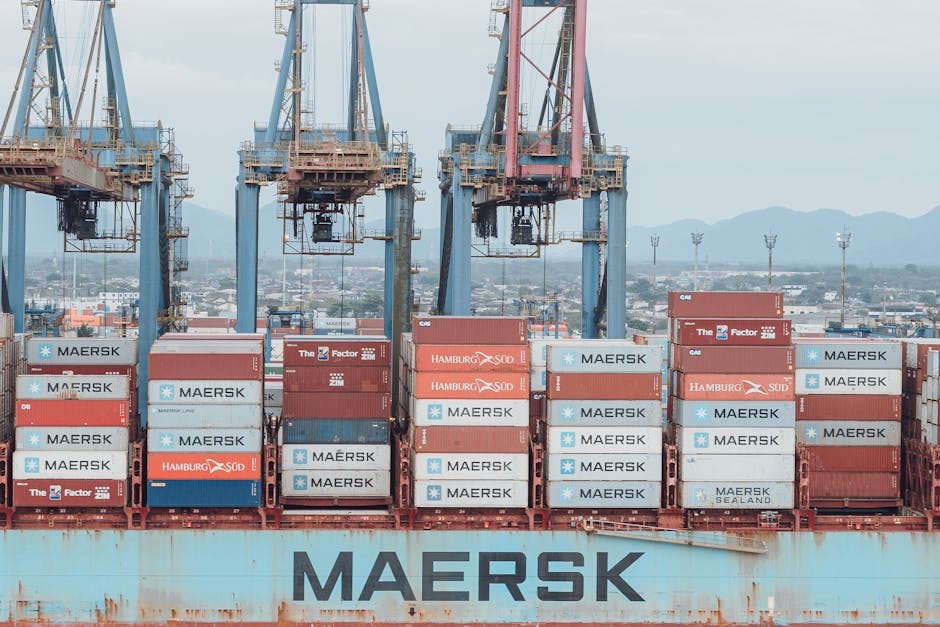
Competitive Pressure Mounts as Vizhinjam Surpasses Vallarpadam in Transhipment Volumes
DP World-operated Vallarpadam container terminal at India’s Cochin port — developed as the country’s first dedicated transhipment hub — seems to be facing formidable competitive challenges from new entrant Vizhinjam, a deepwater terminal managed by Adani Ports.
Transhipment volumes through Vallarpadam in fiscal year 2025-26 almost halved, year on year, according to official port data, to 85,911 teu, from 169,562 teu.
As a result, overall throughput fell to 767,948 teu, from 834,665 teu, data shows.
Gateway Cargo Shows Resilience Amid Transhipment Decline
However, one silver lining for the terminal was a marginal volume gain in gateway cargo handling. DP World Cochin CEO Dipin Kayyath told The Loadstar: “Export/import cargo volumes grew close to 6% in fiscal year 2026, reflecting the resilience of the region’s trade ecosystem and the strength of our operational capabilities.
“While ad-hoc transhipment remains opportunistic amid geopolitical trade shifts, our consistent performance reflects a deep commitment to long-term growth and operational excellence,” he added.
Challenges from High Tariffs and Rising Competition
Vallarpadam had already been struggling to reach volume targets due to sagging direct mainline call fortunes, a problem arguably in large part tied to high port tariffs, compared with Sri Lanka’s Colombo and other hubs in the region.
The latest transhipment volume downturn comes as DP World was looking to woo more liner customers on the strength of productivity enhancements following recent infrastructure upgrades, including new advanced cranes and yard capacity expansions.
“DP World has also invested to build a port-led ecosystem; by developing a free-trade warehousing zone, India’s only such facility co-located within a major port, which continues to serve as a vital enabler of trade and regional economic growth,” Mr Kayyath said.
DP World Cochin recently also achieved a productivity milestone, with container moves on the MSC Ilaria, an ad-hoc call last month, hitting some 8,000 teu.
Vizhinjam Surpasses Capacity, Advances Phase Two
Meanwhile, nearby rival Vizhinjam has not only been able to increase vessel calls at a brisk pace, but ended fiscal 2025-26 with volumes surpassing its designed phase one 1m teu capacity: handling 1.3m teu, from some 600 vessel calls, data shows.
The terminal opened to commercial operations in December 2024 and built up enough volumes to break even in the first year, a rare feat in the industry.
Against the backdrop of that unexpected capacity saturation, the authorities advanced implementation of phase two development at Vizhinjam. Now targeted for completion in 2028, the $1bn expansion is expected to boost capacity to 4m teu annually.
With more port capacity is set to come onstream, including development at Vadhavan near Mumbai, the battle for market share among Indian terminals is likely to heat up, sources believe.
Source: The Loadstar
Compiled from international media by the SCI.AI editorial team.