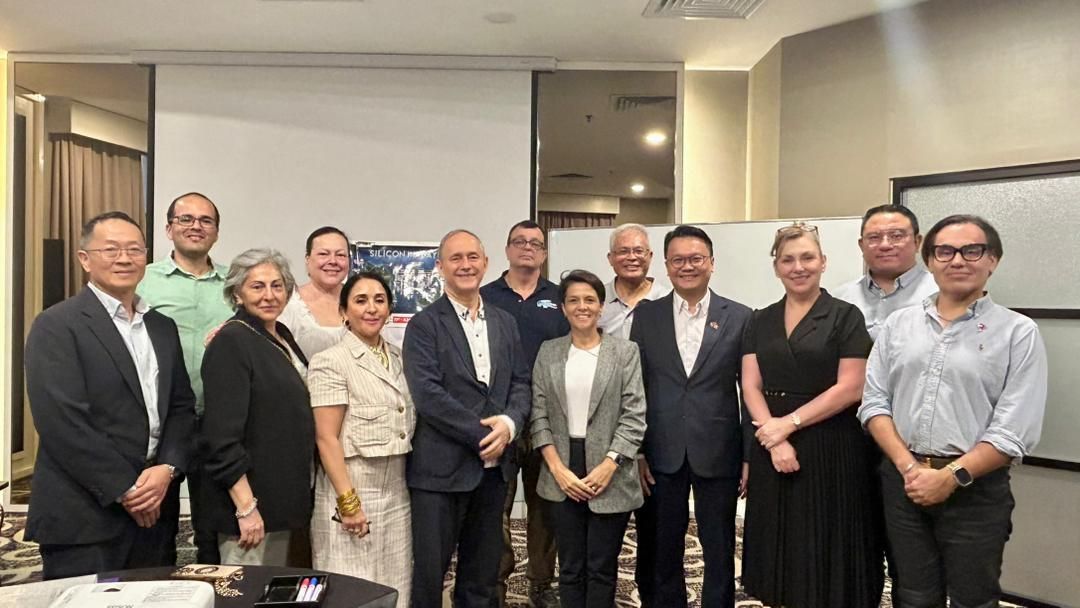
According to www.thestar.com.my, Penang is actively pursuing deeper semiconductor and electronics collaboration with Latin America as global supply chains undergo rapid restructuring driven by geopolitical and economic uncertainties.
A Dual-Hub Strategy for Resilience
Penang Port Commission chairman Datuk Yeoh Soon Hin announced the initiative at the Latin America–Malaysia Semiconductor and Electronics Industry Opportunities Forum in Penang. He proposed a “dual-hub” supply chain model, pairing Penang’s manufacturing strengths with Latin America’s growing regional capabilities to enhance resilience and competitiveness.
“Amid geopolitical and economic uncertainties, companies are increasingly investing in Malaysia due to its relative stability.” — Datuk Yeoh Soon Hin, Chairman, Penang Port Commission
Yeoh underscored Malaysia’s entrenched position in outsourced semiconductor assembly and test (OSAT), holding about 13% of the global market in packaging, assembly and testing. This leadership is supported by Penang’s strategic location, robust logistics infrastructure—including DHL Express’s multiple facilities and direct cargo flights to Hong Kong since 2021—and consistent government policy support.
Latin America’s Evolving Role
The forum convened industry representatives from the United States, Mexico, Costa Rica, Brazil, and Colombia, alongside the Malaysia Semiconductor Industry Association and international business groups. Yeoh noted that Latin America is shifting from a passive observer to an active participant in the semiconductor value chain—particularly in OSAT and automotive electronics—fueled by US-led “nearshoring” and “friendshoring” strategies.
- Mexico: Emerging as a major nearshoring hub
- Costa Rica: Strengths in chip design and testing
- Brazil: Offers a large domestic consumer market
- Chile and Bolivia: Rich in critical minerals essential for semiconductor manufacturing
Yeoh emphasized complementarity: Penang excels in high-volume manufacturing and OSAT, while Latin America provides proximity to North American and regional end markets—reducing lead times and transportation risk.
Practical Challenges and Cross-Regional Coordination
Malaysia Semiconductor Industry Association president Datuk Seri Wong Siew Hai identified key operational hurdles shared across both regions: logistics costs, fragmented policy coordination, and talent shortages. He called for stronger government-to-government cooperation, trade facilitation mechanisms, and joint talent development programs to sustain long-term growth.
Mexican Ambassador to Malaysia Luis Javier Campuzano Pina reaffirmed Mexico’s commitment to deepening bilateral ties with Malaysia—not only in semiconductors and electronics but also aerospace, automotive, and agriculture—with special focus on regional partners like Penang.
For supply chain professionals, this alignment signals a tangible pathway toward geographic diversification beyond traditional Asia–US or Asia–EU corridors. With Penang already hosting multinationals including Jabil, Bosch, Western Digital, and Lam Research, and Latin America accelerating investment in semiconductor-adjacent infrastructure, cross-regional partnerships could ease pressure on single-source dependencies—especially amid persistent port congestion, air freight volatility, and tightening export controls on advanced chips. The dual-hub model does not replace existing nodes but adds redundancy: for example, using Penang for high-mix, low-volume OSAT and Mexico for automotive electronics final assembly serving US OEMs. Success will hinge on harmonizing customs procedures, aligning technical standards, and co-investing in workforce upskilling—particularly in test engineering, supply chain analytics, and green manufacturing practices.
Source: www.thestar.com.my
Compiled from international media by the SCI.AI editorial team.