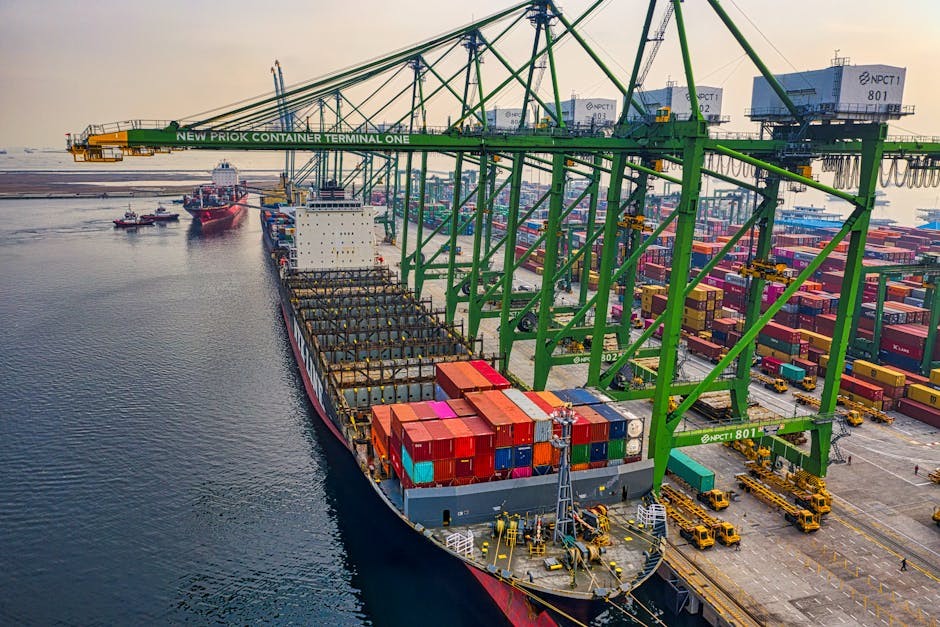
According to techcollectivesea.com, the Southeast Asian logistics market was valued at US$223.6 billion in 2025 and is projected to reach US$360 billion by 2034.
E-commerce fuels demand for digital logistics
The sustained expansion of e-commerce remains a primary driver. Platforms including Shopee, Lazada, and TikTok Shop are accelerating demand for rapid fulfilment, reliable last-mile delivery, and seamless cross-border coordination. This growth places continuous pressure on logistics networks — requiring businesses to manage higher volumes of smaller orders, process returns efficiently, and maintain speed across both rural and urban geographies. Manual coordination alone is no longer viable, making digital solutions for fleet management, warehouse automation, and route optimisation increasingly essential.

Supply chain reconfiguration shifts manufacturing to SEA
A second structural force is the global reconfiguration of supply chains. As companies move away from single-country sourcing, production footprints are expanding across Vietnam, Thailand, Indonesia, and Malaysia. These nations are emerging as key nodes in international manufacturing networks — increasing regional freight volume and complexity. Goods must now flow efficiently between ports, factories, warehouses, and export markets, often crossing multiple national borders. In response, logistics operators are adopting digital tracking systems, predictive planning tools, and integrated freight platforms to manage trade flows and enhance coordination across multimodal transport, customs documentation, and freight visibility.
Infrastructure investment meets digital coordination
Governments across Southeast Asia are advancing major infrastructure projects — including ports, roads, rail networks, and logistics parks — aimed at improving connectivity between industrial zones and metropolitan centres. However, physical upgrades alone cannot deliver full efficiency gains. As the source notes:
“For physical networks to operate at their best, digital coordination is necessary.”
Logistics technology platforms are thus becoming indispensable for capacity utilisation, demand forecasting, and data-driven decision-making.
Fragmentation creates opportunity for tech aggregation
The region’s logistics ecosystem remains highly fragmented, with thousands of small operators, freight forwarders, and transport providers operating with limited digital integration. While this fragmentation introduces operational inefficiencies, it also presents a significant opportunity: technology platforms that aggregate capacity, standardise processes, and increase transparency. Digital marketplaces and software platforms now connect shippers, carriers, and warehouses into unified networks — reducing idle capacity, optimising delivery timelines, and lowering cross-border operational costs.
AI transforms logistics into intelligence infrastructure
Artificial intelligence is reshaping logistics operations by enabling smarter planning and predictive optimisation. AI-driven systems analyse large-scale datasets — including shipment records, traffic conditions, warehouse inventories, and weather trends — to improve route planning, inventory management, and demand forecasting. As stated in the source:
“Modern logistics systems are evolving beyond simple transportation to become supply chain intelligence infrastructure.”
This shift allows businesses to respond faster to disruptions, reduce inefficiencies, and strengthen service reliability — capabilities that are rapidly becoming competitive differentiators.
These dynamics reflect deeper structural forces shaping Southeast Asia’s economy: maturing digital commerce, shifting manufacturing geography, and accelerating infrastructure development. Logistics technology platforms that enhance visibility, coordination, and predictive decision-making will therefore remain among the most strategically important segments of the region’s startup ecosystem over the next decade.
Source: techcollectivesea.com
Compiled from international media by the SCI.AI editorial team.