According to www.thescxchange.com, only 6% of organizations report full end-to-end supply chain visibility — yet 57% of supply chain professionals identify lack of visibility as their top operational challenge.
The Dashboard Paradox
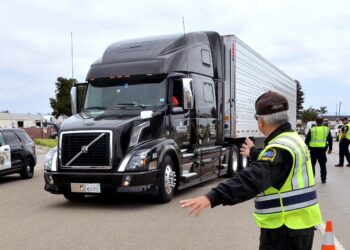
A distribution center yard manager watches a real-time dashboard glowing green with tracked trailers, containers, and assets — yet outside, drivers idle in cabs, dock doors remain closed, and high-priority shipments sit misrouted in the wrong staging area. This dissonance between digital representation and physical reality defines what Jason Blood, Chief Commercial Officer at Sphere Global, calls the “visibility illusion.” His perspective draws from direct collaboration with logistics and supply chain teams managing daily freight movement and order fulfillment across manufacturing, retail, and third-party logistics operations.
As Jason Blood explains:
“Basic location tracking is now ‘table stakes.’ The competitive edge in 2026 and beyond will come from what I call actionable visibility. This means systems that not only show status but also interpret it, predict consequences, recommend responses, and in some cases initiate the next best action automatically.” — Jason Blood, Chief Commercial Officer at Sphere Global
Fragmented Data, Fragmented Decisions
Industry surveys confirm systemic gaps: 6% of organizations achieve full end-to-end visibility, per research from GEODIS, while 57% cite visibility deficits as their top pain point. Investment has surged in electronic logging devices, GPS on tractors and trailers, RFID, barcode systems, and warehouse management platforms — yet these tools rarely talk to each other. A trailer visible to transportation planners may remain invisible to yard supervisors until physical arrival; a delay flagged on a carrier portal often fails to trigger automated workflows in the distribution center system.
This siloed architecture produces costly operational friction: detention and demurrage charges spike due to late arrival warnings arriving too late; labor schedules mismatch actual inbound volume because data latency prevents timely adjustment; inventory inaccuracies surface only during cycle counts or — worse — at customer order fulfillment. In yard operations, basic yard management software shows trailer presence but rarely reveals trailer condition, cargo priority, required labor/equipment, or optimal door sequencing — rendering visibility a static map without navigable routing logic.
Actionable Visibility Requires Three Capabilities
Moving beyond passive tracking demands three interdependent capabilities. First, data must flow across functional boundaries — integrating transportation, yard, warehouse, supplier, and customer systems via robust APIs and standardized formats. Many firms still rely on manual handoffs or batch file transfers, introducing latency and errors. Second, intelligence must be layered onto raw data: descriptive analytics (what happened), predictive analytics (what’s likely to happen), and prescriptive analytics (what to do). For example, a system should not just flag a trailer idle for four hours, but recommend a specific dock assignment based on real-time labor availability, door utilization, and shipment priority.
Third, insights must reach decision-makers in usable, timely formats — not just executive dashboards reviewed once daily, but mobile alerts, voice-directed workflows, or system-to-system triggers. Computer vision automates trailer identification and condition assessment; predictive models forecast arrivals by learning from historical patterns and live signals; satellite and aerial imagery update yard inventories far more frequently than manual counts. As Jason Blood notes, the question is no longer whether the technology exists — but whether organizations will redesign processes and decision rights to deploy it effectively.
For operations leaders seeking tangible ROI, Jason Blood recommends starting not with data sources, but with frontline decisions currently made via guesswork or phone calls — particularly dock assignment, labor allocation, and trailer movement sequencing in distribution centers and yards. Prioritizing these high-leverage decisions over broad technology rollouts yields faster, measurable improvements in service levels and cost control.
Source: thescxchange.com
Compiled from international media by the SCI.AI editorial team.