According to m.economictimes.com, India has manufactured its first export-import (EXIM) shipping container for A.P. Moller–Maersk — a milestone marking the country’s entry into global maritime manufacturing and advancing Prime Minister Narendra Modi’s ‘Make in India’ initiative.
₹10,000 Crore National Scheme Targets 10x Capacity Expansion
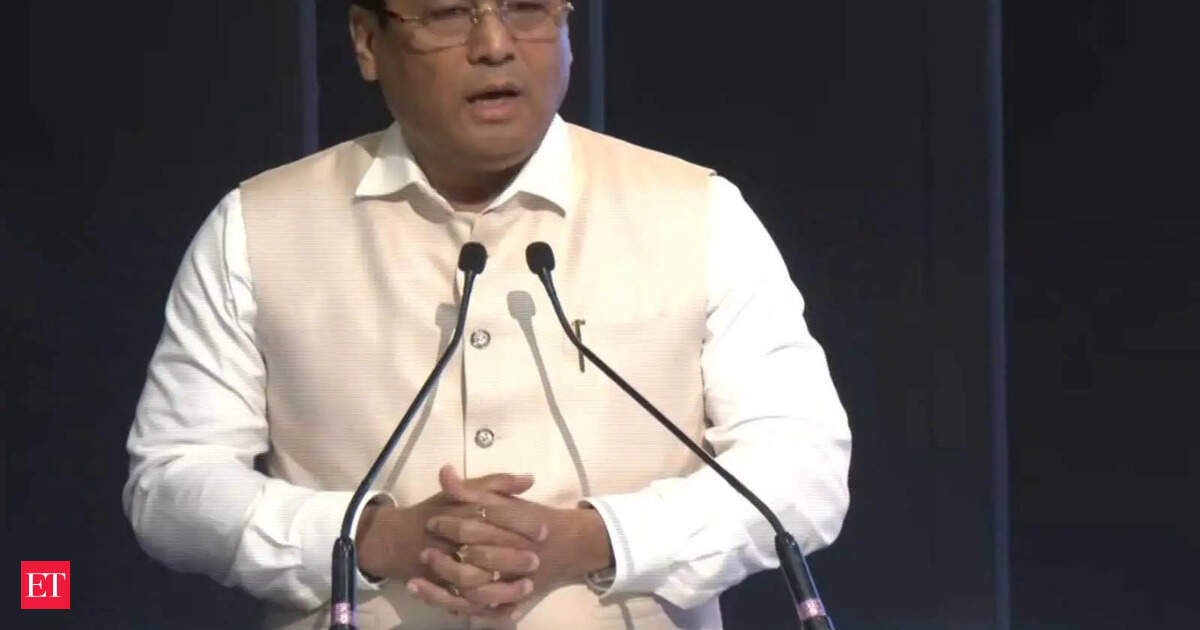
Union Minister for Ports, Shipping, and Waterways Sarbananda Sonowal announced Friday that the newly launched Container Manufacturing Promotion Scheme aims to increase domestic container production capacity by 10 times, from current levels to 7.5 lakh containers annually. The scheme, introduced in the Budget 2026, carries a total outlay of ₹10,000 crore and will provide capital assistance, operational incentives, and support for research, testing, and technology development.
The minister emphasized that the policy is designed to catalyze domestic manufacturing infrastructure and reduce import dependence. According to Sonowal, the initiative directly supports India’s broader ‘Atmanirbhar Bharat’ (Self-Reliant India) agenda and aligns with national goals for supply-chain resilience and industrial self-sufficiency.
First Made-in-India EXIM Container Unveiled for Maersk
The unveiling event in New Delhi marked the delivery of India’s inaugural export-import shipping container — produced domestically for global shipping leader Maersk. During the ceremony, Maersk placed an immediate follow-up order for 1,000 additional containers to be manufactured by DCM Shriram Group, one of India’s largest industrial conglomerates and a key implementation partner under the new scheme.
This initial order validates international confidence in Indian manufacturing quality and scalability. As noted in the report, the container was built to International Organization for Standardization (ISO) specifications and underwent full certification for global trade use — a prerequisite for integration into Maersk’s fleet and logistics network.
Economic and Strategic Implications
Sonowal stated that the scheme will generate significant employment and foster technology transfer from global industry leaders. He added:
“The objective is to make India self-reliant in container manufacturing and to establish our country as a global export hub for high-quality containers.”
The minister also highlighted that domestic production will cut lead times for container procurement, reduce freight cost volatility, and strengthen port-to-hinterland connectivity — particularly for India’s growing export-oriented sectors including textiles, pharmaceuticals, and engineering goods. Industry analysts estimate that achieving 7.5 lakh annual units would position India among the top five global container producers within seven years.
Implementation Timeline and Stakeholder Roles
The scheme targets phased rollout beginning July 2026, with disbursement of initial capital grants scheduled for Q3 FY2026–27. Eligible manufacturers must meet minimum investment thresholds — ₹500 crore for greenfield facilities and ₹200 crore for brownfield expansions — and commit to exporting at least 30% of output within five years.
Key implementing agencies include the Ministry of Ports, Shipping and Waterways; the Department for Promotion of Industry and Internal Trade (DPIIT); and the Ministry of Commerce and Industry. Technical standards and certification oversight will be managed jointly by the Bureau of Indian Standards (BIS) and the International Maritime Organization (IMO)-accredited testing laboratories in Chennai and Mumbai.
According to the report, the first phase of the scheme will prioritize coastal states with existing port infrastructure — notably Gujarat, Maharashtra, Tamil Nadu, and Andhra Pradesh — where land availability, power reliability, and rail-port interconnectivity are rated highest by the government’s logistics readiness index.
Source: m.economictimes.com
Compiled from international media by the SCI.AI editorial team.