Skip to content

Coverage desk

Manufacturing

447 published stories

Van Freight Rejection Rate Hits 14% Amid Capacity Fragility
Manufacturing

Van Freight Rejection Rate Hits 14% Amid Capacity Fragility

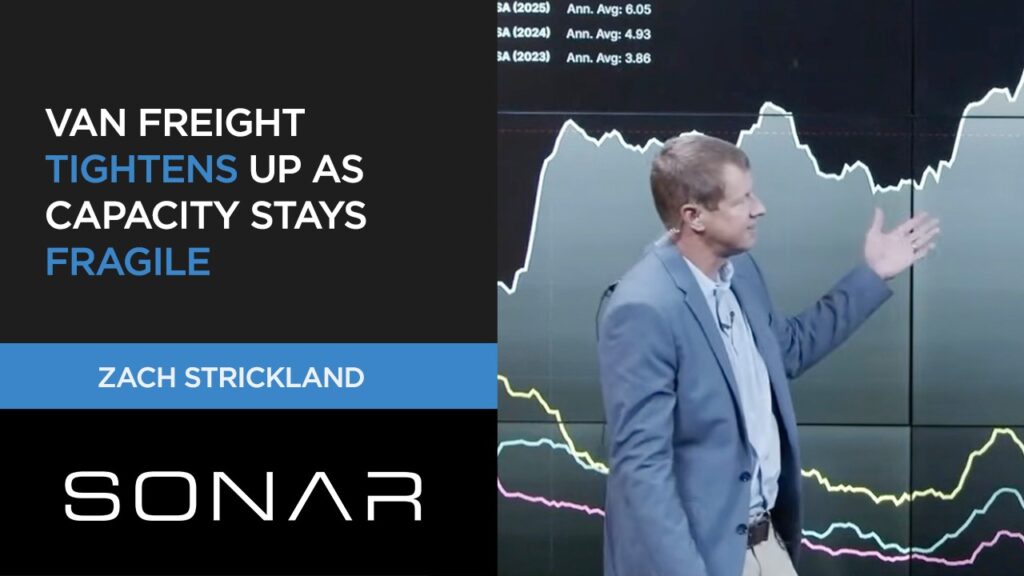
The national Tender Rejection Index reached 14%, with van freight — representing 60%–70% of U.S. freight volume — driving sustained upward pressure. According to FreightWaves’ Zach Strickland, capacity fragility—not demand growth—is the root cause, as tender volumes remain below April levels. Refrigerated rejections sit at 20%, flatbed at 19%, and van rejections are most consequential due to volume share. The Midwest corridor, especially Joliet and Columbus, is the geographic epicenter. Spot rates are rising nationally, with only Atlanta and Greenville showing softness. Diesel cost pass-through is occurring only because capacity constraints enable it.

Hapag-Lloyd cuts QFP capacity up to 40% amid Asia disruption
Manufacturing

Hapag-Lloyd cuts QFP capacity up to 40% amid Asia disruption

Hapag-Lloyd has cut Quality Freight Product (QFP) capacity allocations by up to 40%, according to a forwarder speaking to theloadstar.com on 24 September 2026. Launched in 2021, QFP binds customers and carrier to volume and space commitments, with penalties for non-compliance. The forwarder estimates 93% of Hapag-Lloyd’s eastbound transpacific volume is locked in QFP, limiting spot-market flexibility. Cuts — applied across the board after Labour Day 2026 — stem from operational disruption in China and the Panama Canal. A QFP reconciliation is pending, and Hapag-Lloyd has acknowledged it may need to reconsider the product’s design.

Container Ship Orderbook Surges to 45% of Fleet
Manufacturing

Container Ship Orderbook Surges to 45% of Fleet

The global containership orderbook has surged to 45% of the existing fleet — its highest level since 2009 — with 1,925 vessels (15.6 million teu) on order, more than double the 7.6 million teu post-pandemic peak. Five carriers, including Hai An Transport (368%) and Regional Container Lines (157%), now have orderbooks exceeding their current fleets. Maersk, MSC, CMA CGM, and COSCO collectively hold orderbooks ranging from 35% to 52% of their fleets, prompting Sea-Intelligence to warn of an impending 'commercial battle' as new ships arrive. A concurrent return of Asia–Europe sailings via Suez threatens to further flood the market with released capacity.

Boston Dynamics to Train Atlas Robots in Hyundai EV Factory
Manufacturing

Boston Dynamics to Train Atlas Robots in Hyundai EV Factory

Boston Dynamics will train its Atlas humanoid robots at Hyundai Motor Group’s 2,900-acre electric vehicle factory near Savannah, Georgia. Hyundai plans to deploy 25,000 Atlas units across its global Hyundai and Kia plants and produce 30,000 robots annually in the U.S. The initiative follows Hyundai’s 2020 acquisition of an 80% stake in Boston Dynamics for $880 million. Training begins with logistics and parts sequencing, expanding to component assembly by 2030.

Record-Low Rhine Levels Choke Barge Traffic, Stress Ground Transport
Manufacturing

Record-Low Rhine Levels Choke Barge Traffic, Stress Ground Transport

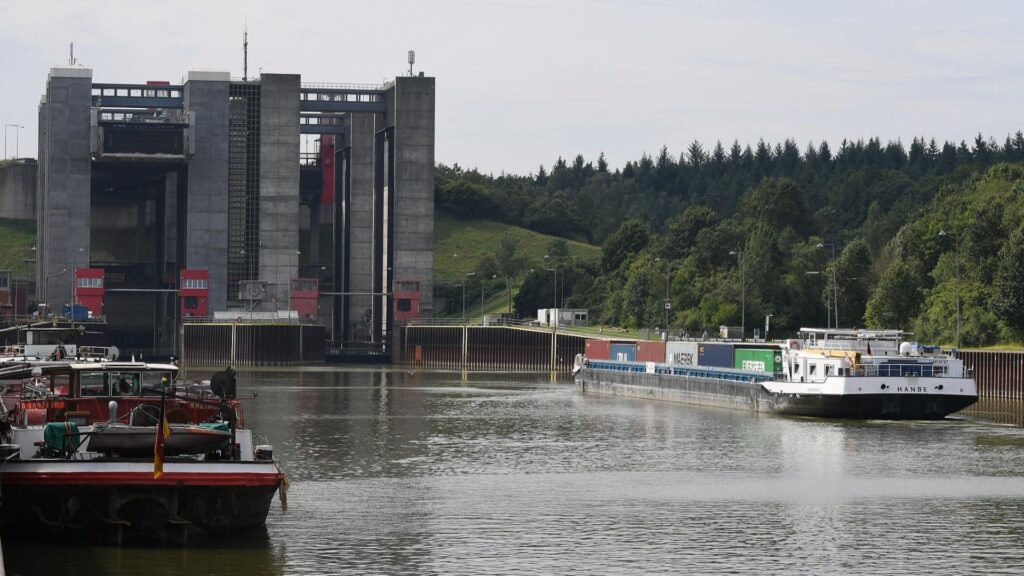
Record-low Rhine River water levels — falling to 32 cm at Kaub on September 15, 2026, the lowest since 1920 — are crippling barge traffic. Navigation restrictions took effect on September 10, 2026, forcing up to 40% load reductions and diverting 1.7 million tons of freight to roads and rails. Chemical and energy sectors report steep shipment declines: BASF cut ammonia barge deliveries by 12%, while coal deliveries dropped 31%. Rhine freight volumes fell 37% YoY in mid-September, with levels expected to stay below 50 cm through October 2026.

Diesel Supply Drops 8% as Trucking Faces Cost, Capacity Squeeze
Manufacturing

Diesel Supply Drops 8% as Trucking Faces Cost, Capacity Squeeze

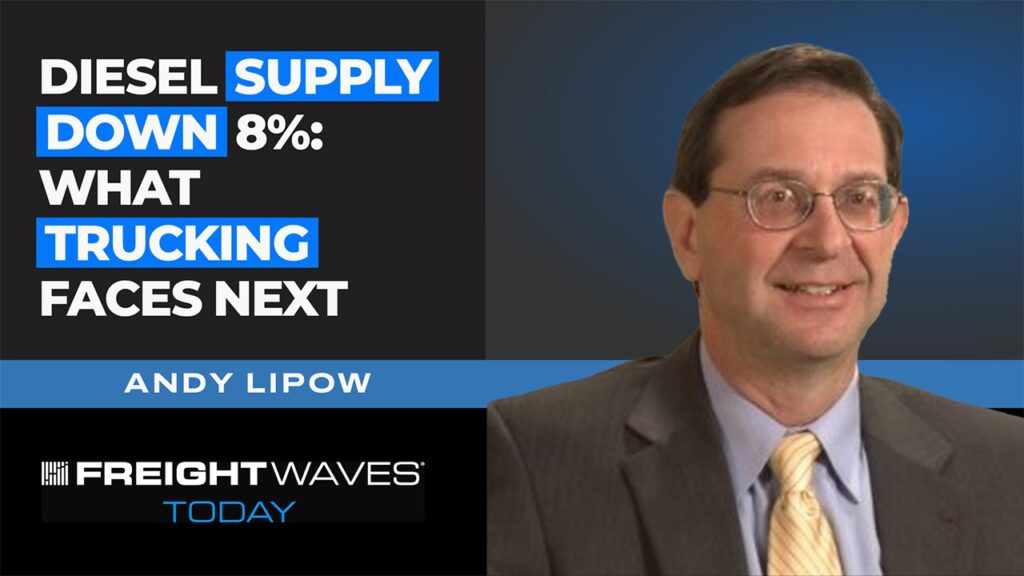
Diesel supply has dropped by 8% year-over-year, pushing U.S. trucking carriers to cut weekly mileage by an average of 145 miles per tractor and delay equipment upgrades. Diesel inventories fell to 23.7 million barrels in mid-September 2026—the lowest since May—while prices rose to $4.28 per gallon, up 19% annually. California refineries produced only 9% of national diesel in early 2026 versus 18% in 2025. The Western Gateway pipeline is scheduled for completion in Q3 2027. SONAR projects diesel supply will stay below the five-year average through December 2026.

Apple’s iPhone Duo assembly yield at 60%, October 23 launch at risk
Manufacturing

Apple’s iPhone Duo assembly yield at 60%, October 23 launch at risk

Apple’s first foldable iPhone, the iPhone Duo, faces a critical production hurdle with final assembly yields stuck at just 60% one month before its October 23 launch. Foxconn’s yield remains below threshold, prompting Apple to consider relaxing quality standards. Global inventory targets are set at 6–8 million units — sharply below typical Pro models’ 20–30 million. Counterpoint forecasts 6 million units shipped in 2026, capturing 25% of the global foldable market. Key components from Samsung Display and Chinese suppliers like Lens Technology and Lingyi iTech continue to face yield and timing challenges.

Transpacific Rates Near Covid Peaks as Carriers Add Capacity
Manufacturing

Transpacific Rates Near Covid Peaks as Carriers Add Capacity

Container shipping spot rates from the Far East to the US west and east coasts have surged by 324% and 325% since 28 February, reaching $7,960 and $11,259 per FEU on 17 September — just 17.9% and 11.2% below their 2022 pandemic peaks. Carriers have raised offered capacity by 6–7% month-on-month, while vessel utilisation now sits at 85–90% in 2026, eight points above pre-pandemic norms. Fleet orderbooks stand at 35% (Maersk), 39% (MSC, CMA CGM), and 52% (COSCO) of current fleets, signaling potential pressure on future rates.

SEMICON India 2026 Inks 25 Partnerships Across Chip Supply Chain
Manufacturing

SEMICON India 2026 Inks 25 Partnerships Across Chip Supply Chain

SEMICON India 2026’s second day featured 25 cross-sector partnerships, including Tata Electronics’ collaborations with INOX Air Products and Sumitomo Chemical to localise high-purity gases and wet chemicals. L&T Semiconductor Technologies announced four product-development alliances focused on silicon carbide modules and smart-meter IoT solutions. A government-backed pilot for indigenous silicon carbide power modules will launch at POWERGRID’s 1,000 MW Pusauli project in Bihar. The India Deep Tech Alliance disclosed $263 million invested across 56 deep-tech firms, while the India Semiconductor Academy—backed by Cadence, Micron, Synopsys, and IIT Kanpur—was unveiled as an industry-led skilling platform.

U.S. Factory Output Falls 0.3% in August, First Drop This Year
Manufacturing

U.S. Factory Output Falls 0.3% in August, First Drop This Year

U.S. factory output fell 0.3% in August — its first decline this year — according to Federal Reserve data released September 18, 2026. Business equipment output dropped 0.5%, auto production fell 1.2%, and factory capacity utilization slid to a five-month low of 75.7%. Total industrial production was unchanged, with utility output rising 1.8% and mining edging up. The cooling reflects higher input costs and supply-chain disruptions tied to wars in the Middle East and Ukraine. Though August marked a pause, business equipment and defense/space output remain above year-ago levels.

Coca-Cola pledges $10B for US manufacturing by 2030
Manufacturing

Coca-Cola pledges $10B for US manufacturing by 2030

Coca-Cola and its bottling partners will invest $10 billion in U.S. infrastructure by 2030, expanding facilities in California, Colorado, Indiana, Alabama, Michigan, Florida, Minnesota, and New York. An independent study found the company contributes $85 billion to U.S. GDP and $10 million per hour in economic activity. It spends $37 billion with U.S. suppliers and supports 1 million jobs. The announcement coincides with a 2026 restructuring that included layoffs and increased focus on AI and emerging brands.

J.B. Hunt boosts driver spending by $25M amid tight freight capacity
Manufacturing

J.B. Hunt boosts driver spending by $25M amid tight freight capacity

J.B. Hunt Transport Services Inc. is committing an additional $25 million to driver-related spending in Q3 2026 amid tightening freight capacity. CFO Brad Delco announced the move on September 15, citing intense driver shortages and rising operational costs—including a $10 million fuel expense increase. The investment supports recruiting, onboarding, training, and sign-on bonuses, reflecting J.B. Hunt’s strategy to gain market share. Profits may dip below Q2 levels, though executives see rising costs as an opportunity to raise rates. The company ranks No. 4 on the 2026 FleetOwner 500 list.

Welcome Back!

Login to your account below

Create New Account!

Fill the forms below to register

Retrieve your password

Please enter your username or email address to reset your password.

Add New Playlist