Skip to content

Manufacturing · Warehousing & Transport

Analysis

Diesel Supply Drops 8% as Trucking Faces Cost, Capacity Squeeze

Diesel supply has dropped by 8% year-over-year, pushing U.S. trucking carriers to cut weekly mileage by an average of 145 miles per tractor and delay equipment upgrades. Diesel inventories fell to 23.7 million barrels in mid-September 2026—the lowest since May—while prices rose to $4.28 per gallon, up 19% annually. California refineries produced only 9% of national diesel in early 2026 versus 18% in 2025. The Western Gateway pipeline is scheduled for completion in Q3 2027. SONAR projects diesel supply will stay below the five-year average through December 2026.

Original source: Source information pending

Diesel Supply Drops 8% as Trucking Faces Cost, Capacity Squeeze

Diesel supply has declined by 8% compared to the prior year, triggering immediate operational and financial pressures across the U.S. trucking industry.

The reduction reflects tightening refinery output and shifting regional distribution patterns, with Western Gateway pipeline infrastructure still under development and California refining capacity remaining constrained. ’ SONAR data, diesel inventories fell to 23.7 million barrels in the week ending September 13, 2026 — the lowest level since early May 2026.

This supply contraction coincides with rising demand: freight volumes on the spot market increased 12% year-over-year in August 2026, while average diesel prices climbed to $4.28 , up 19% from the same period last year.

Impact on Carrier Operations

Trucking carriers are responding with measurable adjustments. A survey of 142 for-hire fleets conducted by SONAR in mid-September 2026 found that 67% reduced weekly mileage by an average of 145 miles, citing fuel availability and cost as primary constraints.

Additionally, 31% of respondents reported deferring scheduled maintenance due to budget reallocation toward fuel purchases, and 22% delayed planned equipment upgrades — including electrification pilots — until at least Q1 2027.

Will O’Donnell, senior analyst at FreightWaves, stated:

“The 8% diesel supply decline is not just a headline number — it’s compressing fleet utilization, raising per-mile costs by 11% on average, and forcing carriers to renegotiate contracts with shippers before Q4 2026.” — Will O’Donnell, Senior Analyst, FreightWaves

Regional Refining and Infrastructure Gaps

California refineries accounted for 18% of total U.S. diesel production in 2025 but contributed only 9% in the first eight months of 2026, Information Administration (EIA) data cited in the report. The Western Gateway pipeline project — intended to deliver refined products from Gulf Coast facilities to West Coast markets — remains scheduled for completion in Q3 2027.

Meanwhile, the U.S. East Coast experienced a 4.2% drop in terminal throughput for distillate fuels during July 2026, driven by unplanned outages at three major marine terminals in New Jersey and Virginia.

SONAR’s latest State of Freight Insights report, released on September 20, 2026, projects that diesel supply will remain below the five-year average through at least December 2026, with no meaningful recovery expected before Q2 2027.

Source: FreightWaves

Compiled from international media by the SCI.AI editorial team.

Ask SCI.AI Finished reading? Continue with SCI.AI. Explore the related policy, route, company and historical context. Continue asking
16 Trucking Companies File for Bankruptcy in Under a Month
Warehousing & Transport

16 Trucking Companies File for Bankruptcy in Under a Month

Sixteen U.S. trucking companies filed for Chapter 11 bankruptcy between August 15 and September 10, 2026 — the highest monthly concentration since 2019. Filings spanned 11 states, with Texas accounting for five cases. Median fleet size was 49 trucks; revenues ranged from under $25 million to over $85 million. Dry van carriers comprised 11 of the 16 firms. Spot rates fell 23% YoY while diesel prices rose 17.4%, intensifying margin pressure.

Record-Low Rhine Levels Choke Barge Traffic, Stress Ground Transport
Disruptions

Record-Low Rhine Levels Choke Barge Traffic, Stress Ground Transport

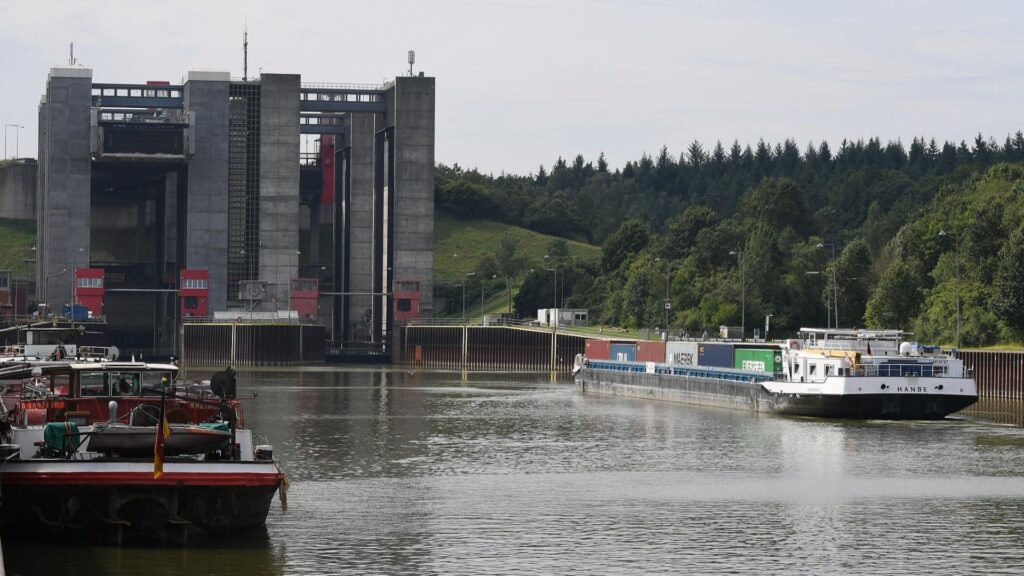
Record-low Rhine River water levels — falling to 32 cm at Kaub on September 15, 2026, the lowest since 1920 — are crippling barge traffic. Navigation restrictions took effect on September 10, 2026, forcing up to 40% load reductions and diverting 1.7 million tons of freight to roads and rails. Chemical and energy sectors report steep shipment declines: BASF cut ammonia barge deliveries by 12%, while coal deliveries dropped 31%. Rhine freight volumes fell 37% YoY in mid-September, with levels expected to stay below 50 cm through October 2026.

Wegmans invests $110M in supply chain expansion
Warehousing & Transport

Wegmans invests $110M in supply chain expansion

Wegmans Food Markets is investing $110 million in its supply chain to expand capacity and consolidate operations in upstate New York. The initiative reduces reliance on third-party providers and supports stores across New York, Pennsylvania, and Ohio. Scheduled for phased completion starting in 2026, the project forms part of a $500 million infrastructure modernization plan spanning 2025–2027. The new facility targets improved inventory accuracy, shorter replenishment cycles, and greater responsiveness to regional demand shifts.

Welcome Back!

Login to your account below

Create New Account!

Fill the forms below to register

Retrieve your password

Please enter your username or email address to reset your password.

Scan to share via WeChat

Open WeChat and scan the QR code to share

QR Code

Add New Playlist