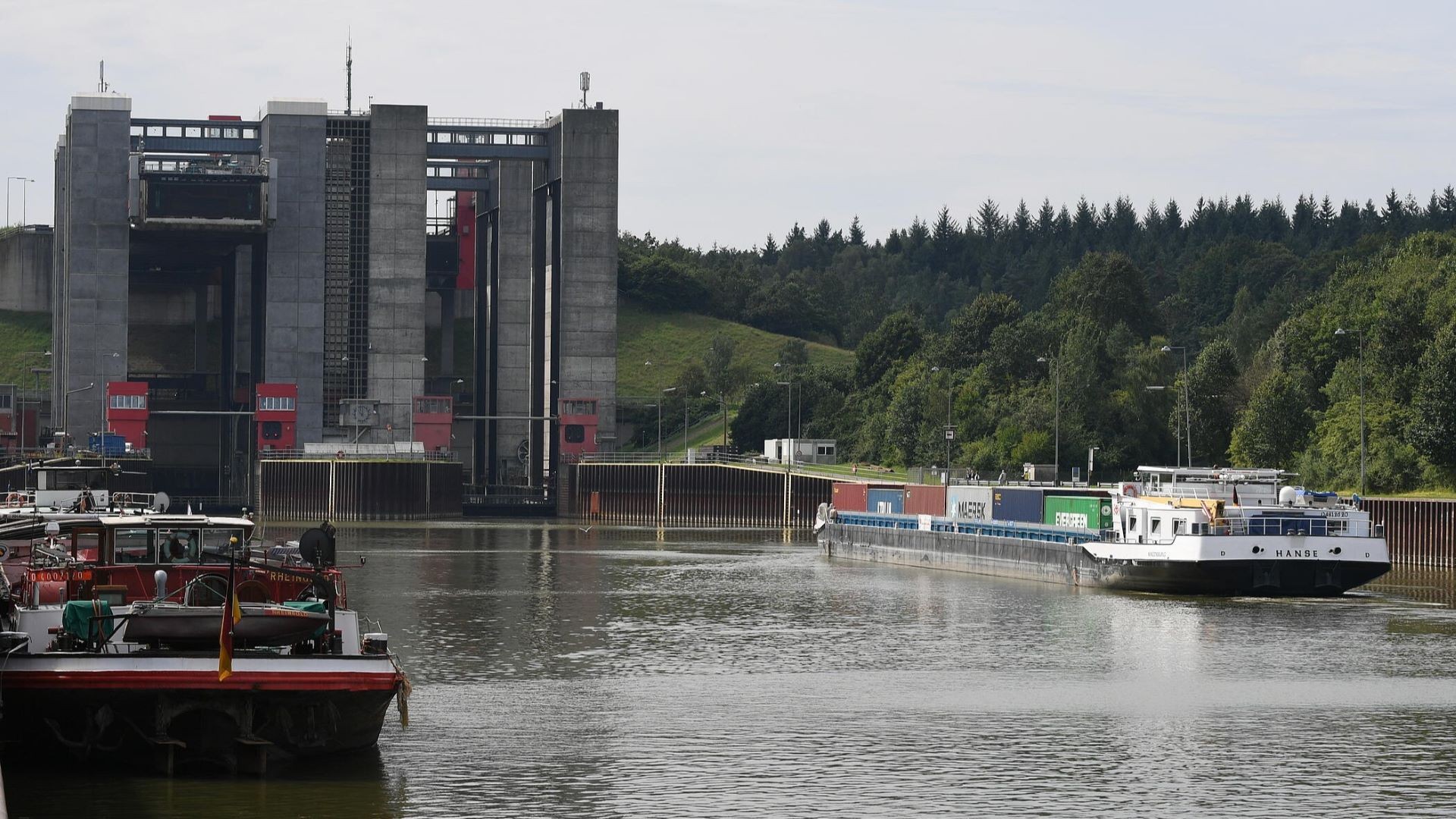
Record-low water levels on the Rhine River are severely restricting barge traffic, forcing shippers to shift freight to road and rail networks already under strain.
Rhine Water Levels Hit Historic Lows
The Rhine’s water level at Kaub — a key gauge for inland navigation — fell to 32 centimeters on September 15, 2026, the lowest reading since measurements began in 1920. This is 18 centimeters below the previous record low set in 2018. At Kaub, navigable depth for fully loaded cargo barges requires a minimum of 170 centimeters.
The prolonged drought across Central Europe has reduced Rhine flow to just 25% of its long-term average for this time of year. Rainfall in the Upbasin was 60% below normal during August 2026, from Germany’s Federal Institute of Hydrology.
Barge Capacity Cuts and Freight Diversion
Barge operators have slashed cargo loads by up to 40% to avoid grounding, reducing effective capacity on the river by an estimated 3.2 million tons . The German Waterways and Shipping Administration (WSA) issued formal navigation restrictions on September 10, 2026, closing two critical sections near Mainz and Karlsruhe to vessels over 1,500 tons deadweight.
Consequently, logistics firms have rerouted more than 1.7 million tons of industrial goods—including coal, chemicals, and steel—onto trucks and trains since early September. Trucking demand along the Rhine corridor surged by 22% week-on-week as of September 18, 2026, pushing spot rates for regional dry van freight up 14%.
Economic Impact Across Key Sectors
Germany’s chemical industry, which relies on the Rhine for 70% of its raw material transport, faces production delays at facilities in Ludwigshafen and Dormagen. BASF reported a 12% reduction in ammonia shipments via barge during the week of September 12–18, 2026. Meanwhile, coal deliveries to power plants in North Rhine-Westphalia dropped by 31% compared to the five-year average for mid-September.
’ SONAR platform, inland waterway freight volumes on the Rhine declined 37% year-over-year in the third week of September 2026. The European Commission’s Joint Research Centre forecasts that Rhine levels will remain below 50 centimeters through at least October 2026, extending disruption into the pre-Christmas shipping season.
Source: FreightWaves
Compiled from international media by the SCI.AI editorial team.