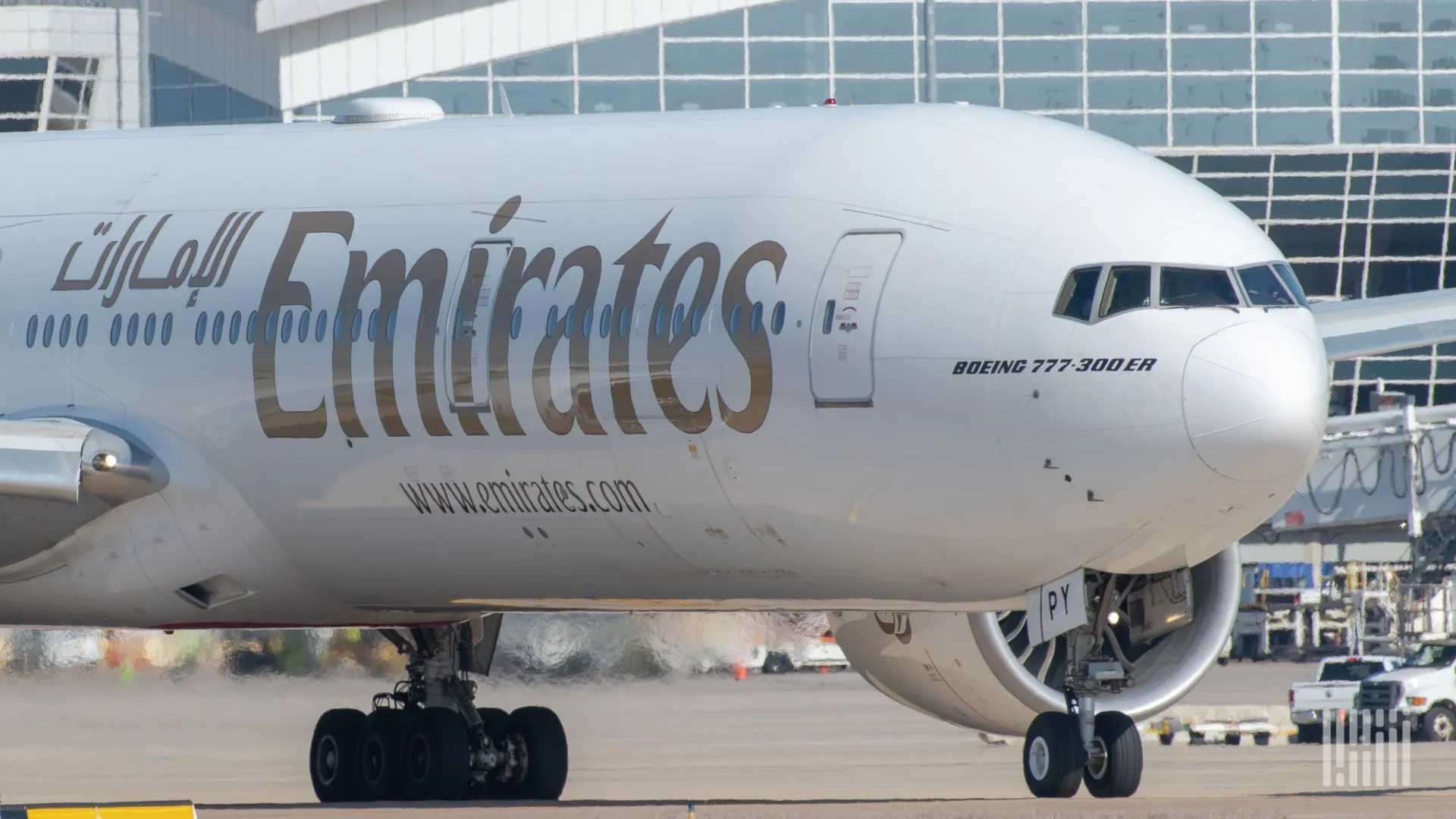
U.S. emissions rollback on Boeing 777 freighter helps air logistics.
The U.S. Environmental Protection Agency (EPA) has issued a regulatory rollback affecting emissions standards for the Boeing 777 freighter aircraft, a move expected to support operational flexibility for air cargo carriers. The revised rule applies specifically to the 777F model and modifies nitrogen oxide (NOx) certification requirements under Title 14 of the Code of Federal Regulations, Part 34. This adjustment aligns with updated International Civil Aviation Organization (ICAO) Annex 16 Volume II standards adopted in 2023.
Regulatory context and technical scope
The EPA’s action follows formal notice published in the Federal Register on May 15, 2026, with the final rule effective as of August 1, 2026. It applies exclusively to newly manufactured Boeing 777F aircraft delivered on or after that date. The rollback does not affect in-service fleets or other freighter platforms such as the Boeing 767F or Airbus A330-200F. agency, the change reflects “real-world engine performance data collected during actual freighter operations” and reduces compliance burden without compromising overall environmental goals.
The revised NOx standard permits a 7.5% higher emissions threshold during takeoff and initial climb phases compared to the prior 2018 EPA rule. This allowance is tied directly to the General Electric GE90-115B engine configuration used on the 777F. The EPA estimates the adjustment will reduce certification time by approximately 11 weeks type validation cycle.
Air cargo operators including Atlas Air and World Airways have indicated plans to accelerate deliveries of new 777F units beginning in Q4 2026. Atlas Air confirmed it holds firm orders for 12 additional 777F aircraft scheduled for delivery between late 2026 and mid-2028.
Industry response and logistical impact
Freight forwarders report early adoption signals: Flexport noted a 22% increase in quoted air cargo capacity out of major U.S. gateways—including Los Angeles International Airport and John F. Kennedy International Airport—for shipments requiring same-day or next-flight-out service, beginning in June 2026.
“This isn’t about relaxing environmental accountability—it’s about calibrating regulation to match how freighters actually fly,” said Will O’Donnell, Senior Director of Regulatory Affairs at FreightWaves.
“The 777F operates at maximum thrust for longer durations than passenger variants, and the prior standard didn’t reflect that reality.” — Will O’Donnell, Senior Director of Regulatory Affairs, FreightWaves
The adjustment supports expanded use of the 777F on ultra-long-haul routes such as New York to Hong Kong and Atlanta to Dubai, where payload-range efficiency directly affects transit time and cost market data, spot rates for transpacific air cargo rose 14.3% in the week ending September 12, 2026, coinciding with increased 777F utilization in North America–Asia lanes.
Source: FreightWaves
Compiled from international media by the SCI.AI editorial team.