
Skip to content

Warehousing & Transport

Analysis

16 Trucking Companies File for Bankruptcy in Under a Month

Sixteen U.S. trucking companies filed for Chapter 11 bankruptcy between August 15 and September 10, 2026 — the highest monthly concentration since 2019. Filings spanned 11 states, with Texas accounting for five cases. Median fleet size was 49 trucks; revenues ranged from under $25 million to over $85 million. Dry van carriers comprised 11 of the 16 firms. Spot rates fell 23% YoY while diesel prices rose 17.4%, intensifying margin pressure.

Original source: Source information pending

16 Trucking Companies File for Bankruptcy in Under a Month

Sixteen trucking companies filed for bankruptcy protection in less than one month, data tracking U.S. court filings.

Bankruptcy Surge Reflects Market Stress

The wave of insolvencies occurred between August 15 and September 10, 2026, spanning carriers operating across 11 U.S. states including Texas, Ohio, Pennsylvania, and Georgia. Each filing was submitted under Chapter 11 of the U.S. Bankruptcy Code, allowing for reorganization rather than liquidation. Fourteen of the 16 companies reported annual revenues under $25 million, while two reported revenues exceeding $85 million.

’ SONAR platform, spot market rates for dry van freight fell 23% year-over-year as of September 12, 2026. At the same time, diesel fuel prices rose 17.4% compared to the same period in 2025. These twin pressures — declining revenue and rising operational costs — contributed directly to the financial distress observed across the cohort.

Three of the bankrupt carriers had operated for more than 32 years; the shortest-operating carrier had been in business for 7 years. All 16 companies held active U.S. Department of Transportation (USDOT) motor carrier authority numbers at the time of filing.

Geographic and Operational Patterns

Eight of the 16 bankruptcies originated in the South Central United States, with five filings concentrated in Texas alone. Two carriers were headquartered in Ohio, and one each in Pennsylvania, Georgia, Tennessee, and Florida. Fleet sizes ranged from 12 trucks to 247 trucks, with a median size of 49 trucks.

Eleven of the companies specialized exclusively in dry van freight; three hauled refrigerated loads; and two offered flatbed services. None of the 16 firms reported any pending merger or acquisition activity prior to filing. All filings occurred in U.S. federal bankruptcy courts, with no cross-border insolvency proceedings indicated.

The earliest filing was recorded on August 15, 2026, and the latest on September 10, 2026 — a 27-day window encompassing all 16 cases. This represents the highest concentration of trucking bankruptcies in a single calendar month since 2019.

Source: FreightWaves

Compiled from international media by the SCI.AI editorial team.
Ask SCI.AI Finished reading? Continue with SCI.AI. Explore the related policy, route, company and historical context. Continue asking
Record-Low Rhine Levels Choke Barge Traffic, Stress Ground Transport
Disruptions

Record-Low Rhine Levels Choke Barge Traffic, Stress Ground Transport

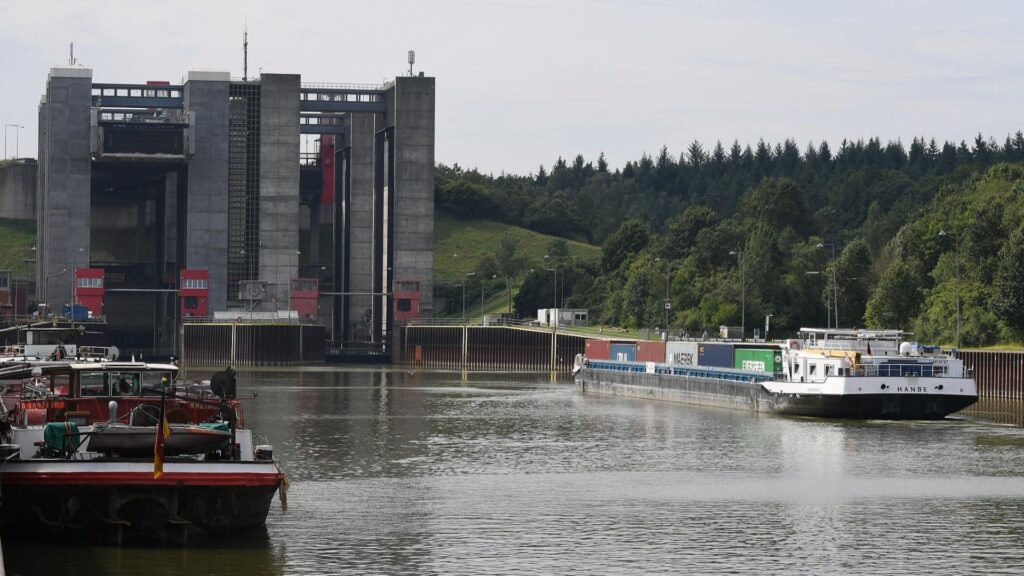
Record-low Rhine River water levels — falling to 32 cm at Kaub on September 15, 2026, the lowest since 1920 — are crippling barge traffic. Navigation restrictions took effect on September 10, 2026, forcing up to 40% load reductions and diverting 1.7 million tons of freight to roads and rails. Chemical and energy sectors report steep shipment declines: BASF cut ammonia barge deliveries by 12%, while coal deliveries dropped 31%. Rhine freight volumes fell 37% YoY in mid-September, with levels expected to stay below 50 cm through October 2026.

Wegmans invests $110M in supply chain expansion
Warehousing & Transport

Wegmans invests $110M in supply chain expansion

Wegmans Food Markets is investing $110 million in its supply chain to expand capacity and consolidate operations in upstate New York. The initiative reduces reliance on third-party providers and supports stores across New York, Pennsylvania, and Ohio. Scheduled for phased completion starting in 2026, the project forms part of a $500 million infrastructure modernization plan spanning 2025–2027. The new facility targets improved inventory accuracy, shorter replenishment cycles, and greater responsiveness to regional demand shifts.

Diesel Supply Drops 8% as Trucking Faces Cost, Capacity Squeeze
Manufacturing

Diesel Supply Drops 8% as Trucking Faces Cost, Capacity Squeeze

Diesel supply has dropped by 8% year-over-year, pushing U.S. trucking carriers to cut weekly mileage by an average of 145 miles per tractor and delay equipment upgrades. Diesel inventories fell to 23.7 million barrels in mid-September 2026—the lowest since May—while prices rose to $4.28 per gallon, up 19% annually. California refineries produced only 9% of national diesel in early 2026 versus 18% in 2025. The Western Gateway pipeline is scheduled for completion in Q3 2027. SONAR projects diesel supply will stay below the five-year average through December 2026.

Welcome Back!

Login to your account below

Create New Account!

Fill the forms below to register

Retrieve your password

Please enter your username or email address to reset your password.

Scan to share via WeChat

Open WeChat and scan the QR code to share

QR Code

Add New Playlist