Skip to content

Manufacturing

Analysis

Coca-Cola pledges $10B for US manufacturing by 2030

Coca-Cola and its bottling partners will invest $10 billion in U.S. infrastructure by 2030, expanding facilities in California, Colorado, Indiana, Alabama, Michigan, Florida, Minnesota, and New York. An independent study found the company contributes $85 billion to U.S. GDP and $10 million per hour in economic activity. It spends $37 billion with U.S. suppliers and supports 1 million jobs. The announcement coincides with a 2026 restructuring that included layoffs and increased focus on AI and emerging brands.

Original source: Source information pending

Coca-Cola pledges $10B for US manufacturing by 2030

According to www.fooddive.com, Coca-Cola and its bottling partners will invest $10 billion in U.S. infrastructure by 2030 to expand production, distribution, and office facilities amid rising demand.

Expansion across seven states

The investment portfolio includes both newly announced and previously disclosed projects. Among them are a bottling distribution facility in Rancho Cucamonga, California; a bottling plant in Colorado Springs, Colorado; a manufacturing plant in Indianapolis; a Coca-Cola United campus in Birmingham, Alabama; a Fairlife plant in Coopersville, Michigan; and a distribution center in Orlando. Additional investments are planned for St. Cloud, Minnesota, and at a Fairlife plant in Webster, New York.

  • Rancho Cucamonga, California — bottling distribution facility
  • Colorado Springs, Colorado — bottling plant
  • Indianapolis — manufacturing plant
  • Birmingham, Alabama — Coca-Cola United campus
  • Coopersville, Michigan — Fairlife plant
  • Orlando — distribution center
  • St. Cloud, Minnesota and Webster, New York — Fairlife plant expansions

Economic impact and supply chain footprint

An independent study commissioned by Coca-Cola and conducted by consultancy firm Steward Redqueen found that the company contributes $85 billion to the U.S. gross domestic product and generates $10 million in U.S. economic activity every hour. The report also states that Coca-Cola spends $37 billion with U.S. suppliers and supports 1 million jobs across its total value chain.

“Through a strong production network, local jobs, supplier partnerships and community investments, we are building on more than a century of impact while reinforcing the resilience of our system and communities across America.” — John Murphy, president and CFO

System structure and strategic shifts

Coca-Cola’s U.S. operations rely on partnerships with independent bottling companies, including Coca-Cola Consolidated, the system’s largest U.S. bottler, which operates across 14 states. Despite this scale, the Atlanta-based company initiated a restructuring effort at the beginning of 2026, which included layoffs. Concurrently, it is directing capital toward growth areas such as AI and small, emerging brands it can scale.

Source: Food Dive

Compiled from international media by the SCI.AI editorial team.

Ask SCI.AI Finished reading? Continue with SCI.AI. Explore the related policy, route, company and historical context. Continue asking
J.B. Hunt boosts driver spending by $25M amid tight freight capacity
Manufacturing

J.B. Hunt boosts driver spending by $25M amid tight freight capacity

J.B. Hunt Transport Services Inc. is committing an additional $25 million to driver-related spending in Q3 2026 amid tightening freight capacity. CFO Brad Delco announced the move on September 15, citing intense driver shortages and rising operational costs—including a $10 million fuel expense increase. The investment supports recruiting, onboarding, training, and sign-on bonuses, reflecting J.B. Hunt’s strategy to gain market share. Profits may dip below Q2 levels, though executives see rising costs as an opportunity to raise rates. The company ranks No. 4 on the 2026 FleetOwner 500 list.

Maersk tops intra-Asia capacity with 340,000 TEU
Manufacturing

Maersk tops intra-Asia capacity with 340,000 TEU

Maersk has overtaken Cosco Shipping to become the largest container shipping line in the intra-Asia market, with deployed capacity exceeding 340,000 TEU as of mid-August 2026. The intra-Asia fleet grew 6.2% year on year to nearly 2.6 million TEU — outpacing global fleet growth of over 5%. Mainline operators control 63% of capacity despite fewer ships, leveraging larger vessels averaging 2,699 TEU versus regional carriers’ 1,338 TEU. Cosco’s capacity rose by just 500 TEU, while CMA CGM added 15,000 TEU and Gold Star Line expanded 72% (11,000 TEU). Fleet age averages 12 years, ranging from TS Lines’ six-year fleet to MSC’s 21-year fleet.

BYD to launch ETT 44 e-truck in Europe by Q2 2026
Manufacturing

BYD to launch ETT 44 e-truck in Europe by Q2 2026

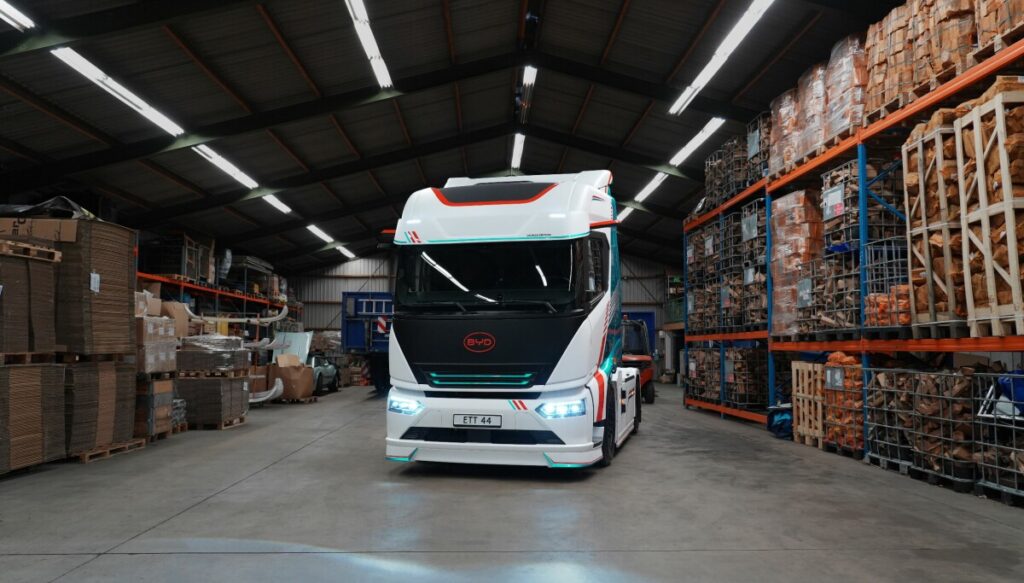
BYD plans to deliver its ETT 44 electric tractor unit to Europe by Q2 2026 and pursue local manufacturing to become 'a European company.' The truck offers up to 372 miles of range and charges 20–80% in 20 minutes. With current EU tariffs on Chinese EVs reaching up to 45%, local production — potentially in Hungary or via acquisition — aims to mitigate duties. BYD already operates bus and battery facilities in Hungary and holds partnerships with Forvia and Voestalpine. ACEA reports €1.3bn in EU imports of Chinese commercial vehicles in 2025.

Welcome Back!

Login to your account below

Create New Account!

Fill the forms below to register

Retrieve your password

Please enter your username or email address to reset your password.

Scan to share via WeChat

Open WeChat and scan the QR code to share

QR Code

Add New Playlist