By 2031, 60% of supply chain disruptions will be resolved without human intervention, according to Gartner’s October 2025 survey of 509 global supply chain leaders — a projection that reframes not just technological capability, but the very architecture of operational resilience. This isn’t incremental automation; it’s the emergence of a self-correcting, anticipatory supply chain infrastructure capable of sensing geopolitical tremors, tariff recalibrations, port congestion spikes, or supplier insolvency signals — and executing countermeasures in seconds, not days. The urgency behind this shift is structural: trade policy volatility has intensified across 78% of major import/export corridors since 2022, while geopolitical flashpoints — from the Red Sea crisis to sanctions regimes targeting critical minerals — have increased disruption frequency by 42% year-on-year. In this context, AI is no longer an efficiency enhancer but a foundational layer of organizational survival. What makes the 60% threshold especially significant is its grounding in empirical adoption curves: Gartner observed that enterprises deploying agentic AI for risk orchestration saw mean time-to-resolution (MTTR) for Tier-2 supplier failures shrink from 4.7 days to 93 minutes — a 97% acceleration that compounds across networked dependencies. This isn’t hypothetical scalability; it’s observable cause-and-effect in live production environments across automotive, pharma, and high-tech verticals where real-time decision latency directly correlates with working capital erosion and ESG compliance exposure.
Agentic AI as the New Operating System for Supply Chain Resilience
Agentic AI transcends traditional rule-based automation by embedding goal-directed reasoning, multi-step planning, and cross-system negotiation into supply chain execution layers. Unlike legacy systems that trigger alerts for human review, agentic architectures autonomously initiate cascading actions: rerouting freight via multimodal alternatives when Suez Canal transits stall, renegotiating spot contracts with alternative carriers using live freight rate APIs, adjusting safety stock parameters across 12-tier supplier networks based on predictive yield forecasts, and even initiating pre-emptive customs documentation updates in response to emerging CBAM compliance triggers. Crucially, this isn’t monolithic AI — it’s federated agents operating under strict governance boundaries: a ‘risk-sensing agent’ ingests satellite imagery of port congestion, a ‘supplier-health agent’ scrapes financial filings and news sentiment, and a ‘logistics-optimization agent’ simulates 17,000 route permutations per second against carbon intensity, cost, and lead time constraints. Gartner’s data confirms that organizations deploying at least three specialized agentic modules achieved 3.8x faster recovery from Tier-1 logistics shocks versus peers relying on single-purpose AI tools. The architectural shift is profound: supply chains are evolving from linear, reactive pipelines into dynamic, self-healing ecosystems where AI agents serve as persistent digital twins of physical operations — continuously validating assumptions, stress-testing contingencies, and learning from every intervention.
This transformation demands rethinking integration paradigms. Legacy ERP-centric models cannot support the real-time data velocity required: agentic AI requires sub-second latency between IoT sensor feeds (e.g., container GPS, warehouse AMR telemetry), unstructured data streams (customs bulletins, port authority advisories), and decision-execution interfaces (TMS, WMS, procurement platforms). Leading adopters like Maersk and Johnson & Johnson have built purpose-built ‘resilience data fabrics’ — not data lakes, but governed, low-latency pipelines with embedded semantic ontologies that translate regulatory text (e.g., USMCA origin rules) into executable logic. Critically, these fabrics enforce provenance tracking: every autonomous decision carries an immutable audit trail showing which data sources triggered the action, confidence scores for each input, and fallback protocols activated. Without this, agentic autonomy remains legally indefensible — particularly under emerging frameworks like the EU’s CSDDD, which holds executives personally liable for supply chain due diligence failures. As Julia von Massow, Director Analyst in Gartner’s Supply Chain practice, observes:
“Agentic AI doesn’t replace human judgment — it relocates it upstream, from tactical firefighting to designing the guardrails, defining success metrics, and interpreting systemic patterns that machines cannot contextualize. The CSCO’s new mandate is architecting trust, not delegating authority.” — Julia von Massow, Director Analyst, Gartner Supply Chain Practice
Data Governance as the Non-Negotiable Foundation for Autonomous Decisions
Data quality isn’t a prerequisite for AI adoption — it’s the primary bottleneck limiting autonomous scope. Gartner’s survey revealed that 73% of CSCOs cite inconsistent master data across ERP, PLM, and supplier portals as their top barrier to scaling agentic AI, surpassing concerns about algorithmic bias or integration complexity. Consider the consequences: if a ‘procurement agent’ receives conflicting part numbers for the same semiconductor across SAP (internal), SupplierPortal (Tier-1), and MRO databases (Tier-2), its automated substitution logic may trigger non-compliant sourcing — violating ITAR regulations or voiding OEM warranties. Worse, fragmented data creates ‘ghost inventories’: AI agents optimizing for ‘available-to-promise’ may allocate stock that physically exists but is mislabeled in the WMS, causing production line stoppages. The solution isn’t bigger data, but *verified* data: leading firms now deploy blockchain-anchored master data management (MDM) where every SKU, supplier certificate, and compliance document carries a cryptographic hash validated across permissioned nodes. This enables AI agents to instantly verify authenticity — e.g., confirming a lithium battery’s cobalt origin meets OECD Due Diligence Guidance before approving shipment. Investment here yields exponential returns: companies with certified data governance frameworks reduced AI-driven false-positive disruption alerts by 89% and increased autonomous resolution accuracy to 94.7% within 18 months.
Regulatory alignment is now inseparable from data strategy. With the EU’s Digital Product Passport mandate requiring granular material traceability by 2026 and the U.S. SEC’s proposed climate disclosure rules demanding Tier-3 supplier emissions data, AI agents must operate within auditable compliance envelopes. This means building ‘regulatory knowledge graphs’ — machine-readable representations of interlocking statutes (CBAM, USMCA, AfCFTA) that dynamically update as laws evolve. For instance, when South Africa’s new critical minerals export licensing regime took effect in Q2 2025, compliant AI agents automatically flagged affected components in automotive BOMs, calculated revised landed cost impacts, and simulated alternative sourcing paths — all before human analysts completed their first impact assessment. Yet governance extends beyond legality: it encompasses ethical boundaries. Firms like Unilever now require AI agents to embed ESG scoring thresholds — refusing to auto-reroute shipments through jurisdictions with documented forced labor risks, even if it increases cost by 12%. This isn’t altruism; it’s risk mitigation: supply chain-related ESG violations triggered $4.2 billion in shareholder litigation settlements in 2024 alone. The takeaway is unequivocal: without enterprise-grade data governance — spanning accuracy, timeliness, completeness, and regulatory semantics — agentic AI remains a liability, not an asset.

The Human-AI Teaming Imperative in High-Stakes Decision Contexts
Despite the 60% autonomous resolution target, Gartner explicitly cautions against full automation for high-stakes decisions — and for compelling strategic reasons. When AI agents autonomously terminate a $280 million annual contract with a Tier-1 electronics supplier due to predicted financial distress, the ripple effects extend far beyond procurement: R&D roadmaps stall, warranty obligations cascade, and customer commitments face renegotiation. Such decisions require contextual nuance no algorithm possesses: understanding whether a supplier’s liquidity crunch stems from temporary working capital gaps (solvable via extended payment terms) or terminal market decline (requiring full exit). Here, AI’s optimal role is augmentation: presenting humans with probabilistic scenarios, quantified risk exposures, and pre-negotiated contractual levers — then empowering them to make judgment calls grounded in relationship equity, strategic intent, and reputational calculus. Real-world evidence supports this hybrid model: manufacturers using AI-augmented sourcing committees reduced supplier churn by 37% while improving on-time delivery by 22% over three years, versus fully automated procurement systems that increased churn 19% due to oversensitivity to transient risk signals. The human element provides the ‘why’ behind the ‘what’ — interpreting cultural cues in supplier communications, assessing leadership continuity during M&A events, or weighing geopolitical exposure against long-term innovation access.
This teeming paradigm reshapes workforce strategy at its core. CSCOs must treat change management not as an HR initiative but as a performance-critical workstream with dedicated budget and KPIs. Gartner’s longitudinal study found that organizations allocating at least 15% of their AI implementation budget to behavioral science interventions — including cognitive load assessments, decision fatigue monitoring, and AI-assisted ‘judgment calibration’ training — achieved 2.3x higher retention of supply chain talent and 41% faster adoption of autonomous workflows. These programs go beyond technical upskilling: they reframe roles around ‘AI stewardship’, where planners become ‘agent trainers’ curating feedback loops, procurement specialists evolve into ‘contractual architects’ designing AI-enforceable clauses, and logistics managers shift to ‘network orchestrators’ setting system-wide objectives rather than micromanaging routes. Crucially, emotional intelligence becomes measurable: one pharmaceutical firm introduced biometric wearables (with consent) during high-stakes AI recommendation reviews, correlating elevated cortisol levels with higher rates of overriding AI suggestions — prompting redesign of interface urgency cues. As supply chains grow more autonomous, the most valuable human skills aren’t disappearing; they’re migrating upstream to meta-cognitive domains where context, ethics, and strategic foresight remain irreplaceable.

Contingency Architecture: Building Fail-Safe Protocols for Autonomous Systems
No autonomous system is infallible — and assuming otherwise invites catastrophic failure. Gartner mandates that CSCOs develop formal contingency architectures, not as theoretical exercises but as living, tested frameworks. This begins with ‘failure mode mapping’: systematically identifying where agentic AI could err — such as misinterpreting ambiguous customs documentation during tariff classification, overreacting to false-positive cyberattack alerts in supplier systems, or optimizing for cost while ignoring latent carbon leakage in nearshoring decisions. Each scenario demands tiered response protocols: Level 1 (automated detection and pause), Level 2 (human-in-the-loop escalation with pre-loaded context), and Level 3 (full system rollback with forensic data capture). Leading adopters conduct quarterly ‘red team’ exercises where cross-functional teams deliberately inject adversarial data — like spoofed port congestion reports or manipulated supplier financials — to test detection latency and protocol fidelity. Results are sobering: 68% of firms failed to detect synthetic fraud in supplier health data within 120 seconds, exposing critical gaps in anomaly detection training. The fix wasn’t better algorithms but richer data provenance: adding blockchain-verified timestamps and source reputation scores to every input stream reduced false negatives by 76% in subsequent tests.
Equally vital is post-failure learning infrastructure. Every autonomous decision failure must feed into a closed-loop improvement cycle — not just algorithm retraining, but governance refinement. When a logistics agent rerouted 42 containers away from Rotterdam during a predicted strike (which was later canceled), the incident triggered three parallel investigations: technical (was weather radar data misinterpreted?), process (did escalation thresholds align with actual labor negotiation timelines?), and strategic (should strike risk tolerance vary by cargo value?). Findings were codified into updated ‘decision playbooks’ accessible to all agents. This institutional memory prevents recurrence: firms with mature failure analytics reduced repeat incidents by 91% year-over-year. Moreover, contingency plans must address systemic fragility — not just isolated errors. During the 2024 Red Sea crisis, companies with AI agents trained on single-port failure scenarios struggled when simultaneous disruptions hit Port Said, Aqaba, and Jeddah. Their contingency architecture now includes ‘cascading failure simulations’ modeling correlated shocks across geographies, commodities, and transport modes. As one Maersk executive noted:
“Our AI doesn’t just need to handle one broken link — it must anticipate how breaking three links simultaneously rewrites the entire chain’s physics. Contingency isn’t backup; it’s the design principle.” — Maersk Logistics Innovation Lead, Global Operations
Strategic Roadmapping: From Tactical AI Pilots to Enterprise-Wide Autonomy
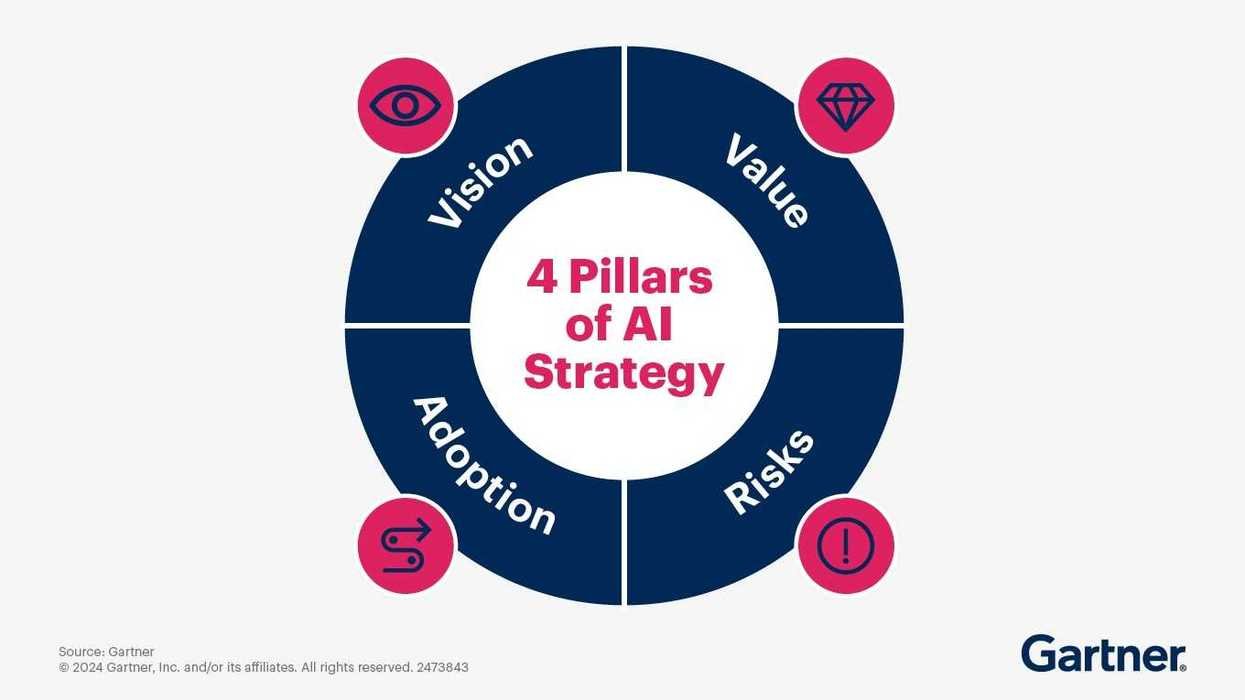
Most organizations begin AI journeys with tactical pilots — demand forecasting enhancements or warehouse robotics optimization — but Gartner stresses that achieving 60% autonomous disruption resolution demands enterprise-wide strategic alignment. This means CSCOs must co-own the corporate AI roadmap with CIOs and CFOs, ensuring technology investments directly serve disruption management KPIs: mean time to detect (MTTD), mean time to resolve (MTTR), and cost of disruption (COD). Critically, this requires redefining ROI: a $2.1 million AI procurement module isn’t justified by 8% cost savings alone, but by its contribution to reducing COD — which averages $1.8 million per hour of Tier-1 production downtime in automotive manufacturing. Roadmaps must sequence capabilities along a rigorously defined autonomy ladder: starting with ‘observe-only’ AI (real-time dashboards), progressing to ‘recommend-only’ (prescriptive alerts), then ‘act-with-approval’ (auto-execution pending human sign-off), and finally ‘autonomous-action’ (pre-authorized decisions within bounded risk parameters). The transition isn’t linear — it’s iterative, with each rung requiring validated data foundations, governance controls, and human capability development. Companies advancing fastest use ‘autonomy sprints’: 90-day cycles where cross-functional teams deploy one new autonomous capability (e.g., auto-replenishment for low-risk SKUs), measure outcomes against baseline, refine controls, and socialize learnings before scaling.
Financial commitment must match ambition. Gartner advises allocating at least 22% of total supply chain technology budgets to AI enablement — not just software licenses, but data engineering, change management, and contingency infrastructure. Crucially, this funding must be sustained: 71% of failed AI initiatives collapsed due to ‘pilot purgatory’ — projects abandoned after initial success because ongoing resources weren’t secured. Sustainable funding requires linking AI spend to board-level risk metrics: for example, tying AI investment approval to reductions in ‘uninsured supply chain risk exposure’ or improvements in ‘ESG materiality score’. Finally, roadmaps must embed external collaboration: no enterprise owns all necessary data. Forward-thinking firms join industry consortia like the Digital Container Shipping Association (DCSA) to share anonymized port delay data, or partner with customs authorities on API-enabled pre-clearance validation — turning regulatory compliance into a shared infrastructure layer. The ultimate measure of success isn’t AI adoption rate, but the shrinking footprint of human intervention in disruption response — measured in hours saved, dollars preserved, and systemic vulnerabilities neutralized. As the 2031 horizon approaches, the question is no longer whether AI can resolve disruptions autonomously, but whether organizations have built the human, data, and governance architecture to let it do so responsibly.
- Gartner’s October 2025 survey of 509 supply chain leaders identified changes in ways of working driven by AI and agentic AI as the most influential driver of future supply chain performance over the next two years
- Organizations deploying agentic AI for risk orchestration achieved 3.8x faster recovery from Tier-1 logistics shocks compared to peers using single-purpose AI tools
- Firms with certified data governance frameworks reduced AI-driven false-positive disruption alerts by 89% and increased autonomous resolution accuracy to 94.7%
- CSCOs must prioritize investments in data quality and governance so autonomous technologies access accurate, timely, and complete supply chain information
- Budgeting ongoing resources to assess the emotional and performance-based impact of increasing autonomy is critical — treating change management as a core workstream
- Developing contingency plans for failures in autonomous decisions requires protocols for rapid human intervention and continuous improvement based on incident analysis and governance frameworks
Source: www.dcvelocity.com
This article was AI-assisted and reviewed by our editorial team.