Skip to content

Air Cargo · Disruptions · Logistics & Transport

European Carriers Boost Asia-Europe Air Cargo by 31% as Middle East Conflict Diverts Traffic

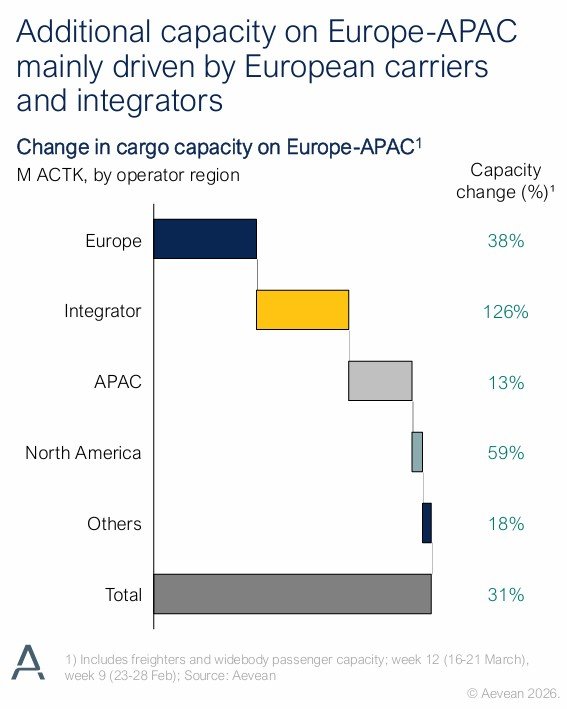
European airlines and integrators added 31% more air cargo capacity on the Asia-Europe lane after Middle East disruptions, per Aevean data. European carriers grew capacity by 38%, integrators by 126%, while Asia Pacific and North American airlines rose 13% and 59%. My Freighter launched new HAN–TAS–FRA, BKK–TAS–FRA, ALA–TAS–FRA, and TAS–FRA routes; DHL Global Forwarding added Shanghai–Leipzig and Liège–Hong Kong flights; Lufthansa Cargo expanded its summer freighter schedule. Globally, air cargo capacity is down only 2% YoY versus a 20% drop at the crisis peak. These moves reflect urgent supply chain resilience efforts amid escalating geopolitical risk.

Original source: Source information pending

European Carriers Boost Asia-Europe Air Cargo by 31% as Middle East Conflict Diverts Traffic

According to www.aircargonews.net, European airlines and integrators have rapidly expanded air cargo capacity on the Asia-Europe trade lane to offset sharp declines caused by the Middle East conflict — with direct freighter and widebody capacity rising 31% in the week ending 21 March compared to the week ending 28 February, just before hostilities escalated.

Capacity Shifts by Region and Carrier Type

Aevean’s research shows divergent responses across carrier groups:

  • European-based airlines increased cargo capacity by 38% week-on-week — the largest absolute tonne-kilometre gain due to their higher baseline;
  • Integrators boosted capacity by 126%, though from a smaller starting point;
  • Asia Pacific airlines added 13% capacity;
  • North American carriers increased space by 59%.

Globally, air cargo capacity was down 2% year on year — a marked improvement from the 20% decline observed at the peak of the crisis last year. Meanwhile, capacity between the Asia Pacific and the Middle East fell 24% year on year, and Middle East–to–Europe routes declined 15%. In contrast, Asia Pacific–to–Europe capacity surged 31%.
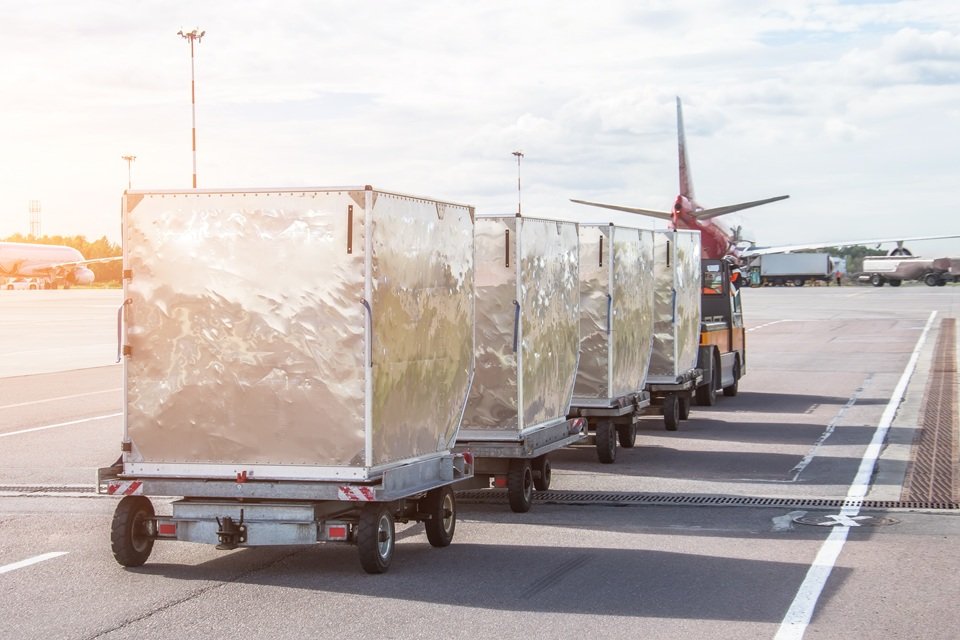
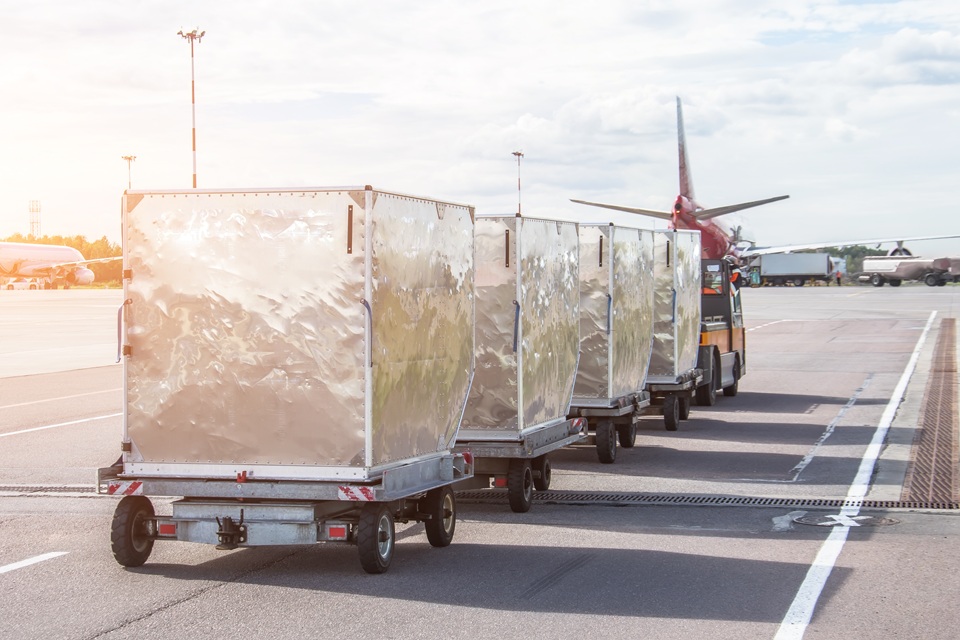
ULDs being transported on airport runway

Operational Responses from Key Carriers

Uzbekistan-based My Freighter launched new weekly services effective 29 March, linking Hanoi (HAN), Bangkok (BKK), Almaty (ALA), and Tashkent (TAS) with Frankfurt Airport (FRA) via its TAS hub. The airline described the move as part of its broader network expansion plans.

DHL Global Forwarding responded to surging demand by leveraging the DHL Express network: it introduced weekly dedicated flights connecting Shanghai to Leipzig and Liège to Hong Kong. This integration of express and forwarding assets enables faster, more reliable capacity deployment without relying on third-party belly-hold space.

Lufthansa Cargo announced additions to its summer freighter schedule, including extra transpacific services and new capacity to Delhi — reflecting both regional demand shifts and strategic route diversification beyond traditional Middle East corridors.
Aevean
Aevean

Industry Context for Supply Chain Professionals

This reallocation mirrors broader industry adaptation to geopolitical volatility. Since late 2023, Red Sea disruptions have already driven rerouting via the Cape of Good Hope, increasing ocean transit times by 10–14 days and amplifying pressure on air cargo for time-sensitive goods. Major integrators like FedEx and UPS previously reported double-digit air freight volume growth on Asia–Europe lanes in Q1 2024, while Maersk’s 2024 Logistics Outlook highlighted that 72% of shippers now prioritize route redundancy over pure cost optimization. For supply chain professionals, these developments underscore the growing operational necessity of multi-airline contracting, dynamic tendering windows, and real-time capacity monitoring — especially for high-value electronics, pharmaceuticals, and automotive components where lead-time variability directly impacts production schedules and inventory carrying costs.

Source: Air Cargo News

Compiled from international media by the SCI.AI editorial team.

Ask SCI.AI Finished reading? Continue with SCI.AI. Explore the related policy, route, company and historical context. Continue asking
Hugging Face harbors 100 malicious AI models exposing supply chain risks
Disruptions

Hugging Face harbors 100 malicious AI models exposing supply chain risks

According to AI Insider, organizations sourcing artificial intelligence models from public repositories face severe data poisoning risks, as attackers manipulate training data to compromise deployed systems. In February 2024, security researchers identified approximately 100 malicious models hiding within Hugging Face, exposing critical vulnerabilities in enterprise AI supply chains. These compromised models were designed to execute arbitrary code immediately upon loading by developers, bypassing existing security scans. Most organizations downloading these models lacked additional verification processes, accepting them based solely on functional performance. The broader risk stems from modern AI deployment practices, where firms download pre-trained models or fine-tune them using third-party data, inheriting invisible risks. Data poisoning represents one of the most technologically rooted supply chain threats, making it exceptionally difficult to identify through standard operational checks.

JD Logistics H1 adjusted profit rises 40%
Logistics & Transport

JD Logistics H1 adjusted profit rises 40%

JD Logistics reported strong financial performance for the first half of 2026, highlighting significant growth in integrated supply chain revenue and expanded overseas logistics capabilities. Total revenue for the period reached 124.7 billion yuan, equivalent to approximately $18.5 billion. This figure represents a year-on-year increase of 26.5%. The company's adjusted operating profit surged by 39.9%, totaling 3.6 billion yuan, indicating that cost reduction measures, efficiency gains, and business mix optimization are yielding substantial results. The integrated supply chain segment generated 59.4 billion yuan in revenue, up 18.5% year-on-year. The company serves nearly 80,000 external integrated supply chain customers. The average revenue per customer reached 254,000 yuan, indicating a shift from volume-driven expansion to deep engagement with high-value clients. JD Logistics' overseas operations emerged as a primary growth engine, characterized by the rapid scaling of warehouse infrastructure and express delivery networks. The company currently operates more than 200 overseas warehouses, bonded warehouses, and direct-mail warehouses across 26 countries and regions worldwide. The total overseas warehouse management area has exceeded 2 million square meters. JoyExpress, the company's proprietary express delivery brand, has densified its network in multiple European countries, including the United Kingdom, Germany, the Netherlands, and France. In the United States, the company expanded its roster of consumer electronics clients by offering integrated warehousing and omnichannel fulfillment services. In Europe, service coverage was broadened to include multiple leading home appliance and drone brands. Additionally, the company partnered with a top consumer electronics client in the Middle East to jointly build a high-standard smart warehouse, exporting its automation capabilities to the region. JD Logistics is accelerating the deployment of artificial intelligence and automation technologies across its warehousing, sorting, and delivery operations. The company deployed the fully upgraded Super Brain LLM 2.0 at scale during the JD 618 shopping festival. The system is capable of calculating the fastest routes for hundreds of millions of parcels within three minutes. An AI-powered map-based inventory diagnostic assistant enables differentiated smart replenishment across tens of millions of SKUs, driving merchant inventory turnover efficiency improvements of 30% to 40%. In warehousing, the self-developed "ZhiLang" goods-to-person solution has entered a phase of large-scale replication. It has been deployed in more than 60 warehouses globally, with new installations in the United Kingdom and Germany. In sorting, the "YiLang" embodied intelligent robotic arm has been upgraded from a single-arm to a dual-arm configuration. Driven by the Super Brain LLM, the system fuses visual, force, and tactile sensor data to complete a full cycle of recognition, suction, grasping, and palletizing in just 10 seconds. On the delivery side, over 1,000 autonomous vehicles are now in regular operation across more than 20 provinces in China. Shenzhen launched the first nighttime autonomous vehicle delivery routes to enable 24-hour uninterrupted operations. In drone delivery, the company operates over 100 domestic routes. In June, the company launched China's largest drone-to-village delivery network in Zizhong County, Sichuan Province, covering 78 administrative villages with delivery times as fast as 7 minutes. JD Logistics introduced multiple new service offerings and deepened its penetration in specific industries during the first half of the year. Revenue from other customers, including express delivery, freight, and on-demand delivery, reached 65.3 billion yuan, up 34.8% year-on-year. JD Airlines now operates 13 all-cargo aircraft, with next-day delivery capabilities for air freight continuing to improve. Express delivery services have achieved full coverage of all county-level regions in China, reaching essentially every administrative village, with nearly 100,000 service stations established across rural townships and villages nationwide. The company introduced the "JingChongDa" pet delivery service in June, featuring proprietary dedicated delivery, pre-screening quarantine, and full-chain traceability. The service has expanded to more than 40 core cities across China with a 100% positive review rate. The express delivery division also rolled out integrated pickup-and-delivery services and two new time-definite products, including cross-city express delivery that is as fast as 4 hours.

Freight rates double as Hormuz closure hits container market
Logistics & Transport

Freight rates double as Hormuz closure hits container market

According to Seatrade Maritime, the global container shipping market has experienced a volatile surge in the first half of 2026, driven by geopolitical disruptions in the Middle East that have effectively doubled freight rates on major trade lanes. Market impact of geopolitical disruption In a mid-year analysis, Seatrade Maritime Podcast spoke with Daniel Richards, an […]

Welcome Back!

Login to your account below

Create New Account!

Fill the forms below to register

Retrieve your password

Please enter your username or email address to reset your password.

Scan to share via WeChat

Open WeChat and scan the QR code to share

QR Code

Add New Playlist