Humanoid Robots Enter Commercialization Phase: Automotive and Logistics Lead Adoption
According to the latest report “Humanoid Robots 2026-2036: Technologies, Markets and Opportunities” from market research firm IDTechEx, the humanoid robot industry is entering an early commercialization phase. The report predicts that this technology will first achieve scale in industrial environments, particularly in automotive manufacturing and logistics & warehousing, before expanding into broader commercial and consumer markets.
The global humanoid robot market is projected to reach approximately $29.5 billion by 2036. As the technology matures, the industry is increasingly viewing humanoid robots not as futuristic prototypes but as practical vehicles for bringing artificial intelligence into human-designed environments. Market activity over the past 12 months has shifted from trade-show demonstrations to structured pilot deployments on production sites.
Automotive Manufacturing: First Major Scaling Opportunity
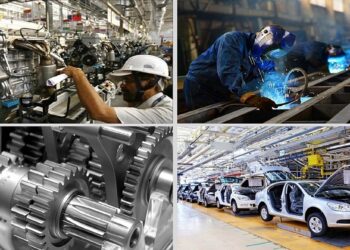
The report identifies automotive manufacturing as the first sector where humanoid robots will achieve meaningful scale. Compared to open-world environments, automotive plants offer controlled operating conditions, structured workflows, and clearer return-on-investment justification for repetitive labor-intensive tasks.
Early deployments focus on relatively simple but scalable tasks such as material handling, inspection support, intra-factory transport, and basic assembly assistance. The standardized nature of automotive manufacturing environments provides an ideal testing ground for humanoid robots to gradually improve performance under controlled conditions.
IDTechEx analysts emphasize that the automotive industry’s long-term investment in automation and mature supply chain ecosystem creates favorable conditions for humanoid robot integration. As hardware costs decline and software capabilities improve, humanoid robots are expected to take on more complex tasks within automotive manufacturing processes.
Logistics and Warehousing: Key Battleground for Second Wave
Logistics and warehousing will emerge as the second major commercialization pathway for humanoid robots, although growth in this segment is likely to be shaped by competition with existing automation technologies. Autonomous mobile robots (AMRs), automated guided vehicles (AGVs), and robotic arms already offer mature cost-performance advantages in many warehouse environments.
However, humanoid robots are increasingly positioned as flexible automation solutions for mixed and unpredictable tasks that must be completed in facilities designed around human workers. As hardware costs decline and task performance improves, humanoids may become commercially attractive for workflows such as pick-and-place, parcel handling, and repetitive sorting operations.
This flexibility advantage is particularly evident in environments where deploying fixed automation would require high capital investment and major infrastructure redesign. Humanoid robots can integrate into traditional warehouse workflows without completely reconfiguring existing facilities.
Technical Challenges and Competitive Landscape
Despite promising prospects, humanoid robots face multiple challenges in logistics and warehousing. Existing automation solutions have achieved high optimization for specific tasks, and humanoid robots need to match or exceed current technologies in cost, reliability, and performance to gain widespread adoption.
The IDTechEx report indicates that the success of humanoid robots will depend on several key factors: continued decline in hardware costs, improvement in software algorithms, integration capability with existing warehouse management systems, and customized development for specific application scenarios.
Manufacturers must demonstrate that their solutions are competitive in terms of total cost of ownership (TCO) and return on investment (ROI). This requires considering not only initial procurement costs but also long-term impacts of maintenance expenses, training requirements, and system upgrades.
Market Opportunities and Growth Forecast
According to IDTechEx projections, the humanoid robot market will undergo transformation from pilot deployments to scaled applications during the 2026-2036 period. Automotive manufacturing and logistics warehousing, as early adopters, will provide critical scenarios for technology validation and business model exploration.
The report anticipates that as technology matures and costs decline, humanoid robots will gradually expand into other industrial sectors such as electronics manufacturing, aerospace, and heavy equipment production. Eventually, the technology will enter commercial and consumer markets, finding applications in retail, healthcare, and home services.
This development trajectory mirrors the adoption curve of many disruptive technologies—from industrial applications to commercial expansion, and finally to consumer markets. Each stage will bring new technical challenges and market opportunities.
Supply Chain Impact and Industry Transformation
The rise of humanoid robots will have profound implications for global supply chains. On the manufacturing side, robot production itself will create new supply chain demands for critical components including sensors, actuators, control systems, and AI chips.
On the application side, humanoid robot deployment will transform labor structures, workflow designs, and facility layouts. This requires businesses to rethink their operational strategies, employee training programs, and long-term investment directions.
For the logistics and warehousing industry, humanoid robots represent a new automation paradigm—not replacing existing systems but complementing and enhancing human capabilities, finding a new balance between flexibility and efficiency.
Future Outlook and Strategic Recommendations
Looking ahead, the success of humanoid robots will depend on the synergistic development of technological, commercial, and regulatory factors. Companies need to develop clear adoption roadmaps that balance short-term pilots with long-term scaled deployment.
IDTechEx recommends that potential adopters start with specific use cases and gradually expand deployment scope. Simultaneously, investment in employee training and technology integration is essential to ensure humanoid robots can seamlessly integrate into existing workflows.
“Humanoid robots represent a new automation paradigm—not replacing existing systems but complementing and enhancing human capabilities, finding a new balance between flexibility and efficiency.”—IDTechEx Report Summary
For technology suppliers, the key lies in demonstrating the practical value of their solutions, not just technological sophistication. This requires showing clear ROI through pilot projects and collaborating with industry partners to develop optimized solutions for specific application scenarios.
Source: DC Velocity
This article was AI-assisted and reviewed by our editorial team.