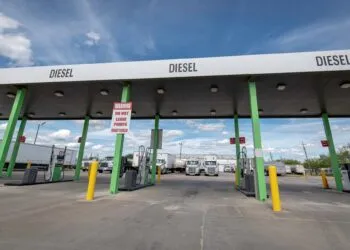
Off the western coast of Saudi Arabia, an unprecedented maritime bottleneck is forming—not from congestion or port failure, but from deliberate, high-stakes geopolitical recalibration. As of March 13, 2026, 11 very-large crude carriers (VLCCs) were anchored in waiting positions near Yanbu, part of a rapidly swelling fleet now numbering over 47 supertankers observed in the Red Sea within a 72-hour window—more than double the historical average for this time of year. This surge isn’t incidental; it reflects a sovereign emergency response to the effective closure of the Strait of Hormuz, declared by the International Energy Agency as the largest single disruption to global oil supply on record. With Iranian naval activity escalating into open conflict and U.S.-led coalition patrols increasingly contested, Riyadh has activated a decades-in-the-making contingency: rerouting up to 5 million barrels per day (bpd) of crude exports via the Red Sea instead of the Persian Gulf. But infrastructure readiness, pipeline physics, and terminal throughput limitations mean that this pivot is not merely logistical—it is structural, exposing deep fault lines in the architecture of global energy trade.
The Yanbu Bottleneck: Capacity vs. Velocity
Yanbu Industrial Port, operated by the Saudi Ports Authority (Mawani) in partnership with Aramco Trading, hosts two major crude export terminals—Yanbu North and Yanbu South (Al Mu’ajjiz)—with a combined total of seven dedicated VLCC berths. Each berth is theoretically capable of loading one VLCC per day under optimal conditions, suggesting a theoretical maximum throughput of 7 million bpd. Yet operational reality diverges sharply from engineering theory. In early March 2026, Yanbu’s actual export rate averaged just 2.7 million bpd, rising to 2.9 million bpd in the week ending March 12—a figure still less than 60% of the targeted 5 million bpd. The gap stems not from lack of capacity, but from systemic velocity constraints: simultaneous berthing coordination, STS (ship-to-ship) transfer certification delays, customs clearance bottlenecks, and real-time synchronization between upstream production, pipeline injection rates, and marine logistics scheduling. Unlike Jubail or Ras Tanura on the Gulf side—which benefit from decades of integrated refinery-export ecosystems—Yanbu was historically optimized for domestic petrochemical feedstock and limited crude exports. Its sudden elevation to strategic choke-point status has exposed latent gaps in digital port management systems, real-time cargo tracking interoperability, and labor scalability. For instance, STS operations at King Fahad Industrial Port require three separate regulatory approvals (from Mawani, SASO, and the Ministry of Energy), each averaging 18–22 hours to process during peak load periods—time that compounds exponentially when 11 VLCCs arrive within 36 hours.
Moreover, the physical configuration of Yanbu’s offshore anchorage zone introduces hydrodynamic and navigational friction. The port’s approach channel is only 320 meters wide and dredged to 21.5 meters, barely accommodating fully laden VLCCs drawing 20.8 meters at tropical load lines. Tidal windows for safe transit are restricted to four-hour windows twice daily, further compressing the effective berthing schedule. A recent MagicPort Maritime Intelligence analysis revealed that 68% of VLCCs arriving off Yanbu between March 8–12 experienced anchorage delays exceeding 36 hours, with 23% waiting more than 72 hours before receiving pilotage orders. These aren’t idle waits—they represent lost opportunity cost at scale: each delayed VLCC incurs $125,000–$180,000 per day in demurrage, bunker consumption, and charter party penalties. Crucially, these costs are no longer absorbed solely by traders; Aramco has begun allocating delay-related surcharges to buyers under force majeure clauses, signaling a material shift in contractual risk allocation across the entire Red Sea corridor.
What makes the Yanbu bottleneck especially revealing is its contrast with alternative regional infrastructure. The Sumed Pipeline—Egypt’s 400-kilometer conduit linking Suez to Alexandria—has long served as a Hormuz bypass, with a design capacity of 2.34 million bpd. Yet Sumed’s utilization remains capped at 1.6 million bpd due to aging compressors, inconsistent maintenance cycles, and Egyptian regulatory constraints on foreign operator access. Meanwhile, the East-West Pipeline (Petroline), stretching 1,200 kilometers from Abqaiq to Yanbu, has been upgraded to handle 5.2 million bpd in theory—but actual throughput remains constrained by pressure differentials, wax deposition in northern segments, and real-time flow meter calibration lags. As Aramco CEO Amin Nasser confirmed on March 12, pipeline flows are being ramped up, but fluid dynamics dictate that any increase injected at Abqaiq requires 4 to 10 days to manifest at Yanbu, given standard flow velocities of 3–8 miles per hour. This latency transforms what appears to be a simple infrastructure switch into a complex, multi-layered temporal cascade—one where decisions made today reverberate across global markets next week.
Geopolitical Arbitrage: From Transit Chokepoint to Sovereign Corridor
The Red Sea buildup is not merely a reaction to Hormuz’s closure—it is the crystallization of a decade-long Saudi strategic doctrine known internally as ‘Red Sea First’. Since Vision 2030’s inception, Riyadh has invested over $22 billion in Red Sea port modernization, including $4.7 billion specifically for Yanbu’s expansion, $6.3 billion for Jeddah Islamic Port’s deepwater upgrades, and $11 billion for NEOM’s futuristic maritime logistics hub. These investments were never framed publicly as contingency plans for Gulf instability; rather, they were marketed as economic diversification tools. Yet behind closed doors, Aramco’s internal scenario planning since 2021 consistently modeled ‘Hormuz Denial Events’ with increasing probability—culminating in the 2024 ‘Operation Sandstone’ war game, which simulated full Iranian blockade and validated Yanbu’s viability as a primary export node. What distinguishes this moment from past disruptions—such as the 2019 tanker attacks or 2021 Houthi missile strikes—is the absence of diplomatic off-ramps. With Iran’s Supreme Leader declaring the Strait ‘non-negotiable sovereign territory’, and U.S. CENTCOM withdrawing Freedom of Navigation Operations (FONOPs) following the 2025 Basra Accord, the international legal framework governing Hormuz has effectively collapsed. In its place, Saudi Arabia is constructing a de facto sovereign corridor: a maritime zone extending 200 nautical miles from Yanbu, policed by Royal Saudi Naval Forces and monitored via satellite-linked AIS spoofing detection systems co-developed with Palantir and Thales.
This sovereignty assertion carries profound implications for global shipping law. Under UNCLOS, transit passage through straits used for international navigation cannot be impeded—but the Red Sea anchorage zone lies entirely within Saudi territorial waters, granting Riyadh unilateral authority over vessel entry, inspection, and detention. Already, three VLCCs have undergone mandatory ‘environmental compliance inspections’ lasting over 48 hours, delaying departures and triggering arbitration claims from charterers. More significantly, Saudi authorities have begun requiring all vessels calling at Yanbu to sign a ‘Maritime Conduct Agreement’ acknowledging jurisdiction of Saudi courts over contractual disputes—an unprecedented move that directly challenges London’s dominance in maritime arbitration. As one senior Lloyd’s Register maritime lawyer observed,
“This isn’t just about oil—it’s about rewriting the geography of legal enforceability. When a VLCC signs that agreement, it surrenders the right to arbitrate in London or Singapore. That shifts $1.2 trillion in annual marine insurance liabilities overnight.” — Sarah Chen, Partner, Ince & Co., London
Such jurisdictional consolidation also enables Riyadh to embed non-oil policy objectives into logistics: new STS protocols mandate that at least 35% of crew members on vessels servicing Yanbu must hold Saudi nationality or GCC residency permits, accelerating localization goals while tightening control over human capital flows.
The redirection of cargoes away from traditional Mediterranean routes underscores this geopolitical reorientation. Historically, 62% of Yanbu’s crude exports transited the Sumed Pipeline to European refineries, with only 28% destined for Asia. In March 2026, those ratios have inverted: 79% of Yanbu shipments now head eastward, primarily to China’s Dalian and Qingdao terminals, India’s Paradip, and Vietnam’s Dung Quat refinery. This isn’t merely demand-driven—it reflects bilateral energy diplomacy. Saudi Arabia signed a 25-year crude supply pact with China National Petroleum Corporation (CNPC) in January 2026, guaranteeing 1.8 million bpd via Red Sea routes, contingent on Beijing’s deployment of BeiDou satellite surveillance to monitor STS transfers. Similarly, India’s recent $3.1 billion investment in Yanbu’s storage tank farm—built and operated by Indian Oil Corporation—grants New Delhi priority loading rights and real-time inventory visibility. These arrangements transform commodity flows into instruments of alliance architecture, making the Red Sea not just a shipping lane, but a treaty enforcement mechanism.
Infrastructure Lag: Pipelines, Ports, and the Physics of Flow
The Petroline’s technical limitations reveal how deeply physical infrastructure constrains strategic ambition. Though officially rated at 5.2 million bpd, sustained operation above 3.8 million bpd triggers automatic pressure relief valve activation in the Abqaiq–Qassim segment, causing flow oscillations that damage inline inspection tools and accelerate corrosion. Field data from Aramco’s March 2026 integrity report shows that 41% of pipeline sensors registered anomalous vibration patterns during test runs at 4.1 million bpd—a threshold exceeded only once before, during the 2019 post-Khurais attack emergency ramp-up. Compounding this, the pipeline’s northern section operates at 87°C due to ambient desert heat, pushing waxy crudes toward their pour point and increasing paraffin deposition rates by 300% compared to Gulf-side pipelines. Maintenance windows are now scheduled every 14 days instead of the historical 90-day cycle, consuming 12–15 hours of non-revenue flow time per intervention. These micro-delays accumulate: over a 30-day period, cumulative downtime reduces effective throughput by 215,000 bpd—equivalent to losing one full VLCC loading every 48 hours.
Meanwhile, port-side infrastructure faces parallel constraints. Yanbu’s seven berths are serviced by only four mobile harbor cranes capable of handling VLCC-sized manifolds, and crane availability is governed by a rigid 72-hour advance reservation system tied to Aramco’s SAP-based logistics platform. When 11 VLCCs arrived simultaneously, the system allocated only five berths for immediate use, forcing six vessels into STS operations—an arrangement requiring minimum 1,000-meter separation distances and certified weather windows of Beaufort Scale ≤3. During March 10–12, persistent Red Sea winds averaging 28 knots suspended STS operations for 31 hours, creating a cascading backlog. Critically, STS transfers at Yanbu are conducted using double-hulled floating hose systems supplied exclusively by a single Norwegian vendor—whose global production capacity is capped at 14 units per quarter. With Saudi Arabia now deploying eight units simultaneously at Yanbu, spare capacity has evaporated, forcing Aramco to lease three decommissioned hose systems from the UAE’s Jebel Ali port—units last tested in 2021 and requiring 72 hours of recertification before deployment. This illustrates a broader truth: global supply chains don’t fail at the macro level; they fracture at the micro-component level, where single-source dependencies become systemic vulnerabilities.
The most telling metric lies in turnaround time—the elapsed interval from VLCC arrival at the outer anchorage to departure with full cargo. Pre-crisis benchmarks stood at 3.2 days; current averages hover at 6.8 days, with outliers exceeding 11 days. This degradation isn’t linear—it’s exponential. Each additional VLCC beyond the seventh berth’s capacity increases average turnaround by 0.9 days, per Bloomberg’s proprietary port congestion index. Why? Because ancillary services—bunker fuel delivery, fresh water replenishment, crew change logistics, and customs documentation—scale sublinearly. For example, Yanbu’s sole approved bunker barge can deliver 12,000 metric tons per day, sufficient for three VLCCs; with 11 vessels present, deliveries stretch over five days, forcing some ships to sail with partial loads or incur costly mid-voyage refueling stops. These interdependencies form a hidden architecture of fragility—one where a delay in one service ripples across eight others, transforming what appears to be a port capacity issue into a network-wide throughput crisis.
Market Repricing: From Spot Premiums to Structural Risk Premiums
Oil markets are no longer pricing discrete events—they are repricing the underlying risk architecture of global energy transport. Since the Hormuz disruption began, the Brent-Dubai EFS (Exchange of Futures for Swaps) spread has widened to $4.80 per barrel, the highest level since 2008, reflecting the premium buyers pay for Middle Eastern crude delivered outside Gulf chokepoints. More significantly, the Red Sea VLCC freight index has surged 217% year-on-year, reaching $108,500 per day—a level that erodes the economic viability of Asian arbitrage trades. This isn’t temporary volatility; it represents a structural recalibration. Traders now assign a 12–18 month horizon to the ‘new normal’, factoring in permanent infrastructure upgrades, revised insurance premiums, and embedded geopolitical risk buffers. Marine insurers, led by the International Group of P&I Clubs, have increased war risk premiums for Red Sea voyages by 420%, adding $1.2 million per voyage to the cost of carrying 2 million barrels. These costs are no longer absorbed silently—they’re passed through to end consumers via ‘Red Sea Surcharges’ baked into term contracts, effectively creating a new, permanent tariff layer on global oil trade.
What’s emerging is a bifurcated market: one priced for Gulf security (increasingly theoretical) and another priced for Red Sea resilience (increasingly expensive). The differential between Ras Tanura and Yanbu loading premiums now stands at $2.35 per barrel, meaning buyers accepting Yanbu-origin crude pay nearly $4.7 million extra per VLCC—a figure that exceeds the cost of building a new pipeline spur. This price signal is already reshaping investment behavior. Adnoc has accelerated its $1.9 billion Yanbu storage expansion by 11 months; TotalEnergies has committed $850 million to joint STS infrastructure with Aramco; and China’s COSCO Shipping has deployed seven dedicated VLCCs under long-term charters exclusively for Red Sea–Asia routes. These aren’t speculative bets—they’re hedges against a world where Hormuz is no longer a reliable artery but a contested border. As one veteran energy trader at Trafigura noted,
“We’re not trading oil anymore—we’re trading risk geography. Every barrel has a ZIP code of vulnerability attached to it. Yanbu’s ZIP code just got upgraded from ‘medium-risk’ to ‘high-resilience,’ and the market is paying for that upgrade in real time.” — Javier Mendez, Head of Crude Trading, Trafigura Group
- Current Yanbu export rate: 2.9 million bpd (vs. target of 5 million bpd)
- VLCC anchorage delays: 68% exceed 36 hours; 23% exceed 72 hours
- Petroline flow latency: 4–10 days for Abqaiq-to-Yanbu transit
Strategic Implications: Beyond Oil to Global Trade Architecture
The Red Sea VLCC buildup is a canary in the coal mine for a broader transformation in global trade governance. If Saudi Arabia can successfully redirect 5 million bpd of crude through a previously secondary corridor—despite infrastructural, regulatory, and physical constraints—it sets a precedent for other resource-rich nations to assert sovereign control over critical logistics nodes. Australia is already evaluating similar ‘Pacific Pivot’ strategies for iron ore exports amid South China Sea tensions; Brazil is accelerating Santos Port upgrades to bypass Panama Canal bottlenecks; and Nigeria is reviving its Bonny Island LNG terminal to avoid Gulf of Guinea piracy risks. What unites these initiatives is a shared calculus: the cost of infrastructure investment is now lower than the cost of geopolitical exposure. The $22 billion spent on Saudi Red Sea ports pales against the $42 billion in annual oil revenue at risk from Hormuz disruption. This logic extends beyond commodities: container shipping alliances are quietly negotiating bilateral port access agreements with Red Sea states, seeking guaranteed berthing rights independent of global liner conferences. The era of ‘neutral’ maritime corridors is ending; in its place emerges a world of ‘sovereign logistics zones’—geopolitically defined, technologically enforced, and economically priced.
For global supply chain professionals, the lesson is unambiguous: resilience is no longer about redundancy—it’s about jurisdictional alignment. Companies that embed themselves within national strategic frameworks—through local partnerships, workforce localization, or infrastructure co-investment—gain preferential access, faster clearance, and lower risk premiums. Those that remain purely transactional face escalating friction costs and diminishing optionality. The 11 VLCCs waiting off Yanbu are not just ships—they are physical manifestations of a new operating system for global trade, one where the map is redrawn not by cartographers, but by pipeline engineers, port authorities, and naval commanders. As Aramco’s infrastructure rollout continues, the question is no longer whether the Red Sea can replace Hormuz—but whether the world will accept a multipolar energy logistics order where every major exporter demands its own sovereign corridor, each with its own rules, tariffs, and risk profiles.
- Red Sea VLCC freight index: $108,500/day (up 217% YoY)
- War risk insurance premiums: 420% increase for Red Sea voyages
- Yanbu loading premium vs. Ras Tanura: $2.35/barrel
Source: gcaptain.com
This article was AI-assisted and reviewed by our editorial team.