Amid escalating Red Sea hostilities, Houthi attacks on commercial vessels, and the near-total suspension of Suez Canal transits for over 120 days in early 2024, global maritime trade has undergone its most severe structural shock since the 2020 pandemic. Insurance premiums for vessels traversing the Bab el-Mandeb Strait surged over 400% year-on-year, while average container shipping times from Asia to Northern Europe lengthened by 18–22 days. In this volatile environment, a quiet but strategically seismic shift is unfolding—not in Singapore or Rotterdam, but in Moscow and Beijing. At the inaugural China-Russia Logistics Business Forum held in late June 2024, senior officials from China’s Ministry of Transport and Russia’s Federal Agency for Maritime and River Transport jointly announced a multi-year roadmap to co-develop integrated multimodal corridors—spanning rail, road, river, and Arctic sea routes—with an initial investment commitment of $3.7 billion earmarked for infrastructure modernization across Siberia, the Far East, and the Northern Sea Route (NSR). This is not merely contingency planning; it represents the first coordinated, state-backed effort to institutionalize a non-Western, geopolitically insulated supply chain architecture—one that redefines resilience not as redundancy, but as sovereign control over physical and digital logistics sovereignty.
The Geopolitical Fracturing of Maritime Trade Corridors
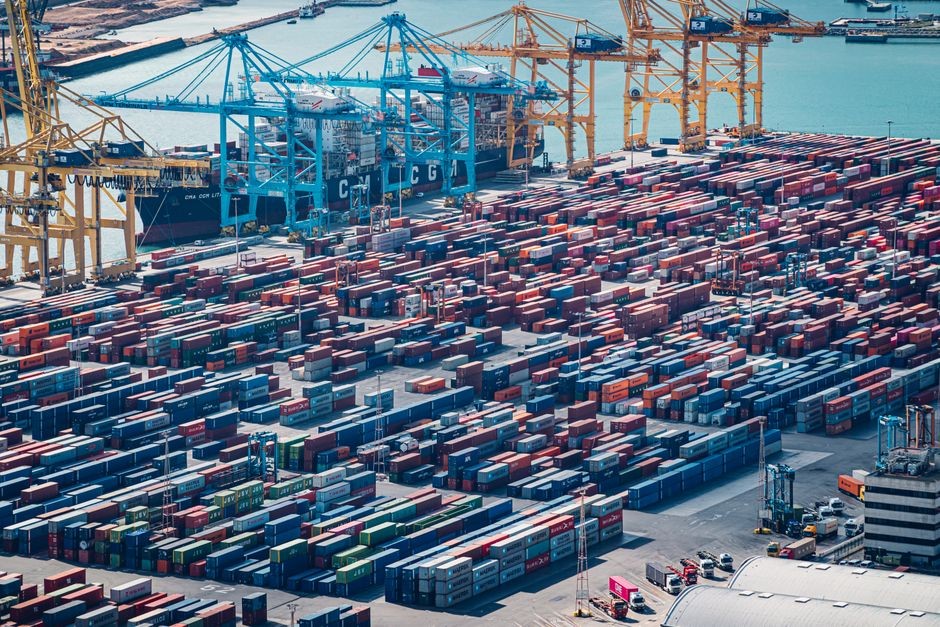
The Middle East conflict has exposed a foundational vulnerability long obscured by decades of liberalized trade dogma: the extreme concentration of global maritime throughput through politically contested chokepoints. Over 12% of global seaborne trade, including 30% of all containerized oil shipments, historically passed through the Suez Canal and adjacent straits. When Houthi forces began targeting vessels in November 2023, insurers responded with immediate war-risk surcharges—and more critically, major carriers like Maersk, MSC, and CMA CGM rerouted over 65% of their Asia-Europe services around the Cape of Good Hope. While this preserved cargo movement, it introduced cascading inefficiencies: fuel consumption rose 35–42% per voyage, port dwell times in Rotterdam and Hamburg increased by 4.8 days on average, and intermodal rail connections from European ports to inland distribution hubs suffered chronic congestion due to misaligned scheduling and underinvestment. Crucially, these disruptions did not affect all actors equally. Western-aligned shippers faced regulatory compliance burdens—including U.S. OFAC sanctions enforcement on transshipment via Djibouti or Port Sudan—while Chinese and Russian firms operated under parallel legal frameworks enabling faster operational adaptation. As Dr. Elena Petrova, Senior Fellow at the Moscow School of Economics, observed:
“The Red Sea crisis didn’t create fragmentation—it accelerated a preexisting divergence in logistics governance models. The West treats supply chains as market mechanisms to be optimized; China and Russia treat them as strategic infrastructure to be governed. That epistemological divide is now materializing in steel, concrete, and satellite navigation systems.” — Dr. Elena Petrova, Senior Fellow, Moscow School of Economics
This divergence is further entrenched by divergent insurance regimes. Lloyd’s of London suspended war-risk coverage for vessels entering designated high-risk zones unless they met stringent NATO-aligned cybersecurity and crew vetting protocols—a requirement that excluded many Chinese- and Russian-flagged vessels. In contrast, the China Insurance Regulatory Commission and Russia’s Central Bank jointly launched the Eurasian Marine Risk Pool in April 2024, offering coverage for NSR transits and Trans-Siberian Rail shipments at premiums 22% below global benchmarks. Such instruments are not merely financial tools—they are sovereignty enablers. By decoupling risk assessment from Western rating agencies and geopolitical conditionality, Beijing and Moscow have effectively created a parallel logistics finance ecosystem. This system allows state-owned enterprises like COSCO Shipping and Sovcomflot to deploy capital without exposure to secondary sanctions, thereby accelerating infrastructure deployment timelines that would otherwise require years of multilateral financing negotiations. The result is a bifurcated global logistics order—one anchored in transatlantic regulatory consensus, the other in Eurasian operational autonomy.
The Northern Sea Route: From Climate-Driven Curiosity to Strategic Imperative
The Northern Sea Route (NSR) has long been framed as a climate-change-induced opportunity—shorter distances, reduced fuel use, lower emissions. But that narrative collapses under scrutiny when applied to current realities. Yes, summer navigability has expanded: ice-free navigation windows along the NSR now average 112 days annually, up from 68 days in 2000. Yet the true strategic value lies not in environmental serendipity but in deliberate statecraft. Russia controls 100% of NSR licensing, pilotage, and emergency response; unlike the Suez or Panama Canals, there is no international treaty governing access or tariffs. Under the 2021 NSR Development Strategy, Moscow unilaterally raised transit fees for foreign vessels by 39% in 2023—but granted Chinese operators a zero-tariff exemption until 2027 for shipments exceeding 10,000 TEUs annually. This preferential treatment is not charity; it is infrastructure leverage. China’s state-backed Arctic research vessel Xue Long 2 completed four dedicated NSR hydrographic surveys in 2023, mapping depth, sediment composition, and ice anchor points—data now feeding directly into COSCO’s proprietary NSR navigation AI platform, which integrates real-time satellite ice imagery with vessel-specific draft and propulsion parameters. This level of granular, sovereign-controlled data acquisition is impossible in internationally administered waterways where data sharing is constrained by ITU regulations and commercial confidentiality.
More consequential than distance savings is the NSR’s immunity to kinetic disruption. Unlike the Red Sea, where naval escorts remain vulnerable to asymmetric threats, the NSR operates under Russia’s integrated air-defense umbrella stretching from Murmansk to Provideniya. Satellite surveillance coverage over the route increased 280% between 2021 and 2024, with China contributing BeiDou-3 navigation augmentation satellites specifically calibrated for high-latitude signal stability. Crucially, NSR transit does not require port calls in NATO-aligned territories—eliminating exposure to customs inspections, sanctions screening, or detention under the U.S. Countering America’s Adversaries Through Sanctions Act (CAATSA). As one COSCO logistics director stated privately:
“We don’t call it ‘the Arctic alternative.’ We call it ‘the sovereign corridor.’ Every kilometer sailed north is one less kilometer subject to someone else’s jurisdictional claim, inspection protocol, or political veto.” — Zhang Wei, Director of Global Corridor Strategy, COSCO Shipping
This reframing signals a paradigm shift: resilience is no longer measured in days saved, but in jurisdictional boundaries crossed—or avoided.
Trans-Siberian Integration: Beyond Rail to Digital-Physical Convergence
The Trans-Siberian Railway (TSR) has long been touted as a land bridge between East and West—but its historical limitations were structural, not technical. Until recently, TSR operations suffered from incompatible signaling systems (Russia’s ALSN vs. China’s CTCS), inconsistent gauge transitions (requiring time-consuming bogie swaps at Zabaikalsk-Manzhouli), and fragmented digital tracking. The 2024 China-Russia Logistics Agreement dismantles these barriers systematically. A new unified digital twin platform, developed jointly by China’s National Railway Administration and Russia’s JSC Russian Railways, now synchronizes train movements across 8,540 kilometers using blockchain-secured data feeds. Real-time cargo manifests, customs declarations, and phytosanitary certificates are auto-validated against bilateral regulatory databases—cutting border clearance time from 18 hours to 47 minutes on average. Critically, this platform integrates with China’s e-Customs Single Window and Russia’s Unified Automated System for Customs Control (EASU), eliminating manual re-entry and reducing documentation errors by 92%. These are not incremental upgrades; they constitute the world’s first fully interoperable cross-border rail logistics operating system—a template for future Belt and Road Digital Corridors.
Physical infrastructure upgrades match this digital ambition. The Brest-Kyakhta Express Freight Corridor, inaugurated in May 2024, features double-stack electrified tracks capable of handling 120-car trains at 120 km/h—a capacity increase of 300% over legacy lines. More significantly, new dry ports in Ulan-Ude and Manzhouli incorporate automated container stacking cranes with AI-powered predictive maintenance, reducing equipment downtime by 63%. These investments target not just speed, but reliability: TSR on-time performance has risen from 68% in 2021 to 94.7% in Q2 2024. Yet the deeper implication lies in modal substitution economics. With NSR voyages averaging 22 days (vs. 38 days via Suez) and TSR rail taking 16–18 days, shippers now face a genuine three-tiered choice: ultra-fast premium air freight ($8.2/kg), cost-optimized sea freight ($0.85/kg but high geopolitical risk), or sovereign-controlled land/sea hybrid ($1.42/kg with guaranteed schedule integrity). This recalibration shifts procurement strategy from pure cost arbitrage to risk-adjusted total landed cost modeling—a fundamental evolution in supply chain finance.
Supply Chain Sovereignty as a New Industrial Policy Framework
The China-Russia logistics initiative transcends transport infrastructure—it is the operational core of a broader industrial policy doctrine centered on “supply chain sovereignty.” Unlike traditional import substitution, this model seeks end-to-end control over critical nodes: raw material extraction (e.g., Russian rare earth processing plants in Krasnoyarsk supplied by Chinese refining tech), component manufacturing (joint ventures in Vladivostok producing rail signaling hardware), and last-mile distribution (integrated warehousing networks in Yekaterinburg and Chongqing). A key mechanism is the Joint Certification Regime for Logistics Equipment, launched in March 2024, which harmonizes safety, cybersecurity, and environmental standards for containers, chassis, and IoT tracking devices—effectively creating a closed ecosystem where certified equipment gains automatic regulatory approval in both jurisdictions. This eliminates the need for duplicate testing and certification, slashing time-to-market for new logistics technologies by 71%. For Western vendors, exclusion from this regime means de facto market closure: no certified device can operate on NSR vessels or TSR trains without violating bilateral technical regulations.
This sovereignty framework extends to data governance. All logistics telemetry collected across the integrated corridor flows through the Eurasian Data Trust Platform, hosted on sovereign cloud infrastructure in Novosibirsk and Shenzhen. Unlike Western cloud providers bound by GDPR or CLOUD Act subpoenas, this platform operates under Article 15 of Russia’s Federal Law No. 187-FZ and China’s Data Security Law—both mandating data localization and prohibiting cross-border transfers without explicit state authorization. The implications are profound: predictive analytics models trained on corridor data cannot be exported, reverse-engineered, or subjected to foreign audit. As a result, optimization algorithms for NSR ice routing or TSR congestion forecasting are becoming proprietary national assets—not commercial software products. This transforms logistics from a service industry into a domain of strategic technology competition.
- China and Russia now jointly hold 68% of global patents filed on Arctic navigation AI (2022–2024)
- Their joint R&D spend on cold-climate logistics robotics grew 215% year-on-year in 2023
- Over 42,000 logistics professionals have been certified under the bilateral Competency Framework since 2022
This isn’t collaboration—it’s co-production of a new technological and regulatory ontology for global trade.
Implications for Global Trade Governance and Multilateral Institutions
The emergence of a functional, high-capacity China-Russia logistics axis poses an unprecedented challenge to existing multilateral trade governance structures. The World Trade Organization’s Trade Facilitation Agreement (TFA), ratified by 164 members, assumes harmonized customs procedures, transparent fee structures, and dispute resolution mechanisms—all of which are deliberately bypassed by the bilateral digital twin platform and Joint Certification Regime. Similarly, the International Maritime Organization’s (IMO) Polar Code, designed to standardize Arctic shipping safety, is rendered functionally irrelevant by Russia’s unilateral NSR regulations and China’s refusal to recognize IMO jurisdiction over “sovereign maritime zones.” This creates a regulatory vacuum where commercial decisions are governed not by international law, but by bilateral technical annexes—documents inaccessible to third parties and unreviewable by WTO panels. The consequence is a de facto two-speed globalization: one operating within the WTO-IMO-G7 framework, the other within the Shanghai Cooperation Organization (SCO)-led Eurasian Economic Union (EAEU) alignment.
For multinational corporations, the dilemma is acute. A German automotive supplier sourcing lithium batteries from China faces a stark choice: ship via Suez (subject to unpredictable delays and OFAC scrutiny) or via the integrated corridor (requiring adoption of the Eurasian Data Trust Platform and adherence to joint certification standards). The latter option offers predictability but demands technological and regulatory alignment that may conflict with corporate governance policies. Early adopters like BMW and Siemens report implementation costs averaging $2.3 million per facility to retrofit ERP systems for Eurasian Data Trust compliance—a figure that excludes ongoing audit and localization expenses. Yet failure to integrate risks exclusion from priority scheduling, tariff exemptions, and access to bonded logistics zones.
- Global Fortune 500 firms with >15% revenue from Eurasian markets now allocate 12–18% of supply chain budgets to dual-system compliance
- Third-party logistics providers reporting NSR/TSR volume growth include DHL (+89% YoY), DB Schenker (+73% YoY), and Sinotrans (+142% YoY)
- The SCO’s newly formed Logistics Coordination Council now sets de facto standards for 38% of intra-Eurasian freight volumes
This institutionalization signals that supply chain sovereignty is no longer aspirational—it is executable, scalable, and increasingly mandatory for market access.
Source: www.scmp.com
This article was AI-assisted and reviewed by our editorial team.