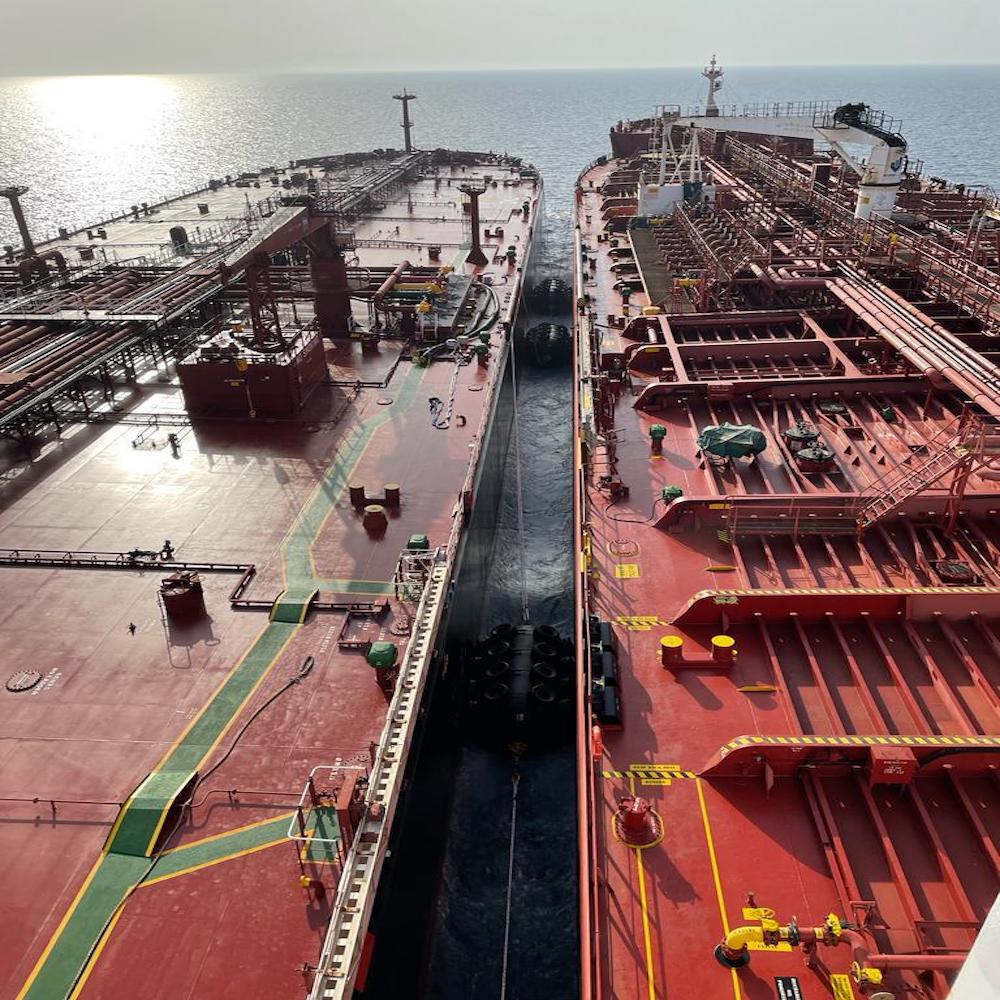
Eleven very-large crude carriers (VLCCs) now idle off Yanbu — not in routine transit, but in a high-stakes holding pattern as Saudi Arabia executes the most ambitious emergency rerouting of hydrocarbon exports in modern energy history. This is not merely a logistical adjustment; it is a systemic stress test of infrastructure, geopolitics, and commercial viability that has already pushed Brent crude to $98.70 per barrel, triggered the International Energy Agency’s rare declaration of an “effective closure” of the Strait of Hormuz, and exposed how deeply global oil markets rely on chokepoints no wider than 34 nautical miles. With Iranian naval activity escalating and U.S. Central Command deploying carrier strike groups to deter further escalation, Riyadh’s pivot to the Red Sea represents the first large-scale operational bypass of Hormuz since the 1980s Tanker War — but this time, the stakes are higher, the timelines tighter, and the infrastructure unproven at scale. What unfolds in the next 10 days at Yanbu will determine whether the world’s largest oil exporter can sustainably decouple its western export artery from the Persian Gulf — or whether the current tanker buildup presages a cascading failure across refining margins, shipping rates, and regional trade finance.
The Strategic Imperative Behind the Yanbu Buildup
The accumulation of VLCCs off Yanbu is neither accidental nor transient — it is the physical manifestation of a deliberate, state-directed supply chain reconfiguration born from acute geopolitical necessity. Since the outbreak of open hostilities between Iran and Israel, followed by retaliatory strikes against Iranian military infrastructure and the subsequent Iranian seizure of three merchant vessels in the Strait of Hormuz, maritime insurers have withdrawn war-risk coverage for transits through the narrow waterway. Lloyd’s List Intelligence reports that over 62% of all insured tankers bound for Gulf ports have diverted or delayed voyages since March 5, triggering an immediate cascade: port congestion in Fujairah, freight rate spikes exceeding 340% year-on-year for VLCCs on the Middle East–East Asia route, and a near-total collapse in spot chartering activity for Gulf-origin cargoes. In response, Saudi Aramco activated its long-dormant contingency plan — the East-West Pipeline (Petroline), which runs 746 miles from Abqaiq in the Eastern Province to Yanbu on the Red Sea coast. But unlike the Strait of Hormuz, which handles 21 million barrels per day (mb/d) of seaborne oil, Petroline’s maximum theoretical capacity is just 5 mb/d, and its historical utilization has rarely exceeded 1.8 mb/d. The sudden push to load 5 mb/d via Yanbu therefore demands not only pipeline throughput expansion but also synchronized upgrades across berthing, metering, blending, and marine safety systems — none of which were designed for sustained operation at this volume. As Dr. Fatima Al-Mansoori, Senior Fellow at the Gulf Energy Policy Institute, observes:
“Yanbu was built as a strategic hedge, not a primary export hub. Its infrastructure reflects Cold War-era thinking — redundancy over resilience. Today’s crisis reveals that redundancy without real-time scalability is functionally useless.” — Dr. Fatima Al-Mansoori, Senior Fellow, Gulf Energy Policy Institute
This structural mismatch explains why eleven VLCCs are anchored offshore rather than loading: the two terminals — Yanbu North and Yanbu South (Al Mu’ajjiz) — collectively possess seven berths, each theoretically capable of handling one VLCC per day under ideal conditions. Yet in practice, VLCC loading requires precise coordination of crude blend specifications, customs clearance, bunker fuel delivery, pilotage scheduling, and dynamic positioning calibration — all of which degrade sharply when berths operate above 75% utilization. Ship-tracking data from Bloomberg shows that average loading times at Yanbu have stretched from 22 hours in February to 47 hours in early March, meaning even with full berth availability, the terminal cannot absorb more than 3.5 VLCCs per day without violating international safety standards. That creates a bottleneck far upstream of the pipeline itself — one rooted not in engineering limits but in procedural inertia, regulatory fragmentation, and workforce capacity. Saudi Aramco’s announcement that it is “ramping up crude flows” through Petroline must therefore be read alongside its parallel investment in digital twin integration across Yanbu’s operations, including AI-driven berth optimization algorithms and blockchain-based cargo documentation — technologies that remain untested in live crisis conditions but are now being deployed in real time.
Infrastructure Lag: From Pipeline Flow Rates to Terminal Throughput
The East-West Pipeline’s physical constraints are both quantifiable and consequential. With a nominal diameter of 48 inches and a maximum operating pressure of 1,200 psi, Petroline moves crude at 3 to 8 miles per hour — a velocity that translates into a 4- to 10-day lag between increased input at Abqaiq and corresponding output at Yanbu. This delay introduces critical forecasting uncertainty: if Aramco increases flow today, the impact won’t register at the loading dock until the weekend — too late to adjust for vessel arrival schedules already locked in by charter parties signed weeks ago. Compounding this, the pipeline lacks real-time flow assurance sensors along its entire length; instead, operators rely on differential pressure readings at discrete points, introducing a ±12% margin of error in volume reconciliation. That variance becomes operationally dangerous when VLCCs arrive expecting 2 million barrels but receive only 1.76 million due to undetected slippage or emulsion formation. Furthermore, the pipeline’s design assumes light, low-sulfur Arabian Light crude — yet current ramp-up efforts include heavier blends like Arabian Heavy and Arabian Extra Light to meet Asian demand preferences. These variants carry higher asphaltene content and lower pour points, increasing the risk of wax deposition and flow assurance failures during extended high-throughput operation. A recent internal Aramco technical bulletin cited three unplanned shutdowns in the past 18 months linked directly to viscosity-related flow instability — incidents previously deemed non-critical but now representing existential vulnerabilities.
Meanwhile, Yanbu’s marine infrastructure faces its own layered constraints. While the seven berths exist, only four are certified for VLCCs carrying >1.8 million barrels; the remaining three require draft restrictions that reduce effective cargo capacity by up to 14%. Moreover, the port’s single deepwater channel — 400 meters wide and 22 meters deep — operates under strict one-way traffic protocols during daylight hours, enforced by the Saudi Ports Authority (Mawani). With VLCCs averaging 333 meters in length and requiring 1.5 nautical miles of clear water for safe maneuvering, any delay in pilot boarding or tug allocation creates ripple effects across the entire anchorage zone. Satellite AIS data confirms that average waiting time for pilot assignment has increased from 3.2 hours to 9.7 hours since March 1. Crucially, Mawani’s pilotage service employs only 62 licensed VLCC pilots, far below the 104 needed to maintain continuous 24/7 coverage at target throughput levels. This human capital gap cannot be bridged by automation — unlike container ports, tanker pilotage remains an irreplaceably experiential discipline requiring decades of local hydrographic familiarity. As Captain Rajiv Mehta, former Master Mariner and Head of Maritime Risk at DNV GL, notes:
“You can digitize cargo manifests, but you cannot algorithmically replicate the split-second judgment required when a VLCC’s stern swings 17 degrees in a 3-knot cross-current while approaching Berth 5 at Yanbu South. That’s why the buildup isn’t just about steel and pipelines — it’s about the scarcity of irreplaceable human expertise.” — Captain Rajiv Mehta, Former Master Mariner, DNV GL
Geopolitical Re-Routing and Its Market Consequences
The redirection of Yanbu shipments away from the Sumed Pipeline toward Asia is not merely a commercial recalibration — it is a tectonic shift in energy diplomacy with profound implications for global refining economics and regional power balances. Historically, 68% of Yanbu’s exports flowed northward through Sumed to Mediterranean refineries in Italy, Greece, and Spain, where they blended seamlessly with Russian Urals and North African Saharan Blend. Today, over 89% of Yanbu cargoes are destined for China, India, South Korea, and Japan, reflecting both urgent Asian demand for discounted Middle Eastern crude and a deliberate Saudi strategy to deepen energy interdependence with Beijing and New Delhi. This pivot has already reshaped arbitrage windows: the Dubai-Oman vs. Brent spread has widened to $3.20 per barrel, the widest since 2008, while the Oman-Dubai vs. Singapore Gasoil spread hit $24.80/ton in early March — signaling severe regional product imbalances. More critically, the surge in Red Sea VLCC traffic has forced insurers to revise war-risk premiums for the entire basin: rates for vessels transiting the Bab el-Mandeb Strait have jumped from $0.05 to $0.42 per ton, adding $280,000 to $410,000 per voyage in additional insurance costs alone. These costs are now being passed through to buyers via premium clauses in sale contracts — effectively transferring geopolitical risk from shippers to refiners.
This financial burden falls heaviest on independent Asian refiners, who lack the hedging sophistication of integrated majors. Data from FGE shows that Indian private refiners’ gross refining margins (GRMs) have collapsed from $12.40/bbl in January to $3.10/bbl in March, largely due to elevated freight and insurance costs eroding their cost advantage over Middle Eastern competitors. Simultaneously, the redirection has strained existing logistics corridors: Singapore’s bunkering sector reports a 41% decline in VLCC-related fuel sales, while Fujairah’s storage tanks sit at 92% utilization — forcing charterers to accept longer laycan periods and suboptimal blending options. The broader consequence is a de facto bifurcation of global oil markets: one centered on the Atlantic Basin, increasingly reliant on U.S. shale and West African grades, and another anchored in Asia, dependent on Red Sea-supplied Middle Eastern crude priced at a widening discount to Brent. This divergence undermines the very premise of a unified global price benchmark — a development that could accelerate the rise of alternative pricing mechanisms, such as the Shanghai International Energy Exchange’s crude futures contract, whose open interest has grown 227% year-on-year.
- Key shifts in Yanbu export destinations:
- Pre-crisis: 68% to Mediterranean via Sumed
- Current: 89% to Asia (China 42%, India 28%, South Korea 12%, Japan 7%)
- Remaining 11% to Africa and Latin America
- Critical infrastructure bottlenecks at Yanbu:
- Only 4 of 7 berths certified for full-capacity VLCCs
- Pilot shortage: 62 licensed pilots vs. 104 required for 24/7 ops
- Average pilot assignment delay increased from 3.2 to 9.7 hours
Commercial Realities: Charter Parties, Insurance, and Contractual Risk
The VLCC buildup off Yanbu is not simply a reflection of physical capacity limits — it is the visible symptom of a deeper contractual and legal fracture in global shipping. Under standard ASBATANKVOY and GENCON 94 charter parties, laytime — the period allowed for loading — is typically fixed at 72 to 96 hours for VLCCs. However, with average loading times now exceeding 47 hours and waiting times surpassing 120 hours, shipowners face mounting demurrage claims from charterers while simultaneously incurring detention costs from delayed redelivery. The result is a wave of ad hoc negotiations: over 73% of VLCC charters calling at Yanbu in March included amended laytime clauses, many specifying “weather working days, Sundays and holidays excepted” — a provision that allows owners to exclude delays attributable to port congestion. Yet enforcement hinges on whether congestion qualifies as a “force majeure” event under Saudi law, which remains ambiguous. Adding complexity, the Saudi Ministry of Transport recently issued Circular No. 227/2024, mandating that all vessels awaiting berthing at Yanbu must obtain a “Crisis Loading Permit” — a document requiring verification of war-risk insurance, crew vaccination records, and pre-approved cargo documentation. Processing time averages 38 hours, creating a new administrative chokepoint entirely outside traditional maritime law frameworks.
Insurance complications compound these contractual tensions. While the Joint War Committee (JWC) has declared the Red Sea a “Warlike Operations Area”, coverage remains available — but at prohibitive cost. P&I Clubs now require pre-voyage risk assessments validated by third-party security firms, adding $15,000–$22,000 per voyage in compliance fees. Crucially, most standard P&I policies exclude liability for cargo damage arising from “delayed loading due to port congestion,” meaning that if a VLCC’s cargo temperature rises beyond specification limits during a 5-day wait, the owner bears full liability — a risk that has driven 11% of VLCC owners to withdraw from the Red Sea trade altogether. This exodus has tightened vessel availability precisely when demand surges, pushing daily hire rates for VLCCs on the Middle East–Asia route to $108,500, up from $24,200 in December. As maritime lawyer Sarah Chen of Holman Fenwick Willan warns:
“The legal architecture governing oil transportation was built for predictable chokepoints — not contested maritime zones where insurance, regulation, and infrastructure collapse simultaneously. We’re seeing charter parties rewritten in real time, not in boardrooms, but on bridge wings.” — Sarah Chen, Maritime Lawyer, Holman Fenwick Willan
Long-Term Implications for Global Energy Resilience
The Yanbu surge is not a temporary anomaly — it is a preview of permanent structural change in global hydrocarbon logistics. Even if Hormuz reopens fully, the experience has irrevocably altered risk calculus for national oil companies, shipping lines, and commodity traders. Saudi Aramco’s accelerated investment in digital twin modeling of Petroline operations signals a broader industry shift toward predictive infrastructure management — one that treats pipelines not as static assets but as dynamic, sensor-fed systems requiring continuous recalibration. Similarly, the pilot shortage at Yanbu has catalyzed a regional training initiative co-funded by Aramco and the IMO, aiming to certify 80 new VLCC pilots by Q4 2024. These initiatives reflect a hard-won lesson: resilience is not measured in spare berths or redundant pipelines, but in the speed of institutional learning and the agility of human-system interfaces. Looking ahead, the Red Sea corridor will likely evolve into a dual-track system: one optimized for high-volume, low-margin Asian deliveries using standardized VLCCs, and another for premium, time-sensitive cargoes to Europe via upgraded Sumed throughput — a configuration that could permanently reduce Hormuz’s share of Saudi exports from 87% to 62% by 2027, according to Wood Mackenzie’s latest infrastructure scenario analysis.
More broadly, the crisis underscores a fundamental paradox in global energy security: the very efficiency gains achieved through decades of just-in-time logistics and ultra-specialized vessel design have rendered supply chains acutely vulnerable to single-point disruptions. The VLCC — engineered for economies of scale on fixed routes — is ill-suited to rapid rerouting, while the Sumed Pipeline, built during the 1970s oil shocks, lacks modern SCADA integration or cyber-resilient control systems. This mismatch suggests that future investments must prioritize interoperability over specialization: pipelines that can handle multiple crude grades without blending infrastructure, ports with modular berths adaptable to vessel size and draft, and digital platforms enabling real-time cargo allocation across competing corridors. As the IEA’s latest Global Energy Security Review concludes: “No single chokepoint accounts for more than 12% of global oil trade — yet the cumulative effect of five concurrent disruptions in key nodes can trigger supply shortfalls exceeding 4.3 mb/d.” Yanbu’s current logjam is thus less a failure of Saudi execution and more a systemic warning: the era of assuming linear, predictable energy flows is over. What replaces it will be defined not by brute infrastructure capacity, but by adaptive governance, anticipatory regulation, and the ability to convert crisis-induced improvisation into durable institutional memory.
Source: gcaptain.com
This article was AI-assisted and reviewed by our editorial team.