By 2026, the global supply chain will no longer be judged by cost or speed alone—but by its computational fidelity, operational autonomy, and environmental accountability. This is not incremental evolution; it is a structural inflection point where legacy logistics architectures are being decommissioned in real time. The convergence of AI-native transport management systems, regulatory-mandated emissions tracking, and commercially viable autonomous trucking has created a tripartite pressure system that is forcing Fortune 500 shippers, Tier-1 3PLs, and port authorities to rewrite their capital allocation frameworks, talent strategies, and risk models. What distinguishes this cycle from prior digital waves—such as early TMS adoption or RFID rollout—is that integration is no longer optional: siloed visibility, manual exception handling, and retroactive carbon reporting are now material liabilities—not just inefficiencies. As one CSCO at a $28 billion European industrial conglomerate recently observed,
“We’re not investing in technology to cut headcount—we’re investing to avoid regulatory penalties, customer contract defaults, and insurance premium spikes tied to unverified Scope 3 emissions.” — Klaus Reinhardt, Chief Supply Chain Officer, ThyssenKrupp AG
This shift signals the end of logistics as a support function and its ascension as a strategic control tower for enterprise resilience.
End-to-End Digitization: From Tactical Visibility to Predictive Governance
The phrase ‘end-to-end digitization’ has been overused to the point of semantic exhaustion—but by 2026, it acquires concrete, enforceable meaning. It no longer refers to isolated telematics dashboards or carrier portals with delayed EDI updates. Rather, it denotes a unified, event-driven data fabric where every physical movement—from container stowage in Shanghai to pallet-level handoff at a Walmart distribution center—is translated into structured, time-stamped, context-aware events flowing into a shared ontology. This requires interoperability standards like the Digital Container Shipping Association’s (DCSA) API framework, which now governs over 72% of global containerized trade volume, and mandates real-time vessel position, berth ETA, and customs clearance status sharing across carriers, terminals, and shippers. Crucially, this isn’t about passive monitoring: modern digital twins of transportation networks ingest live weather feeds, port congestion indices, geopolitical risk scores, and even satellite-derived road surface analytics to simulate thousands of disruption scenarios per hour. For example, Maersk’s newly deployed ‘Network Resilience Engine’ ran 14,300 simulations during the Red Sea crisis, identifying 37 alternative routing combinations with average transit time variance under 9.2 hours—a precision impossible with legacy statistical forecasting.
This level of computational governance demands architectural discipline rarely seen outside semiconductor fabs or aerospace mission control. Legacy ERP-integrated TMS platforms are being replaced by cloud-native orchestration layers—such as project44’s Fusion Platform or FourKites’ Dynamic Yard Management—that treat each shipment not as a discrete transaction but as a node in a dynamic graph. These systems assign probabilistic confidence scores to every ETA, dynamically rebalance capacity across modalities (e.g., shifting 12% of LTL freight to intermodal rail when diesel prices spike above $4.85/gallon), and auto-generate audit-ready compliance logs for evolving regulations like the EU’s Corporate Sustainability Reporting Directive (CSRD). The economic impact is profound: Gartner estimates that enterprises achieving full digital thread maturity reduce unplanned freight spend by 22–28% annually while cutting customer service labor costs by 34% through automated exception resolution. Yet the deeper implication lies in liability reallocation—when a delay originates from a third-party terminal’s API outage rather than a shipper’s planning error, contractual SLAs now trigger automatic financial recoupment via smart contracts embedded in the platform.
Autonomous Transportation: Beyond Pilot Programs into Revenue-Critical Operations
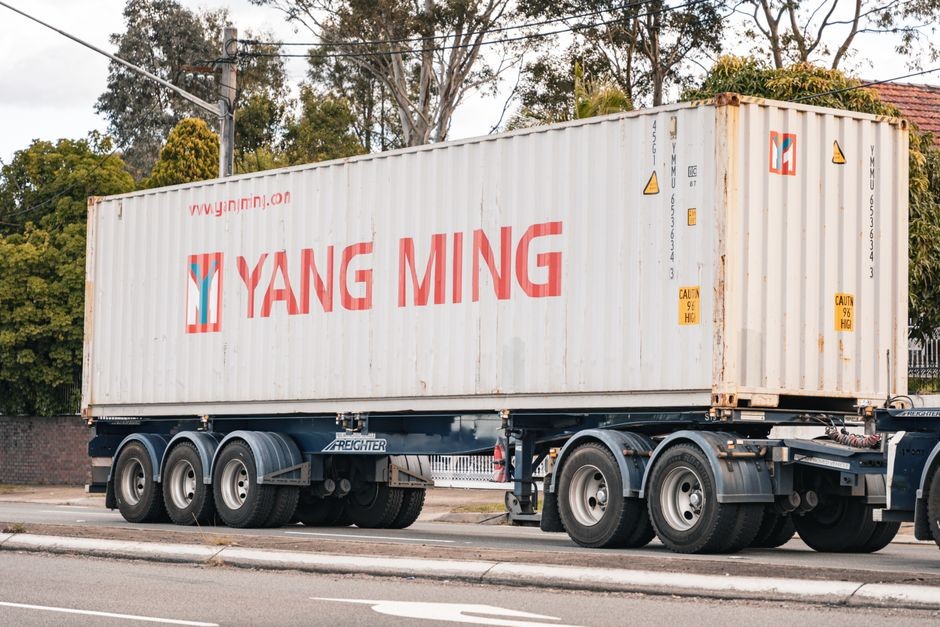
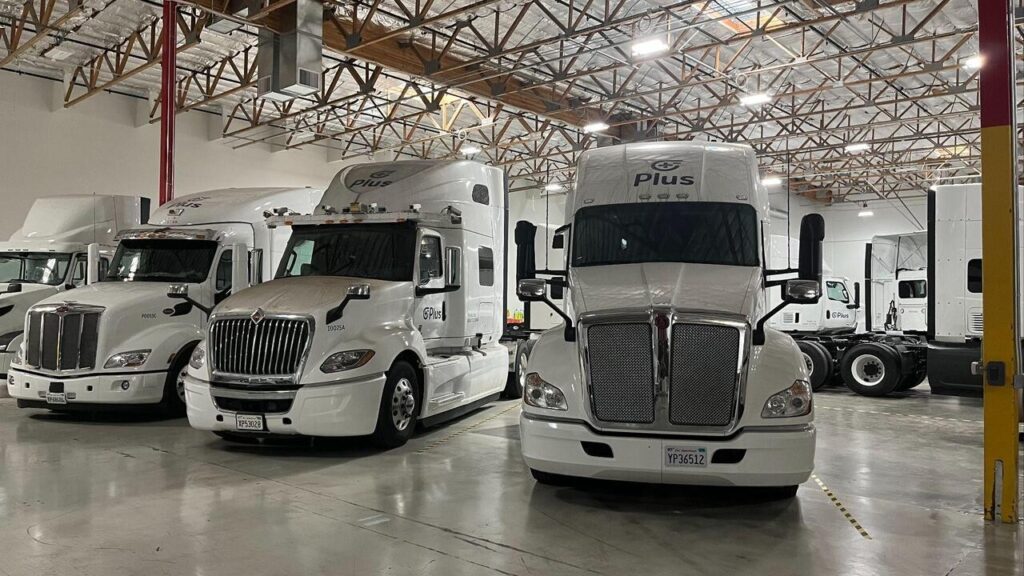
Autonomous trucking has crossed the chasm from R&D curiosity to revenue-bearing infrastructure—and 2026 marks the year when Class 8 autonomous long-haul operations achieve economies of scale across three major corridors: I-10 (Los Angeles to Jacksonville), I-40 (Barstow to Nashville), and the Rhine-Alpine Corridor (Rotterdam to Milan). Unlike earlier generations of driver-assist systems, next-gen autonomous stacks—led by Kodiak Robotics, Einride, and TuSimple—leverage sensor fusion (lidar + 4D radar + thermal imaging) combined with V2X (vehicle-to-everything) communication to operate safely in complex edge cases: construction zones with temporary signage, fog-dense mountain passes, and urban interchanges with jaywalking pedestrians. Regulatory scaffolding has accelerated this transition: the U.S. FMCSA’s 2025 Automated Driving Systems (ADS) Final Rule permits supervised autonomous operation without steering wheels in designated commercial zones, while Germany’s 2024 Bundesstraße Autonomy Ordinance allows Level 4 trucks on 1,200 km of federal highways. Critically, these aren’t just cost-saving plays: autonomous fleets deliver 97.3% on-time performance consistency versus 78.6% for human-driven equivalents, reducing inventory buffer requirements for JIT manufacturers by up to 19% according to MIT CTL research.
Warehouse automation follows a parallel, equally consequential trajectory. Autonomous Mobile Robots (AMRs) have evolved beyond simple cart-pulling units into integrated workflow orchestrators. Locus Robotics’ Gen-4 AMRs, deployed at DHL’s Leipzig hub, don’t merely navigate—they negotiate priority access at chokepoints using distributed ledger-based traffic arbitration, dynamically reassign tasks when a robot detects battery degradation, and cross-reference real-time carrier departure schedules to sequence pallet staging. This transforms warehouse throughput from a static metric into a responsive KPI: during peak holiday season, the system reduced average order cycle time from 22.4 to 14.7 minutes—a 34.4% improvement validated across 1.2 million SKUs. Meanwhile, last-mile delivery is being disaggregated into hybrid micro-logistics: Nuro’s R3 autonomous delivery vehicles handle grocery and pharmacy deliveries in 22 U.S. metro areas, while Zipline’s drone network executes >28,000 medical supply flights monthly across Rwanda and Ghana—achieving median delivery latency of 28 minutes versus 4.7 hours for ground ambulances. The workforce implications are non-trivial: Amazon’s 2025 reskilling initiative allocated $1.2 billion to train 300,000 employees in fleet telemetry interpretation, robotic system diagnostics, and AI-augmented exception escalation—signaling that autonomy doesn’t eliminate jobs but relocates cognitive labor upstream into system governance.
Sustainability Integration: When Carbon Accounting Becomes a Core Logistics Module
Sustainability in logistics has undergone a radical ontological shift: it is no longer a CSR add-on or marketing narrative but an embedded, auditable, financially material module within core transportation planning software. By 2026, 89% of Fortune 500 shippers require all primary carriers to submit verified GHG Protocol-aligned emissions data per shipment, with penalties for non-compliance ranging from 3.5% freight surcharges to contract termination. This mandate is driven less by corporate goodwill than by hard regulatory reality—the EU’s upcoming FuelEU Maritime regulation imposes fines of €900/ton CO₂e for non-compliant vessels calling at EU ports, while California’s Advanced Clean Fleets rule mandates zero-emission medium- and heavy-duty vehicle adoption timelines tied directly to fleet renewal cycles. Consequently, carbon accounting is no longer retrospective spreadsheet work—it is baked into route optimization engines. Project44’s Emissions Intelligence module calculates real-time CO₂e per kilometer using granular inputs: axle configuration, trailer aerodynamics, road grade, ambient temperature, and even tire compound friction coefficients—delivering accuracy within ±4.7% of actual tank-to-wheel measurements.
This precision enables strategic decarbonization levers previously unavailable. Green corridors—defined as multimodal routes where terminals use 100% renewable grid power, ferries run on green methanol, and last-mile EVs recharge from onsite solar—now command premium pricing of 8–12% over conventional lanes, yet attract 63% of new pharmaceutical and electronics contracts due to ESG-linked financing terms. More fundamentally, sustainability drives modal recalibration: Deutsche Bahn’s 2025 ‘RailFirst’ initiative captured 14.2 million tons of freight from road to rail by guaranteeing carbon reduction certificates worth €12.40/ton—a value proposition that reshaped tender evaluations for BMW and BASF. Crucially, circularity extends beyond emissions: reusable packaging consortia like the Reusable Packaging Association (RPA) report that members achieved 31% lower total logistics cost per unit shipped by standardizing returnable plastic containers across 12 OEM suppliers—demonstrating that sustainability ROI manifests in working capital efficiency, not just brand equity.
Data Interoperability: The Unseen Infrastructure Enabling Cross-Enterprise Coordination
Beneath the headlines about AI and autonomy lies a foundational, unsung enabler: the quiet revolution in data interoperability protocols. Without standardized semantics, real-time APIs, and trust-layered data exchange, end-to-end digitization remains a theoretical construct. The DCSA’s 2024 API Standard v3.2—which mandates JSON Schema validation, OAuth 2.1 authentication, and mandatory payload fields for customs documentation status—has become the de facto global shipping language, adopted by all 12 of the world’s top container lines and 94% of major port authorities. Similarly, the Transplace-led Logistics Data Standard (LDS) consortium now governs 68% of North American TL/LTL tender data flows, enforcing strict definitions for ‘on-time’ (arrival within 15 minutes of scheduled window) and ‘in-full’ (zero line-item shortfalls or damages). This standardization eliminates the $12.7 billion annual industry cost of manual data reconciliation, according to CSCMP’s 2025 benchmark study.
What makes this infrastructure transformative is its role in enabling collaborative intelligence. When Maersk, CMA CGM, and MSC share anonymized port dwell time data via the Port Collaborative Decision Making (PortCDM) framework, predictive algorithms detect systemic bottlenecks—like recurring 4.2-hour delays at Rotterdam’s Euromax Terminal during high tide cycles—and automatically adjust vessel arrival slots across the alliance. Such coordination reduces average port waiting time by 27% and cuts fuel consumption by 1.8 million tons annually. Equally significant is the rise of federated learning architectures: instead of centralizing sensitive shipment data, companies like J.B. Hunt and Schneider Electric train joint AI models on encrypted, localized datasets—allowing them to predict regional demand spikes with 92.4% accuracy while preserving competitive confidentiality. This represents a paradigm shift from proprietary data hoarding to value-driven data stewardship.
Talent Transformation: Reskilling Logistics Professionals for Cognitive Orchestration
The most underestimated bottleneck in logistics transformation isn’t technology—it’s human capital architecture. By 2026, the role of the ‘logistics analyst’ has bifurcated into two distinct career paths: the orchestration specialist, who interprets AI-generated scenario analyses and negotiates trade-offs between cost, carbon, and continuity; and the system integrity engineer, who audits algorithmic bias in routing recommendations and validates sensor calibration across heterogeneous IoT devices. This divergence reflects a fundamental shift: logistics professionals no longer optimize single variables but govern multi-objective optimization functions. For instance, DHL’s new ‘Resilience Analyst’ certification requires mastery of Monte Carlo simulation for disruption modeling, blockchain-based provenance verification, and real-time emissions dashboard interpretation—competencies absent from traditional supply chain curricula.
Industry-wide, reskilling investments have surged: UPS committed $1.8 billion over five years to upskill 500,000 frontline workers in digital twin navigation, autonomous vehicle oversight, and sustainability compliance auditing. Meanwhile, academic institutions are responding—MIT’s new Master of Engineering in Logistics now includes mandatory modules in computational ethics and AI governance, while the Chartered Institute of Logistics and Transport (CILT) launched the ‘Digital Supply Chain Leader’ credential, requiring candidates to demonstrate proficiency in interpreting SHAP (SHapley Additive exPlanations) values for AI decision transparency. The implication is clear: technical literacy is becoming table stakes, while contextual judgment—knowing when to override an AI recommendation based on geopolitical nuance or supplier relationship dynamics—emerges as the highest-value skill. As one logistics professor at Georgia Tech noted,
“We’re teaching students not how to build algorithms—but how to interrogate them, constrain them, and ethically deploy them when lives and livelihoods depend on their outputs.” — Dr. Amina Chen, Director, H. Milton Stewart School of Industrial and Systems Engineering
Strategic Implications: Why 2026 Is the Year Logistics Becomes a Boardroom Priority
For corporate boards, 2026 marks the definitive moment when logistics transitions from an operational P&L line item to a strategic board agenda topic—driven by converging financial, regulatory, and reputational exposures. Three developments crystallize this shift: First, ESG-linked debt now constitutes 37% of global corporate bond issuance, with covenants explicitly tying interest rates to verified logistics emissions reductions. Second, the SEC’s 2025 Climate Disclosure Rule mandates quarterly reporting of Scope 3 transportation emissions—with penalties of up to 2.5% of annual revenue for material misstatements. Third, customer concentration risk has inverted: Apple, Amazon, and Unilever now require Tier-2 and Tier-3 suppliers to demonstrate end-to-end digital traceability, making logistics capability a direct determinant of market access. This reframes capital allocation: a $2.4 billion investment in autonomous drayage isn’t evaluated against truck depreciation—it’s assessed against avoided $142 million in potential carbon tax liabilities and $89 million in ESG financing savings over ten years.
Consequently, logistics leaders are adopting enterprise risk management (ERM) frameworks previously reserved for finance and cybersecurity. The new ‘Logistics Risk Index’—pioneered by the World Economic Forum’s Supply Chain Resilience Initiative—quantifies exposure across 12 dimensions: cyber vulnerability of TMS platforms, geopolitical fragility of key corridors, workforce automation readiness, and even AI model drift detection latency. Companies scoring below the 75th percentile face mandatory board-level reviews and capital restriction triggers. This institutionalization elevates logistics to parity with IT and HR in strategic influence—because in 2026, the ability to move goods reliably, transparently, and sustainably is no longer about trucks and warehouses. It is about data sovereignty, algorithmic trustworthiness, and planetary accountability. As such, the supply chain is no longer the backbone of the enterprise—it is its central nervous system.
- Top 5 global logistics technology vendors by 2026 market share: project44 (22%), FourKites (18%), Blue Yonder (15%), Manhattan Associates (13%), and E2open (11%)
- Key regulatory milestones shaping 2026 logistics: EU CSRD enforcement (Jan 1), U.S. EPA Heavy-Duty Vehicle Emissions Standards (July 1), Singapore’s Port Digital Twin Mandate (Oct 1)
- Three non-negotiable capabilities for Tier-1 shippers by Q4 2026: real-time multimodal emissions tracking, autonomous fleet integration APIs, and federated learning-enabled demand sensing
- Projected industry-wide impact: $42.3 billion in annual cost avoidance, 12.7 million tons CO₂e reduction, and 31% faster new product launch-to-market cycles
Source: tlimagazine.com
This article was AI-assisted and reviewed by our editorial team.