AI startup Lio has raised $30 million in a Series A round led by Andreessen Horowitz, bringing its total funding to $33 million, to expand its AI platform for automating enterprise procurement. Founded in 2023, Lio's technology enables processes that once took weeks to be completed in minutes, with a documented case study showing 75% automation of procurement operations within six months at a global manufacturer. This March 2026 development signals a strategic inflection point for supply chain management, where AI agents are redefining vendor management from a manual bottleneck into a competitive advantage.
The Funding Milestone: Lio’s $30M Series A and What It Signals
AI procurement startup Lio announced a $30 million Series A funding round on March 5, 2026, led by Andreessen Horowitz (a16z), with participation from SV Angels, Harry Stebbings, and Y Combinator. Lio, which graduated from YC’s Spring 2023 batch, has now raised a total of $33 million in funding to date. The fresh capital will be deployed to expand Lio’s operations throughout the United States and accelerate the development of its AI agents’ capabilities. This investment signals strong institutional confidence in AI-native approaches to enterprise procurement automation, a space that has long been dominated by legacy software vendors and outsourced services.
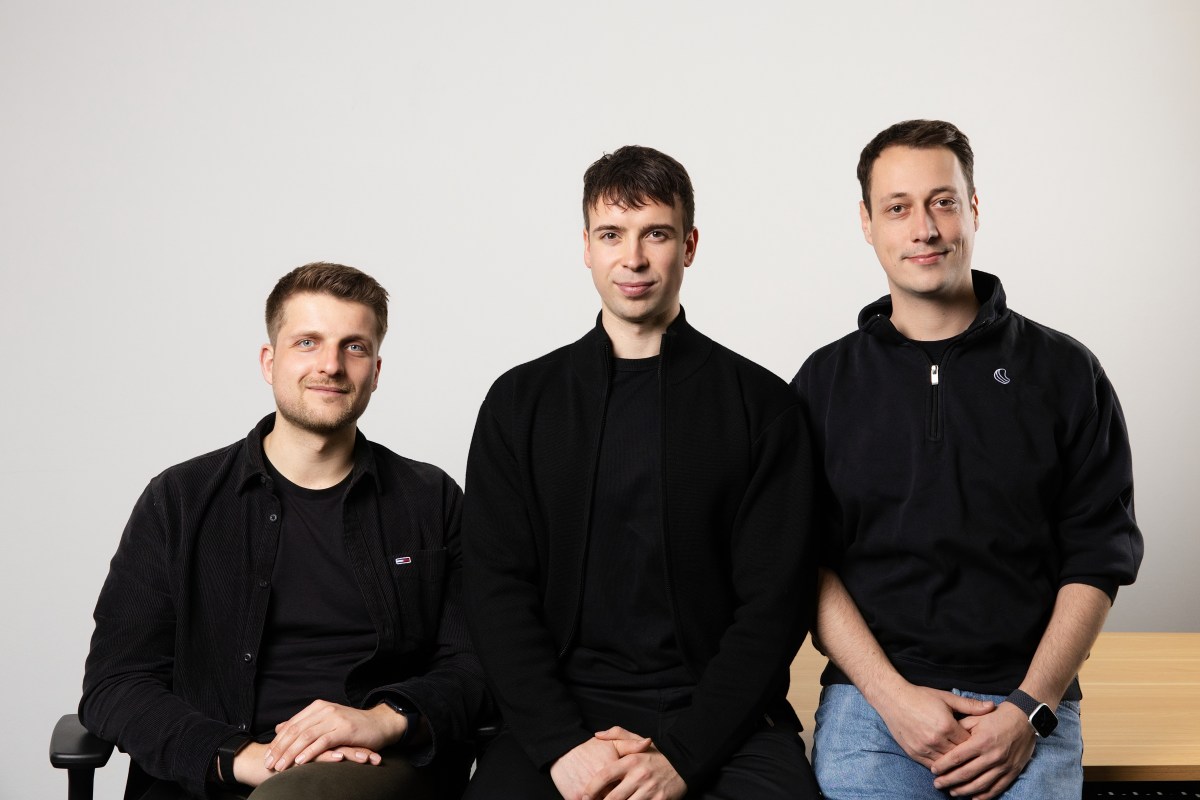
Vladimir Keil, co-founder and CEO of Lio, experienced procurement friction firsthand — both as an employee at a large corporation and later when building his first startup. “When we were selling enterprise software, we had to go through procurement ourselves and saw how manual and fragmented the process still is,” Keil told TechCrunch. This dual perspective shaped Lio’s foundational thesis: that procurement workflows, being largely composed of unstructured data and repetitive tasks, are precisely the kind of operations that AI agents are best positioned to handle autonomously. Keil co-founded Lio in 2023 with Lukas Heinzmann and Till Wagner, forming a team with both technical depth and operational experience.
The a16z-led round represents a significant vote of confidence from one of Silicon Valley’s most influential venture capital firms, which has a track record of identifying foundational infrastructure plays in AI. For the supply chain industry, Lio’s funding milestone marks a transition point: procurement automation is no longer an experimental initiative but a category that established investors are willing to back with substantial capital. The company is already managing billions in enterprise spend, suggesting that Lio has crossed the threshold from proof-of-concept to production-scale deployment across multiple large enterprise customers.
The Persistent Bottleneck: Why Procurement Remains Stubbornly Manual
Enterprise procurement sits at the intersection of finance, legal, operations, and IT — making it one of the most complex and coordination-intensive functions in any large organization. As TechCrunch details, a single purchase order can require opening ERP software, checking contract management systems, searching supplier databases, running compliance checks, cross-referencing budgets, and processing email threads. This fragmentation means that even organizations that have invested heavily in eProcurement software still rely on large teams to manually execute the actual work. “Even with modern eProcurement software, most of the real work is still done manually,” Keil emphasized.
The cost of this manual dependency is substantial. Large organizations typically build sizeable internal procurement departments or outsource the function to Business Process Outsourcing (BPO) providers — both approaches that are expensive, slow, and prone to human error. Legacy procurement platforms like SAP Ariba and Oracle have digitized parts of the workflow but were architected under the assumption that humans would remain in the loop for every decision. This “human-assisted” model creates inherent speed limits: the pace of procurement is constrained by the availability and attention of human operators, not by the speed of underlying systems.
“Every previous generation of procurement technology was built on the same assumption, that humans will do the work and technology will help them do it faster. We take a fundamentally different approach. Instead of building software to help humans do procurement work faster, Lio deploys AI agents that execute the workflow themselves.” — Vladimir Keil, CEO of Lio (TechCrunch, March 5, 2026)
The structural persistence of manual procurement is not a matter of technological immaturity — it reflects a design philosophy mismatch. Legacy vendors built tools for human operators; Lio builds autonomous operators that happen to interact with the same tools. This distinction matters enormously for the supply chain community, where procurement delays cascade into inventory shortfalls, production stoppages, and missed delivery commitments. In an era of tariff volatility and geopolitical uncertainty, the ability to execute procurement decisions in minutes rather than weeks has become a genuine strategic differentiator.
Lio’s Agentic Platform: How AI Agents Execute End-to-End Procurement
Lio operates what it describes as an AI-native platform with agentic infrastructure — a system where AI agents act as a virtual procurement workforce, autonomously completing the entire procurement cycle. According to TechCrunch, these agents operate across and on top of enterprise systems, performing tasks such as reading documents, evaluating suppliers, negotiating terms, and completing transactions. The platform integrates with existing enterprise infrastructure, including major ERP systems, without requiring organizations to replace their existing technology stack. This “overlay” architecture dramatically reduces implementation friction and accelerates time-to-value.
The practical implications of this approach are profound. When a procurement need arises — whether a routine reorder or a complex sourcing requirement — Lio’s agents can independently navigate the relevant enterprise systems, identify qualified suppliers from the vendor database, assess compliance status, compare pricing against historical benchmarks, generate and send negotiation communications, and execute the approved transaction. Processes that previously demanded weeks of human coordination can now be completed in minutes, as Keil confirmed. This speed compression isn’t simply an efficiency improvement — it fundamentally changes the economics and strategic calculus of procurement operations.
The 75% Automation Case Study: A Global Manufacturer’s Transformation
The most compelling evidence of Lio’s impact comes from a documented customer case study shared by CEO Vladimir Keil with TechCrunch. A global manufacturer was able to automate 75% of its previously outsourced procurement operations within six months of deploying Lio’s AI agents. This figure is significant on multiple dimensions. First, the baseline was outsourced operations — meaning the comparison isn’t against a manual internal team, but against a professional BPO provider with existing expertise and processes. Second, the 75% threshold was achieved within half a year, indicating rapid deployment and adoption rather than a multi-year transformation journey.
This case study illustrates the three-layer value proposition that Lio delivers to enterprise customers. At the cost layer, eliminating or reducing BPO dependency can translate to substantial savings on the procurement fees that typically represent a percentage of total spend managed — at the scale of billions in enterprise spend, even fractional percentage reductions translate to significant dollar amounts. At the compliance layer, AI agents consistently apply the same decision rules and documentation standards, reducing the error rates that arise from human fatigue and oversight gaps. At the speed layer, six-month implementation timelines compare favorably to the multi-year deployments that characterize major ERP procurement module rollouts.
What the 75% automation figure also reveals is Lio’s approach to the remaining 25%. Rather than claiming full automation across all scenarios, Lio focuses its AI agents on the highest-frequency, highest-repetition procurement tasks — the standardized workflows that consume the majority of procurement team bandwidth. The residual 25% of cases requiring human judgment — novel supplier relationships, high-stakes contract negotiations, compliance gray areas — remain under human oversight. This balanced approach creates a sustainable division of labor where AI handles the volume and humans focus on strategic judgment, resulting in procurement teams that can “run more negotiations, analyze more suppliers, and capture savings opportunities that would otherwise be missed,” as Keil described.
Competitive Landscape: Lio vs. Legacy Procurement Technology
TechCrunch explicitly identifies Lio’s competitive set as legacy procurement software vendors (SAP Ariba and Oracle), BPO providers, and consulting firms. Each category represents a distinct model for how enterprises have historically managed procurement complexity, and each faces structural challenges that Lio’s agentic approach is designed to overcome. Understanding these competitive dynamics is essential for supply chain leaders evaluating their own procurement technology strategies in 2026.
- SAP Ariba: The market-leading eProcurement platform offers comprehensive workflow digitization but remains fundamentally human-assisted. Complex procurement scenarios still require substantial manual intervention, and implementation timelines are typically measured in months or years rather than weeks.
- Oracle Procurement Cloud: Provides deep integration with Oracle’s broader ERP ecosystem but shares SAP Ariba’s architectural assumption that humans execute all significant procurement decisions. AI features are additive rather than foundational.
- BPO providers: Firms like Genpact and Accenture offer expertise and scalability but at a cost structure that scales linearly with transaction volume. Knowledge transfer risk and response flexibility limitations are inherent to the outsourcing model.
- Consulting firms: Provide strategic procurement expertise but lack the ongoing operational automation capabilities that Lio delivers at scale.
Lio’s key differentiator is what Keil describes as a “fundamentally different approach” — building AI agents that execute procurement workflows themselves rather than assisting humans who do the execution. This architectural distinction creates compounding advantages: Lio’s agents improve continuously from every procurement interaction, building an organizational knowledge base that becomes increasingly difficult for competitors to replicate. The resulting data moat — built from real enterprise procurement decisions rather than synthetic training data — represents a durable competitive barrier that strengthens with each customer deployment.
Implications for Supply Chain Leaders and the Future of Vendor Management
For supply chain practitioners and procurement leaders, Lio’s $30 million funding round and its documented customer outcomes represent more than a single company’s success story — they signal an inflection point in how enterprises will manage vendor relationships and procurement operations through 2026 and beyond. The traditional procurement operating model, built around human-operated software tools and either internal teams or BPO arrangements, is being challenged by a fundamentally different paradigm: AI agents that autonomously execute the complete procurement lifecycle.
The practical implications unfold across three dimensions. For procurement professionals, the skill premium is shifting from operational execution to strategic governance — configuring AI agent rules, managing supplier ecosystem relationships, and directing the 25% of procurement decisions that still require human judgment. For technology leaders, Lio’s “overlay” architecture demonstrates that AI automation doesn’t require wholesale ERP replacement — it can be layered on top of existing SAP, Oracle, and Coupa installations, reducing the implementation risk that has historically slowed procurement transformation initiatives. For CFOs and COOs, the ROI case is becoming quantifiable: documented 75% automation rates within six months, at companies managing billions in enterprise spend, provide a credible financial model for procurement AI investment.
As Keil articulated to TechCrunch: “In the long run, we think this changes procurement from a back-office function into a much more powerful lever for enterprise performance.” This vision — procurement as a strategic capability rather than an administrative overhead — aligns with the broader evolution of supply chain management toward data-driven, resilient, and dynamically adaptable operations. With $33 million in total funding and a proven case study of transformative automation, Lio is positioned at the forefront of this transformation, offering supply chain leaders a concrete path from procurement as a bottleneck to procurement as a competitive advantage.
Source: techcrunch.com
This article was AI-assisted and reviewed by our editorial team.