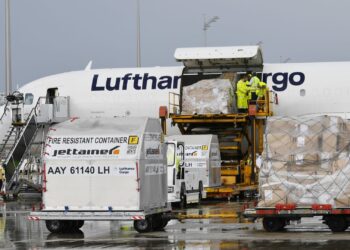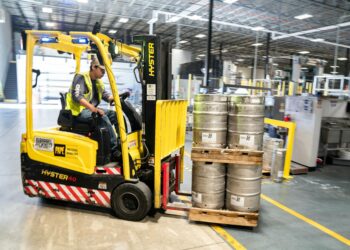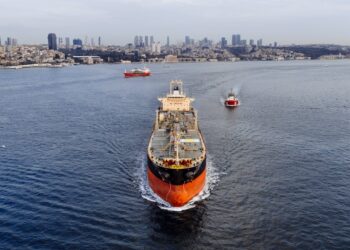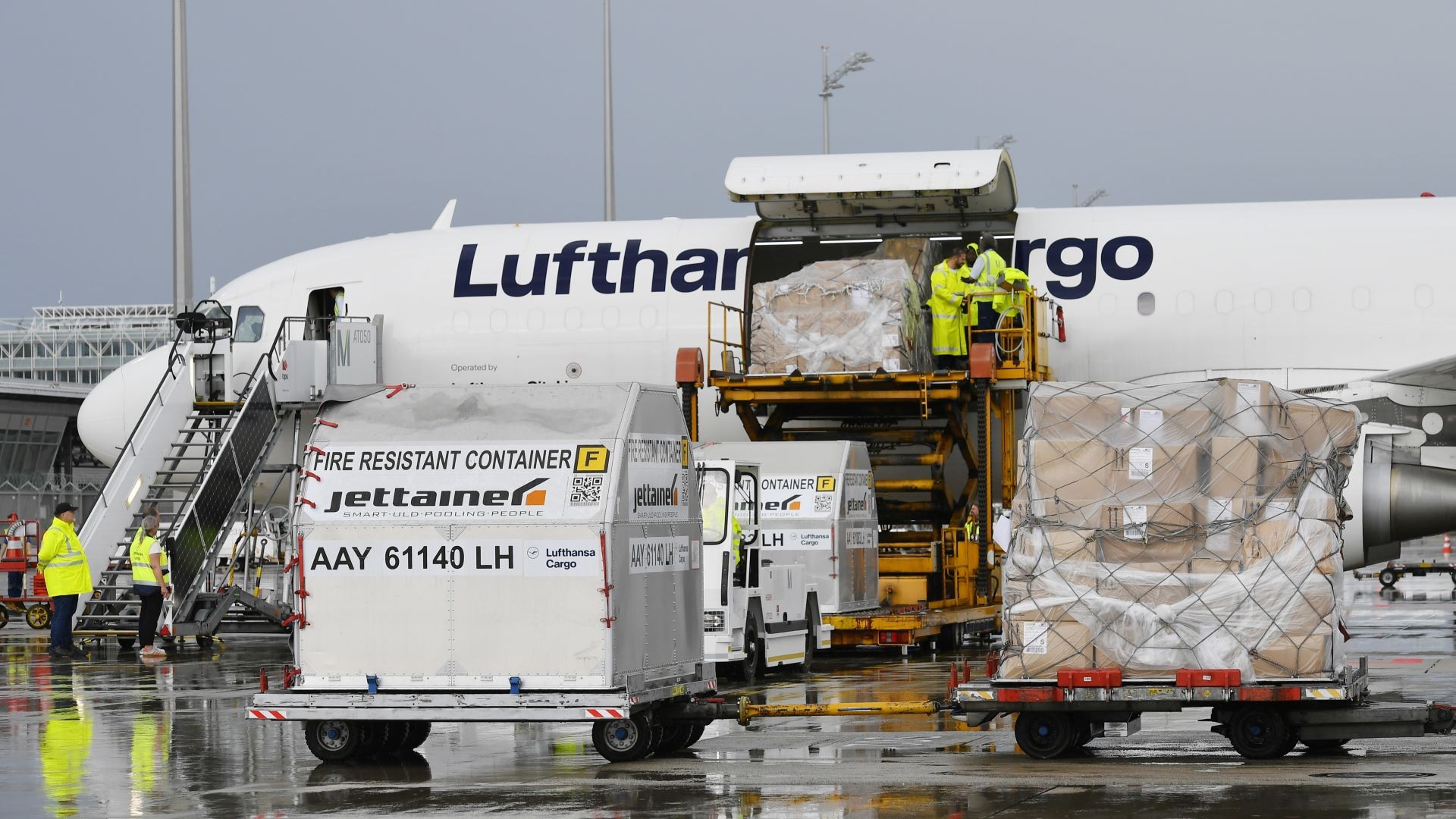
Amid a global air cargo market still contending with post-pandemic volatility, capacity overhang, and margin compression in general freight, Lufthansa Cargo has executed a rare feat: 29% growth in operating profit in 2025—achieved not through volume expansion or fleet scaling, but through deliberate, high-precision vertical specialization. With adjusted EBIT rising to €324 million ($377 million), the carrier has demonstrated that profitability in air logistics no longer flows from tonnage alone, but from deep domain expertise, regulatory fluency, and infrastructure co-design with end-industry stakeholders. This is not incremental optimization—it is structural repositioning. In an era where benchmark yields for belly cargo have declined 18% since 2022 (IATA Cargo Intelligence, Q4 2025), Lufthansa’s pivot toward pharmaceuticals, semiconductors, automotive Tier-1 components, and aviation MRO logistics reveals a new playbook: one where freight becomes a mission-critical extension of the customer’s value chain—not just a transport transaction. The implications extend far beyond Frankfurt; they signal a tectonic shift in how global carriers define competitive advantage.
The Vertical Imperative: Why General Freight No Longer Pays
For decades, air cargo profitability hinged on scale, network density, and yield management across commodity categories—textiles, electronics, perishables—treated as interchangeable payloads. That model collapsed under its own weight after 2022. As e-commerce-driven demand normalized and ocean freight rates stabilized, airlines faced simultaneous pressure: shippers demanded guaranteed capacity at fixed rates, while fuel surcharges eroded margins and digital freight platforms commoditized booking. According to the World Economic Forum’s 2025 Logistics Risk Report, general air cargo EBITDA margins across legacy carriers fell to an average of 4.1%, down from 7.8% in 2019. Crucially, this erosion was not uniform. High-value verticals—particularly those bound by stringent compliance regimes—remained resilient. Pharma shipments, for instance, sustained average yields 3.2x higher than general freight (ICAO Air Cargo Benchmarking Survey, 2025), while semiconductor logistics commanded premium pricing due to real-time tracking mandates, shock-sensor integration, and zero-tolerance for temperature excursions. Lufthansa’s strategic retreat from undifferentiated spot-market exposure wasn’t defensive—it was anticipatory. By reallocating sales resources, training crews in GDP (Good Distribution Practice) protocols, and embedding logistics engineers within pharma clients’ supply planning teams, the airline transformed itself from a transporter into a certified extension of GMP (Good Manufacturing Practice) ecosystems.
This vertical imperative is rooted in three converging structural forces: first, regulatory fragmentation—EU GDP Annex 15, FDA 21 CFR Part 11, and China’s NMPA requirements now mandate end-to-end cold chain validation, forcing shippers to select carriers with auditable infrastructure, not just available slots. Second, product complexity—advanced driver-assistance systems (ADAS) modules, EUV lithography machine parts, and mRNA vaccine vials require coordinated handling across customs, ground handling, and aircraft loading—processes impossible to standardize across generic freight operations. Third, financial risk transfer—the cost of a single temperature excursion in a $2.4 million shipment of CAR-T cell therapies exceeds €1.2 million in liability, making carrier insurance capacity and claims responsiveness decisive selection criteria. Lufthansa didn’t merely add ‘pharma services’ to its catalog; it built 12 GDP-certified stations across Europe and North America, deployed IoT-enabled cool containers with live API integration into client ERP systems, and trained over 420 staff members in IATA CEIV Pharma certification. That level of embedded capability cannot be replicated by opportunistic entrants—it requires capital, time, and cross-functional alignment across flight operations, legal, IT, and commercial units.
Pharma: Where Temperature Control Meets Regulatory Sovereignty
The pharmaceutical vertical represents the most technically demanding—and financially rewarding—segment in modern air cargo. Unlike general freight, where delays are negotiated via service credits, pharma logistics operates under binding regulatory frameworks where non-compliance triggers automatic audit trails, product recalls, and reputational contagion across entire clinical trial portfolios. Lufthansa Cargo’s €324 million EBIT leap was significantly amplified by its 37% year-on-year growth in temperature-controlled shipments, particularly for biologics requiring -70°C ultra-low temperature (ULT) environments and mRNA therapeutics needing strict +2°C to +8°C maintenance. What distinguishes Lufthansa’s approach is not just hardware—though its fleet of four Airbus A321P2F converted freighters features factory-installed cooling ducts and dual-zone climate control—but its regulatory architecture. The carrier co-developed its Cold Chain Excellence Program with the European Medicines Agency (EMA) and validated its processes against WHO GDP guidelines, enabling direct acceptance by regulators in Brazil’s ANVISA and Japan’s PMDA without redundant audits. This eliminates weeks of pre-shipment validation for multinational clients like Roche and Novo Nordisk—turning what was once a bottleneck into a competitive accelerator.
Crucially, Lufthansa’s pharma strategy transcends temperature. It embeds traceability at the molecular level: every ULT container integrates Bluetooth Low Energy (BLE) sensors feeding data directly into customers’ Track & Trace dashboards, with immutable blockchain logging for audit readiness. When a shipment of monoclonal antibodies transited through Chicago O’Hare during a winter storm in January 2025, Lufthansa’s ground team activated its ‘Cold Chain Continuity Protocol’, rerouting the consignment to Cincinnati/Northern Kentucky International Airport (CVG) where pre-positioned refrigerated dollies and conditioned hangar space ensured uninterrupted thermal integrity—all documented in real time for FDA review. Such operational sovereignty is impossible for asset-light competitors relying on third-party handlers. As Dr. Elena Vogel, Head of Global Logistics at BioNTech, observed:
“Lufthansa doesn’t sell us air freight—they sell us regulatory continuity. When our Phase III trials depend on a 72-hour window from Frankfurt to São Paulo, we’re not buying lift—we’re buying certainty backed by EMA-validated SOPs.” — Dr. Elena Vogel, Head of Global Logistics, BioNTech
This reframing shifts pricing from per-kilogram to per-risk-mitigation-event, explaining why Lufthansa’s pharma yield per tonne sits at $12,800, versus $3,900 for general cargo.
- Key differentiators in Lufthansa’s pharma offering: GDP-certified stations in 12 cities, real-time sensor API integration, EMA/WHO-aligned SOPs, dedicated pharma account managers with clinical supply chain experience
- Regulatory pain points addressed: FDA 21 CFR Part 11 electronic signature compliance, EU GDP Annex 15 warehouse handover protocols, China NMPA temperature deviation reporting thresholds
Semiconductors and Automotive: Precision Logistics as Competitive Moat
While pharma demands thermal fidelity, semiconductors and high-end automotive components demand mechanical, electrical, and electromagnetic precision. A single vibration-induced micro-fracture in a 3nm logic chip renders it scrap; a 0.5°C ambient fluctuation during transit of lithium-ion battery modules can trigger thermal runaway protocols. Lufthansa’s entry into these domains reflects a fundamental understanding: in advanced manufacturing, logistics is no longer a cost center—it is a design constraint. Its 12 Boeing 777F freighters now feature shock-dampening floor grids calibrated to ISO 14644-1 Class 5 cleanroom vibration standards, while its A321P2Fs deploy static-dissipative cargo nets and RF-shielded containers certified to MIL-STD-461G. Critically, Lufthansa does not operate these capabilities in isolation. It participates in the SEMI Global Logistics Council, contributing to the development of the SEMI E177 standard for semiconductor transport environmental monitoring, thereby aligning its infrastructure investments with industry-wide specifications—not retrofitted solutions. This collaborative standard-setting grants Lufthansa privileged access to roadmaps from TSMC, ASML, and Bosch, allowing preemptive capacity allocation and engineering support for next-generation tooling shipments.
The automotive vertical further illustrates this symbiosis. As OEMs accelerate electrification and software-defined vehicle architectures, Tier-1 suppliers face compressed launch windows and zero-defect expectations. Lufthansa’s ‘Automotive Express’ program includes bonded warehousing at Frankfurt Airport with JIT sequencing capabilities—components arrive in kitted trays, scanned via RFID, and dispatched directly to assembly line gates within 90 minutes of unloading. For BMW’s Neue Klasse EV platform, Lufthansa manages end-to-end logistics for 217 distinct high-voltage components, each with unique ESD (electrostatic discharge) handling protocols and customs classification codes. This isn’t freight forwarding; it’s production-line orchestration. Revenue per shipment averages $24,600, with gross margins exceeding 31%—nearly triple the segment average. As Klaus Richter, VP Supply Chain at Continental AG, noted:
“When Lufthansa delivers our ADAS radar modules, they don’t hand off a pallet—they hand off a validated, serialized, customs-cleared, ESD-protected unit ready for automated mounting. That eliminates seven handoffs, three quality inspections, and 11 hours of line-side staging time.” — Klaus Richter, VP Supply Chain, Continental AG
Such integration transforms logistics from a tactical function into a strategic lever for OEMs pursuing platform-based manufacturing.
- Automotive logistics innovations: JIT sequencing hubs at FRA, RFID-enabled kitting, bonded warehousing with customs pre-clearance, ESD-compliant handling certifications
- Semiconductor logistics enablers: ISO Class 5 vibration control, MIL-STD-461G RF shielding, SEMI E177 sensor integration, cleanroom-grade packaging validation
Infrastructure as Strategy: From Aircraft to Digital Twins
Lufthansa’s vertical ascent is inseparable from its infrastructure evolution—not just physical assets, but digitally native systems engineered for sector-specific workflows. While competitors retrofit legacy cargo management platforms, Lufthansa developed CargoOS, a modular SaaS suite with industry-specific ‘vertical pods’: PharmaOS handles GDP audit trails and temperature deviation alerts; AutoOS manages VIN-level serialization and customs tariff harmonization for 12,000+ HS codes; ChipOS validates SEMI E177 sensor logs and auto-generates failure reports compliant with JEDEC JESD22-A108F. This isn’t bolted-on functionality—it’s architecture born from co-development with Siemens Healthineers (for medical imaging components) and Infineon (for power semiconductors). CargoOS integrates natively with SAP S/4HANA and Oracle Cloud SCM, enabling real-time inventory synchronization between Lufthansa’s Frankfurt hub and a client’s ERP—eliminating reconciliation delays that historically caused 22% of automotive line-stop incidents (McKinsey Auto Supply Chain Survey, 2025).
Equally transformative is Lufthansa’s investment in digital twin technology for its freighter fleet. Each 777F and A321P2F operates with a live digital replica fed by 142 onboard sensors monitoring door cycle stress, floor load distribution, HVAC performance, and even cargo bay humidity gradients. These twins feed predictive maintenance algorithms that reduce unscheduled downtime by 41%—critical when a single delayed flight disrupts multi-tier semiconductor production schedules across Asia, Europe, and North America. Moreover, the digital twin enables ‘what-if’ scenario modeling: before accepting a $14.2 million shipment of EUV optics from ASML to Intel’s Arizona fab, Lufthansa’s system simulates 73 possible routing paths, factoring in real-time NOTAMs, volcanic ash forecasts, and even solar flare activity (which impacts HF radio reliability over polar routes). This computational rigor turns capacity allocation into a dynamic, risk-optimized decision engine—not a manual slot booking process. As such, Lufthansa’s digital infrastructure isn’t supporting its vertical strategy; it is the strategy’s foundational layer, creating barriers to imitation that extend far beyond aircraft ownership.
The Global Ripple Effect: Reshaping Carrier Economics and Alliances
Lufthansa Cargo’s success is catalyzing a paradigm shift across the air cargo industry—one that will redefine alliance structures, joint venture economics, and even aircraft procurement strategies. Its six Boeing 777Fs operated through AeroLogic (its DHL Express joint venture) are no longer generic freighters but configured specifically for pharma and automotive lanes: three feature enhanced cooling capacity, two include ESD-hardened floors, and all six run CargoOS firmware. This signals a departure from traditional joint ventures—where capacity is pooled and commoditized—toward ‘vertical alliances’, where partners co-invest in sector-specific infrastructure and share regulatory intelligence. Indeed, Lufthansa’s collaboration with DHL extends beyond AeroLogic: the two jointly fund a GDP training academy in Leipzig, certifying over 1,800 handlers annually across 27 countries. Such institutionalized knowledge transfer creates systemic advantages no single carrier can replicate.
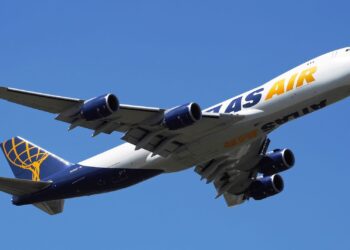
More broadly, Lufthansa’s model pressures legacy carriers to abandon ‘one-size-fits-all’ networks. Singapore Airlines Cargo’s recent announcement of a dedicated semiconductor lane from Singapore to Tokyo, complete with SEMI-certified handlers and integrated sensor analytics, mirrors Lufthansa’s playbook. Even cargo-only airlines like Atlas Air are accelerating conversions of 747-8Fs to include pharma-ready configurations. The implication is clear: future air cargo profitability will be determined less by route density and more by vertical depth—measured in regulatory certifications held, standards co-authored, and digital integrations delivered. As the International Air Transport Association (IATA) prepares its 2026 Air Cargo Strategic Roadmap, Lufthansa’s €324 million EBIT achievement stands not as an outlier, but as the first validated blueprint for the next decade of air logistics—where the highest-margin cargo isn’t the heaviest, but the most consequential.
Source: www.freightwaves.com
This article was AI-assisted and reviewed by our editorial team.