The Geopolitical Pivot: From AGOA Dependence to Dual-Market Sovereignty
Africa’s export architecture has long been anchored in asymmetrical trade frameworks—most notably the African Growth and Opportunity Act (AGOA), which since 2000 granted select sub-Saharan nations duty-free access to the U.S. market for over 6,000 products. Yet the recent 12-month extension of AGOA—set to expire on December 31, 2026—does not signal continuity but rather the culmination of a structural crisis in transatlantic trade governance. Washington’s decision to withhold a multi-year renewal, coupled with increasingly conditional eligibility criteria—including stringent labor, environmental, and governance benchmarks—has exposed the fragility of Africa’s unilateral reliance on American market access. This is no longer merely a tariff negotiation; it is a sovereignty recalibration. As South Africa’s trade ministry explicitly acknowledged in February 2026, its pursuit of the Framework Agreement on Economic Partnership for Shared Prosperity with China was accelerated not by ideological affinity, but by acute exposure to U.S. tariff volatility—particularly in agricultural commodities such as citrus, wine, and macadamia nuts, where retaliatory duties surged by up to 32% following disputes over phytosanitary protocols. The deeper implication lies in supply chain resilience: AGOA’s ‘single-window’ model created path dependency in logistics corridors, port infrastructure investment, and customs digitization—all calibrated for Miami, New York, and Los Angeles gateways. Now, African exporters must simultaneously reconfigure inland transport networks to accommodate rail links to LAPSSET (Lamu Port-South Sudan-Ethiopia Transport Corridor) and the Trans-Asian Railway, while upgrading cold-chain capacity for perishables destined for Shanghai or Shenzhen instead of Newark. This dual-market pivot demands more than policy agility—it requires capital reallocation, workforce upskilling in ISO 22000 and GB/T certification standards, and a fundamental rethinking of origin tracing systems to satisfy both U.S. CBP’s Importer Security Filing (ISF) and China’s Customs Risk Management Platform (CRMP). The 26% surge in South African exports to $161 million in 2025—attributed by AgriSA to a ‘temporary pause’ in U.S. tariffs—is thus a statistical mirage masking systemic vulnerability. Without parallel investments in multimodal interoperability, digital trade facilitation, and harmonized product classification, Africa risks becoming a geopolitical arbitrage zone rather than an integrated node in global supply chains.
What makes this pivot historically unprecedented is its simultaneity—not sequential alignment, but concurrent engagement across diametrically opposed regulatory ecosystems. While the U.S. emphasizes rule-based trade with embedded conditionality on human rights and climate commitments, China’s zero-tariff offer for 53 African countries operates through a state-led, project-finance lens: market access is bundled with infrastructure loans, technology transfer agreements, and data localization requirements under China’s Digital Silk Road framework. Kenya’s Early Harvest Arrangement—granting 98% of Kenyan exports duty-free access to China—comes with binding clauses on traceability via China’s Blockchain-based Food Safety Traceability System (BFSTS), mandating integration with Kenya’s National Agricultural Information System (NAIS) by Q3 2026. This is not mere tariff elimination; it is infrastructural assimilation. Similarly, South Africa’s ‘early harvest agreement’ expected by March 2026 includes joint development of a Cross-Border E-Commerce Hub in Durban, co-funded by China’s Ministry of Commerce and the Industrial Development Corporation of South Africa (IDC), with mandatory use of Alipay+ and WeBank’s SME lending APIs for Kenyan and South African exporters. Such technical entanglements mean that even if political winds shift, disentangling from China’s digital trade stack will be exponentially harder than reversing tariff concessions. The consequence? African supply chain managers are now forced to maintain dual compliance teams—one fluent in U.S. FDA’s Foreign Supplier Verification Program (FSVP) and another certified in China’s General Administration of Customs (GACC) Registration System for Overseas Food Producers. This bifurcation inflates operational costs by an estimated 18–22% per export lane, according to the African Union’s Logistics Performance Index 2025 update—a burden disproportionately borne by SMEs that constitute 87% of Africa’s formal exporters. Without targeted technical assistance and blended finance mechanisms, the ‘dual-market sovereignty’ narrative risks collapsing into a new form of technical dependency.
Zero-Tariff Ambition vs. Structural Reality: The Limits of Beijing’s Market Access Offer
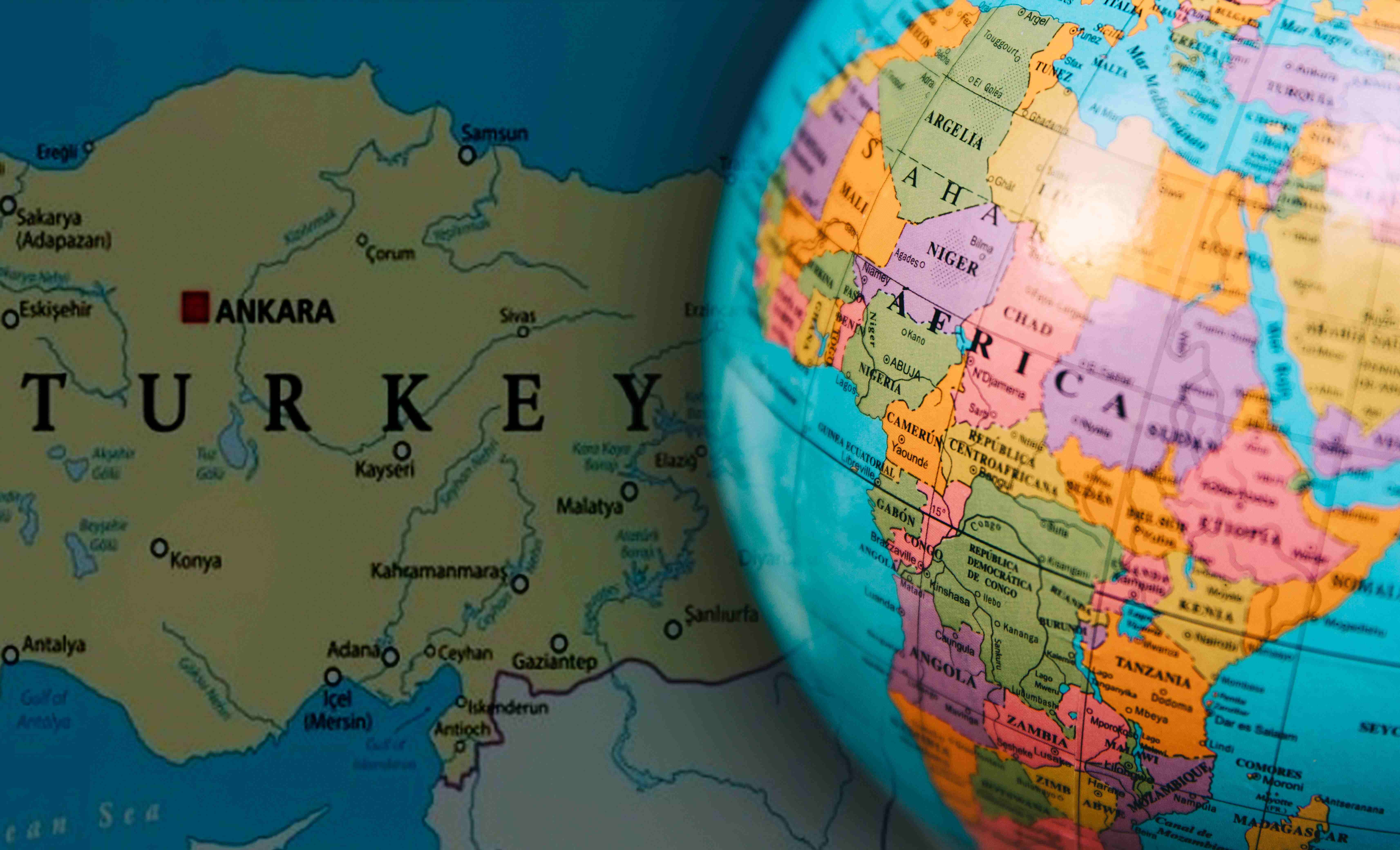
Beijing’s announcement to eliminate tariffs on all products from 53 African countries—with diplomatic ties—represents a quantum leap beyond its previous preferential treatment for just 33 least-developed countries (LDCs) under the Duty-Free Quota-Free (DFQF) scheme. On paper, this expansion appears transformative: it extends zero-tariff coverage to middle-income economies like South Africa, Kenya, Egypt, and Nigeria—countries previously excluded due to World Trade Organization (WTO) rules prohibiting non-reciprocal preferences among non-LDCs. However, the operational reality reveals a chasm between diplomatic signaling and logistical execution. First, China’s tariff elimination applies only to the Most-Favoured-Nation (MFN) rate, not the applied rate—which may already be zero for many African exports due to existing bilateral or regional agreements. More critically, China’s customs valuation system imposes de facto non-tariff barriers far more restrictive than MFN schedules: the GACC’s ‘transaction value plus’ methodology routinely adds 12–18% to declared invoice values for agricultural commodities based on benchmark price databases updated biweekly, effectively neutralizing tariff savings. A case in point is Kenya’s avocado exports: though granted zero MFN duty under the Early Harvest Arrangement, Kenyan exporters reported an average 15.7% increase in landed cost in Q1 2026 due to GACC’s application of ‘market-adjusted value’ rules tied to Chilean and Mexican avocado price indices—neither of which reflect East African production costs or seasonality. This is not protectionism in disguise; it is algorithmic trade governance designed to prioritize domestic food security objectives over export liberalization rhetoric.
Second, the zero-tariff promise ignores China’s labyrinthine import licensing regime, particularly for sensitive sectors. Under China’s 2024 Revised Catalogue of Imported Goods Subject to Licensing Control, over 217 African-origin products—including fresh horticulture, processed dairy, and leather goods—require pre-shipment inspection certificates issued exclusively by Chinese-designated agencies such as CCIC (China Certification & Inspection Group) or SGS China. These inspections carry fees averaging $1,200–$3,800 per shipment, payable in RMB and subject to 72-hour processing windows—conditions that render them functionally prohibitive for SMEs lacking forward currency hedging capacity. Moreover, China’s newly implemented ‘Green Channel’ certification for sustainable sourcing mandates blockchain-verified carbon footprint tracking for all agro-exports entering Shanghai’s Yangshan Free Trade Port—a requirement for which fewer than 4% of Kenyan tea cooperatives possess compliant ERP systems. Thus, while Beijing touts ‘rapid market access scheduled for early May,’ the actual implementation timeline hinges not on diplomatic calendars but on Africa’s ability to retrofit legacy ERP platforms with China’s national blockchain ID system (eID), integrate with the China International Trade Single Window (CITSW), and achieve GACC-recognized third-party certification. The irony is profound: China’s offer of tariff-free access presupposes a level of digital maturity and institutional coherence that most African customs administrations lack—even after a decade of World Bank-funded ASYCUDA modernization programs. Without parallel investment in human capital—such as training 5,000 African customs officers on GACC’s AI-powered risk profiling algorithms—the zero-tariff pledge remains a theoretical construct rather than an operational pathway.

South Africa’s Strategic Hedging: From Tariff Row to Infrastructure Integration
South Africa’s February 2026 Framework Agreement on Economic Partnership for Shared Prosperity with China marks a decisive departure from its historical trade posture—not as a surrender to Beijing’s influence, but as a sophisticated exercise in supply chain diversification rooted in hard infrastructure calculus. Unlike rhetorical declarations, this agreement embeds concrete, time-bound infrastructure commitments: the co-development of the Durban–Beijing Maritime Corridor, including deep-water berth upgrades at Durban Port to accommodate 24,000-TEU container vessels, and the establishment of a Dedicated Rail Freight Corridor linking Durban to Johannesburg’s City Deep Dry Port with automated gantry cranes supplied by CRRC. Critically, these projects are financed through a blended structure—40% concessional loan from China Eximbank, 30% equity from Transnet (South Africa’s state-owned freight operator), and 30% green bond issuance denominated in RMB and listed on the Shanghai Stock Exchange. This financial engineering achieves three strategic objectives: first, it insulates infrastructure delivery from U.S. secondary sanctions by avoiding USD-denominated debt; second, it locks in long-term shipping capacity with COSCO Shipping, whose 2025 Memorandum of Understanding with Transnet guarantees priority berthing slots for South African exports during peak seasons; third, it creates irreversible physical dependencies—once the rail corridor is commissioned in Q4 2027, rerouting cargo to alternative ports like Walvis Bay or Maputo would incur 37% higher inland haulage costs due to gauge incompatibility and terminal congestion. The agreement’s ‘early harvest’ component—targeting implementation by March 2026—is thus less about immediate tariff relief and more about securing de facto control over the most efficient physical conduit to China’s consumer markets.
This infrastructure-first approach reflects a deeper understanding of 21st-century trade geopolitics: tariffs are negotiable; port capacity, rail gauge standardization, and digital customs interoperability are structural. South Africa’s trade ministry explicitly linked its urgency to the U.S. tariff row—not as a reactive grievance, but as a catalyst for systemic modernization. When U.S. Customs and Border Protection (CBP) imposed Section 301 duties on South African steel imports in late 2025, citing ‘unfair subsidies,’ Pretoria responded not with WTO litigation but by accelerating negotiations with China on mutual recognition of AEO (Authorized Economic Operator) status. Achieving AEO equivalence by Q2 2026 would allow South African exporters to bypass 92% of GACC’s physical inspections—reducing clearance time from 72 to 4 hours—and granting priority processing at all 22 Chinese land border crossings. This is supply chain diplomacy at its most granular: transforming regulatory alignment into velocity. Furthermore, the Framework Agreement includes a clause mandating joint development of a ‘Durban-Shanghai Smart Logistics Twin’—a digital replica of the entire corridor fed by IoT sensors, satellite AIS tracking, and AI-driven predictive maintenance algorithms. By 2028, this twin will simulate disruption scenarios (e.g., Suez Canal blockage, Red Sea conflict escalation) and auto-re-route shipments via the China-Pakistan Economic Corridor (CPEC), thereby embedding strategic redundancy into operational DNA. Such capabilities cannot be replicated through AGOA extensions; they require sovereign control over data architecture, sensor networks, and algorithmic decision engines—assets South Africa is now acquiring not through aid, but through co-investment and co-design.

Kenya’s Far-East Expansion: Beyond Early Harvest to End-to-End Value Capture
Kenya’s announcement of a broader export expansion strategy targeting the Far East, Europe, the U.S., and intra-African markets under AfCFTA signals a paradigm shift from commodity exportation to end-to-end value chain integration. The Early Harvest Arrangement with China—granting 98% of Kenyan exports duty-free access—is merely the entry point; what distinguishes Nairobi’s approach is its explicit linkage of market access to domestic industrial upgrading. Cabinet Secretary Lee Kinyanjui’s statement that the deal ‘will open vast opportunities for local exporters’ is underpinned by three concrete pillars: first, the establishment of Special Economic Zones (SEZs) in Mombasa and Naivasha co-developed with China’s Shandong Gaosu Group, featuring bonded manufacturing facilities where Kenyan firms can assemble electronics components imported from Guangdong duty-free, then re-export finished goods to China under preferential rules of origin. Second, the launch of the Kenya-China Agri-Processing Corridor—a $1.2 billion initiative to build 14 solar-powered cold storage hubs along the Nairobi–Mombasa highway, each equipped with IoT-enabled humidity and ethylene sensors calibrated to Chinese market specifications for mangoes, avocados, and French beans. Third, the creation of a Kenya-China Joint Technical Standards Committee tasked with harmonizing Kenya Bureau of Standards (KEBS) regulations with China’s GB/T 20000 series—ensuring that Kenyan dairy processors, for instance, meet GB/T 19301-2023 standards for ultra-high-temperature (UHT) milk before shipment, eliminating costly reprocessing upon arrival in Shanghai. This is not trade diplomacy; it is supply chain engineering.
The sophistication of Kenya’s strategy becomes evident when contrasted with traditional aid-driven models. Rather than accepting Chinese grants for port upgrades, Nairobi negotiated a ‘revenue-sharing concession’ with China Merchants Port Holdings: the company finances Mombasa Port’s Terminal 3 expansion in exchange for 30-year operating rights and 65% of container handling revenues—but crucially, with a binding clause requiring 40% of all procurement contracts to be awarded to Kenyan firms certified under KEBS’ new ‘Made-in-Kenya’ digital verification platform. This ensures technology transfer isn’t abstract but contractual: Chinese engineers must train Kenyan counterparts in real-time during construction, and all BIM (Building Information Modeling) data must be deposited in Kenya’s National Digital Infrastructure Repository. Similarly, the Early Harvest Arrangement includes a ‘Skills Transfer Annex’ mandating that 70% of technical staff at the new Cross-Border E-Commerce Hub in Nairobi be Kenyan nationals trained in Alibaba Cloud’s e-commerce analytics suite and Tencent’s WeCom supply chain collaboration tools. Such provisions transform market access into capability acquisition—addressing Africa’s chronic ‘implementation deficit’ where policy announcements outpace institutional absorption capacity. The result is measurable: preliminary data from the Kenya National Bureau of Statistics shows that Kenyan firms engaged in the pilot SEZ program achieved 22% higher export unit values in Q1 2026 compared to non-participants, primarily due to value addition (e.g., frozen avocado pulp instead of raw fruit) and reduced logistics costs from integrated warehousing. This suggests that Kenya’s ‘Far-East expansion’ is less about chasing Chinese demand and more about using Chinese market access as leverage to upgrade domestic productive capacity—making its export basket more competitive globally, not just in Beijing.
The AfCFTA Imperative: Intra-African Trade as Strategic Ballast
While much attention focuses on Africa’s external market diversification, the most consequential development in its export diplomacy is the quiet but relentless operationalization of the African Continental Free Trade Area (AfCFTA). Kenya’s explicit inclusion of ‘intra-African trade’ in its broader export expansion strategy is not rhetorical filler—it reflects a hard-nosed recognition that external market access without continental integration is structurally unsustainable. The AfCFTA Secretariat’s 2025 Implementation Report confirms that 43 of 54 signatory states have ratified the agreement, and 31 have deposited their instruments of accession to the Protocol on Trade in Goods—activating tariff liberalization on 90% of tariff lines. Crucially, the Pan-African Payment and Settlement System (PAPSS), launched in January 2026, now processes $4.2 billion monthly in cross-border transactions across 37 currencies, reducing foreign exchange conversion costs by up to 83% and settlement times from 5–10 days to under 2 hours. For supply chain managers, this means that a Kenyan exporter selling coffee to Senegal no longer needs to invoice in USD, pay 3.2% correspondent banking fees, and wait 72 hours for confirmation—instead, funds settle instantly in KES and XOF via PAPSS’ real-time gross settlement engine. This financial infrastructure is the bedrock upon which Africa’s export sovereignty rests: without it, dual-market engagement remains hostage to dollar liquidity crises and SWIFT-dependent bottlenecks that amplify U.S.-China financial decoupling shocks.
Moreover, AfCFTA’s Rules of Origin framework—though still evolving—is creating powerful incentives for regional value chain consolidation. Under the ‘Cumulation Provision,’ inputs sourced from any AfCFTA member count toward the 40% local content threshold required for preferential access to China under Kenya’s Early Harvest Arrangement. Thus, a Kenyan textile manufacturer can source cotton from Benin, dye it in Ethiopia, cut fabric in Tanzania, and sew garments in Nairobi—yet still qualify for zero tariffs on exports to Shanghai. This transforms AfCFTA from a paper agreement into a strategic supply chain accelerator. The African Union’s recent Investment Protocol, ratified by 28 states, further reinforces this by guaranteeing equal treatment for investors across the continent and establishing a continental arbitration tribunal—removing the need for costly bilateral investment treaties with external powers. Critically, AfCFTA’s digital trade protocol—adopted in November 2025—mandates mutual recognition of electronic signatures, e-invoicing standards, and digital certificates of origin across all member states, directly interoperable with China’s CITSW and the U.S. Automated Commercial Environment (ACE). This creates a ‘digital corridor’ that allows African exporters to file a single electronic manifest valid for transit through 12 countries en route to Mombasa Port, slashing documentary compliance time by 68%. In essence, AfCFTA is not competing with U.S. or Chinese offers—it is providing the foundational infrastructure that makes those offers operationally viable. Without seamless intra-African movement of goods, services, and data, Kenya’s Far-East strategy collapses under its own logistical weight; without PAPSS, South Africa’s Durban–Beijing corridor remains financially brittle. The lesson is unequivocal: Africa’s export diplomacy succeeds only to the extent that its continental integration deepens.

Supply Chain Implications: Toward a Multipolar Logistics Architecture
The convergence of U.S. AGOA uncertainty, China’s zero-tariff expansion, and AfCFTA’s operational rollout is catalyzing the emergence of a multipolar African logistics architecture—one that rejects the unipolar dominance of any single external power and instead builds interoperable, sovereign-controlled nodes. This is not theoretical; it is visible in port infrastructure, digital platforms, and workforce development. Consider the port ecosystem: while Mombasa and Durban are deepening ties with Chinese operators, Abidjan Port Authority signed a 25-year concession with DP World in 2025 to develop a dedicated ‘AfCFTA Transit Terminal’ with AI-powered yard management systems compatible with both GACC and CBP data standards. Similarly, the LAPSSET corridor—once derided as a white elephant—is now being retrofitted with dual-gauge rail tracks (1,000mm and 1,435mm) to serve both Indian Ocean shipping lines and China’s Trans-Asian Railway, with IoT sensors feeding real-time cargo visibility into a unified African Logistics Data Exchange (ALDE) platform launched in Q1 2026. This platform, hosted on Kenya’s National Data Centre and governed by the African Union’s Data Policy Framework, allows shippers to compare real-time freight rates, vessel ETAs, and customs clearance probabilities across 18 ports—functionally creating a continental spot market for logistics capacity. For supply chain planners, this means dynamic routing decisions based on predictive analytics rather than static contracts, enabling resilience against geopolitical shocks like Red Sea disruptions or U.S. sanctions on Chinese shipping entities.
The workforce dimension is equally transformative. The African Union’s newly launched ‘Logistics Skills Passport’—endorsed by 32 member states—validates certifications across seven domains: digital customs compliance, cold-chain management, multimodal operations, trade finance, cybersecurity for logistics platforms, AI-driven demand forecasting, and ESG-compliant transport. Holders gain automatic recognition in China’s GACC AEO program and U.S. CBP’s FAST lanes, eliminating redundant testing. Meanwhile, the African Development Bank’s $2.3 billion Logistics Transformation Facility is funding 120 ‘Smart Logistics Academies’ across the continent, each equipped with VR simulators for port crane operations, blockchain-based cargo documentation labs, and AI chatbots trained on CBP, GACC, and KEBS regulatory databases. This systemic upskilling addresses the core bottleneck: Africa’s logistics productivity remains 42% below the global average (World Bank LPI 2025), not due to lack of ambition but to fragmented, outdated training ecosystems. The multipolar architecture thus emerges not from grand strategy alone, but from granular, interoperable investments in human capital, digital infrastructure, and physical connectivity—each reinforcing the others. As Kenya’s CS Kinyanjui observed, ‘Our export diplomacy is not about choosing sides; it is about building the capacity to engage all sides on our terms.’ That capacity—measured in standardized data protocols, harmonized certifications, and sovereign-controlled digital platforms—is the true metric of Africa’s supply chain sovereignty. And it is being built, quietly but relentlessly, one port upgrade, one skills passport, one blockchain ledger at a time.
Source: primeprogressng.com