On February 23, 2026, global mobility and delivery giant Uber officially announced the formation of a new business division, Uber Autonomous Solutions, marking a critical inflection point in the commercialization of autonomous vehicle technology within the logistics and delivery sector. This strategic move not only demonstrates Uber’s ambitions within the autonomous driving ecosystem but also reveals the profound transformation underway in the last-mile delivery industry.
From Technology Race to Commercial Deployment: Uber’s Strategic Pivot
Uber’s newly launched Autonomous Solutions division aims to provide comprehensive operational support services to autonomous vehicle manufacturers, covering software systems, fleet management, regulatory compliance, user experience, and customer support across all operational dimensions. Behind this initiative lies Uber’s deep insight into industry trends—technology itself is no longer the bottleneck; the real challenge lies in achieving scalable commercial deployment.
Sarfraz Maredia, Uber’s Global Head of Autonomous Mobility and Delivery, who will lead the initiative, stated clearly: “AV tech teams should be able to focus on what they do best: building software that can safely power an autonomous world.” Uber’s new division will provide “operational depth” in demand generation, rider experience, customer support, and day-to-day fleet operations, helping partners reduce their cost per mile and accelerate time to market.
Nearly Two Dozen Partners: Building an Autonomous Ecosystem
Uber has established partnerships with nearly 24 autonomous vehicle technology companies, spanning multiple application scenarios including robotaxis, self-driving trucks, sidewalk delivery robots, and drone delivery. This extensive partnership network includes prominent companies such as Lucid, Nuro, Waabi, and China’s WeRide, into which Uber has invested hundreds of millions of dollars.
Notably, Uber has also invested $100 million to build fast-charging autonomous vehicle charging stations and established a dedicated Uber AV Labs engineering team to collect driving data for robotaxi partners. This deeply integrated collaboration model positions Uber as an irreplaceable hub within the autonomous driving ecosystem.
15-City Expansion Plan: Reshaping the 2026 Last-Mile Landscape
Uber announced plans to scale robotaxi deployments to more than 15 cities by the end of 2026, an ambitious expansion plan that will profoundly reshape the competitive landscape of the global last-mile delivery market. Currently, Uber has launched shared robotaxi services with Waymo in Atlanta and Austin, and established partnerships with Chinese autonomous driving companies including Baidu, Momenta, and Pony.ai.
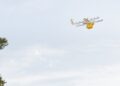
In the sidewalk delivery robot segment, Uber collaborates with companies such as Cartken, Starship, and Serve—these small autonomous robots are playing an increasingly important role in urban last-mile delivery. UK-based automated driving technology startup Wayve, along with robotaxi developers AVride and Motional, have also joined Uber’s partner lineup.
Commercialization Tipping Point: Breakthroughs in Cost and Scale
Andrew MacDonald, Uber’s President and COO, pointed out when announcing the new division: “What’s going to determine the success or failure of autonomous in the world is whether it can be commercialized, and Uber is going to be the thing that makes autonomy commercially viable.” This assessment reveals the core challenge currently facing the autonomous driving industry—how to transition from technology demonstrations to sustainable business models.
Uber’s new division will focus on addressing key barriers in the commercialization process, including infrastructure such as training data and mapping, fleet financing, regulatory services, and managing how robotaxis and other autonomous vehicles navigate complex events and venues. The company is using a fleet of specially equipped Lucid vehicles to collect data that can be shared with partners, enabling them to train their AI systems more effectively.
From ATG Divestiture to Ecosystem Restructuring: Uber’s Autonomous Journey
Uber’s journey in the autonomous driving sector has been marked by significant ups and downs. In 2020, following internal struggles and an incident in which one of its test vehicles killed a pedestrian, Uber sold its in-house autonomous development unit, Uber ATG, to Aurora. Since then, the company has shifted to consolidating its position in autonomous driving through partnerships and investments.
Today, Uber’s strategy has evolved from in-house development to ecosystem enablement. This transformation not only reduces R&D risk but also enables Uber to rapidly integrate best-in-class technologies across the industry. Uber plans to launch a robotaxi service with Volkswagen in Los Angeles by the end of 2026, although fully driverless operations won’t be available until 2027.
The Future of Last-Mile Delivery: Human-Machine Collaboration and Efficiency Revolution
The establishment of Uber Autonomous Solutions heralds an efficiency revolution in the last-mile delivery industry. Traditional human-powered delivery models face challenges such as rising costs and labor shortages, while autonomous technology offers a scalable, sustainable alternative.
However, completely replacing human delivery workers is not a short-term objective. In the foreseeable future, last-mile delivery will adopt a hybrid human-machine collaboration model—autonomous vehicles handle main routes and standardized deliveries, while human couriers manage complex scenarios and special situations. This collaborative approach will maximize the advantages of both, achieving optimal overall efficiency.
For supply chain and logistics enterprises, Uber’s strategic moves provide important insights: in the autonomous era, core competitiveness lies not merely in owning technology, but in the ability to integrate technology, operations, and ecosystem resources to deliver end-to-end solutions for customers. As robot delivery networks launch across multiple cities in 2026, the competitive landscape of the last-mile delivery industry is poised for a fundamental reshuffle.
Source: Uber wants to be a Swiss Army Knife for robotaxis – TechCrunch, February 23, 2026