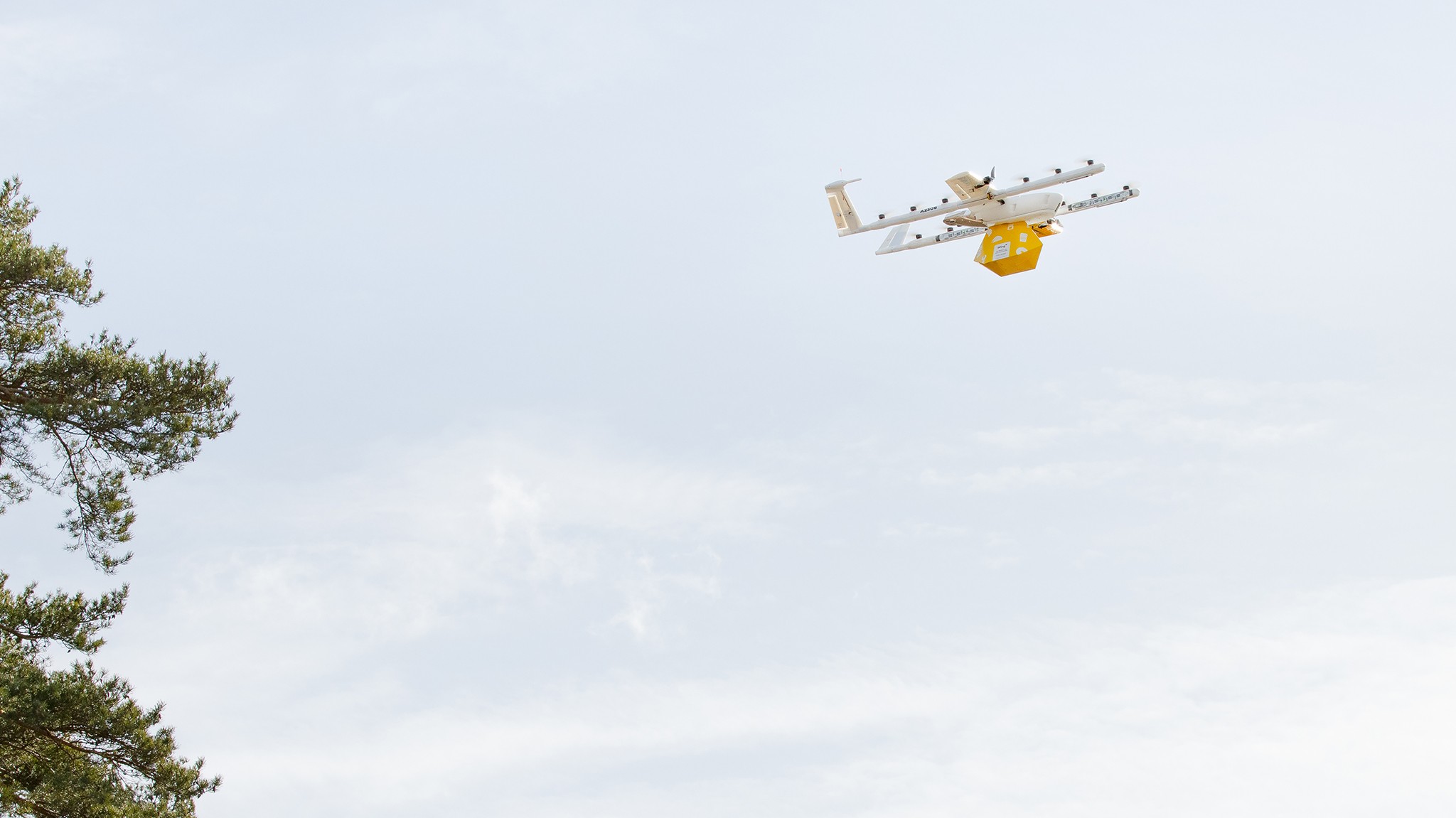
According to wing.com, Wing is scaling its ultra-fast residential drone delivery service to the San Francisco Bay Area in the coming months — marking a strategic homecoming for the company, which was founded in the Bay Area via Google’s X (the Moonshot Factory) in 2012.
A Homegrown Solution to Last-Mile Challenges
From its inception, Wing identified a global pain point: traditional last-mile delivery remained fundamentally slow, expensive, and inefficient for small, urgent, and local orders. Rather than pursuing incremental improvements, the team chose to solve the hardest problem first — designing drone technology capable of safely flying small packages directly to homes in dense residential areas.
Roots in Mountain View
Wing first introduced drone delivery in the Bay Area at Google’s Mountain View campus, where it rapidly delivered supplies across offices in real time. This internal pilot generated strong user feedback — with “When can I start getting drone delivery at my home?” quickly becoming a common question among Google employees. That grassroots demand reinforced Wing’s commitment to expand beyond campus walls into broader Bay Area neighborhoods.
Proven Scale and Partnerships
Today, Wing has safely completed over 750,000 deliveries to homes, serving a total of more than two million customers across major U.S. metropolitan areas including Houston, Atlanta, and Dallas. Its operational footprint reflects rigorous testing and regulatory alignment: Wing operates under FAA Part 135 air carrier certification — the first drone delivery company to achieve this status in the U.S. (granted in 2020).
Wing partners with major brands including Walmart and DoorDash. Recent expansion milestones cited on wing.com include:
- January 11, 2026: Expansion to 150 new Walmart stores coast to coast
- January 15, 2026: Launch of expanded service in Greater Houston as part of Walmart and Wing’s “biggest expansion year yet”
- March 5, 2026: Extended service hours in Charlotte and Dallas-Fort Worth
Operational Model and Supply Chain Implications
Wing’s infrastructure centers on lightweight, highly automated drones optimized for small-parcel logistics — typically carrying items under 3 lbs, such as last-minute groceries, household essentials, and prepared meals. The system bypasses road congestion entirely, reducing delivery windows to under 10 minutes from order to drop-off in active service zones. For supply chain professionals, this represents a functional shift from hub-and-spoke distribution to decentralized, hyperlocal fulfillment nodes — often co-located with existing retail or dark store facilities.
This model complements, rather than replaces, conventional ground fleets. It targets high-frequency, low-weight, time-sensitive demand — a segment where labor costs, traffic delays, and emissions per delivery are disproportionately high. Wing’s integration with DoorDash and Walmart signals growing retailer appetite for multimodal last-mile orchestration, especially in high-cost, high-density markets like the Bay Area.
Source: wing.com
Compiled from international media by the SCI.AI editorial team.