The housing market continues to serve as a persistent drag on freight demand, presenting a major obstacle for transportation and logistics operators.
Truckload capacity squeezed by less housing starts
U.S. Census data shows that total housing starts fell 2.8% month-over-month in April 2026 to a seasonally adjusted annualized rate (SAAR) of 1.465 million, down 0.9% year-over-year.
Behind the headline figures, however, lies a deeper divergence that disproportionately hurts freight volume:
- Single-Family Starts Plunge: Single-family starts –which generate significantly more building materials freight per unit– plunged 9.0% MoM in April to 930,000 units.
- Multifamily Surge Masking Softness: Conversely, multifamily starts rose 14.3% MoM to 529,000 annualized units. Because multifamily buildings are far less material-intensive per unit, this surge does little to rescue lagging flatbed or rail demand.
Mode-specific squeezes
The lack of residential construction and lagging existing home sales have sent shockwaves through regional shipping corridors from open-decks to boxcars:
- Standard flatbed freight is undergoing a severe split. Traditional building materials (lumber, drywall and roofing) are incredibly soft. However, heavy industrial, data center builds and utility construction are booming. This industrial strength pushed overall flatbed tender rejections (STRIF.USA) past 40% in April 2026 and drove the Flatbed Truckload Volume Index (STVIF.USA) up an average of 48% YoY as of June 2026.
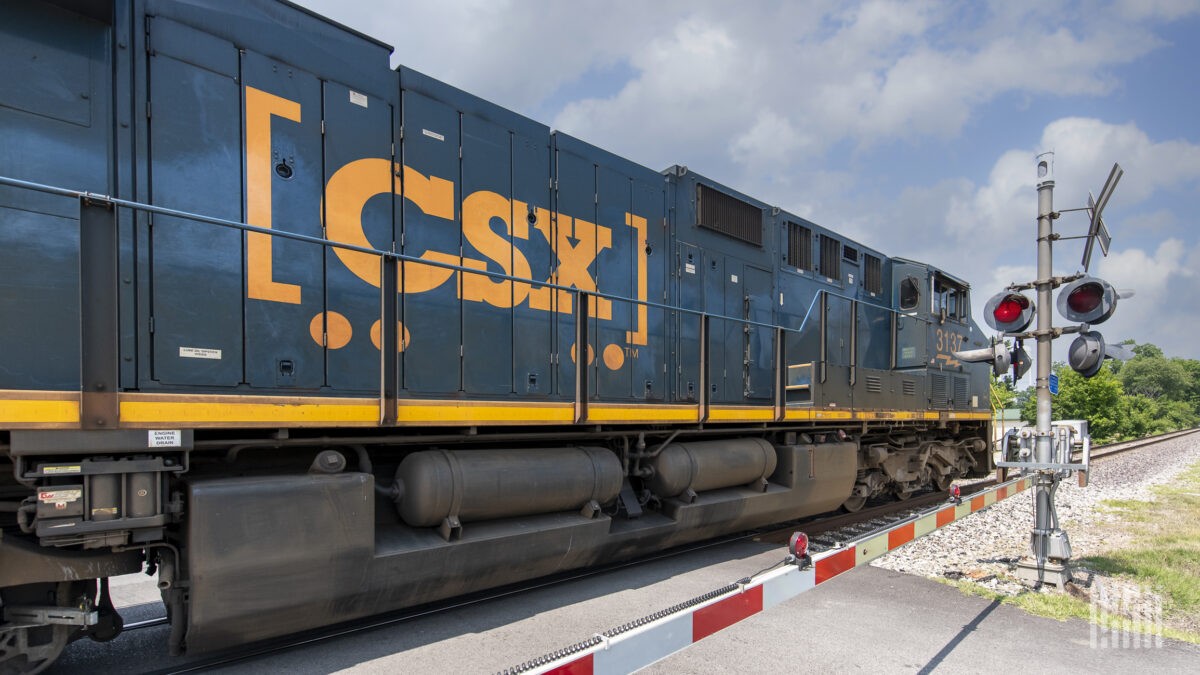
- Rail traffic for forest and lumber products is depressed. Weekly primary forest products rail carloads (RTOFP.USA) plummeted 32% year-over-year to just 788 weekly carloads as of May 23. On Q1 2026 earnings calls, Class I railroad CSX Corporation explicitly pointed out that housing affordability was “a real headwind,” with its forest products segment volumes sliding 9% year-over-year.
Macro real estate trends support the split
Broader industrial real estate developments echo the split between sluggish consumer housing and high-flying industrial infrastructure. According to Link Logistics –one of the nation’s largest industrial real estate operators managing roughly half a billion square feet of warehouse space– the oversupply correction of 2024 has run its course.
The industrial real estate market is tightening rapidly, favoring last-mile owner-operators. National warehouse availability has also dropped for the first time since 2021 as the national construction pipeline contracted by 35%.
Additionally, the massive artificial intelligence infrastructure buildout is fueling conventional warehouse demand and logistic spillover in the millions of square feet, according to Link Logistics executive Glenn Wylie.
Don’t get caught off guard
Discover the full ground-level logistics impact of the residential construction squeeze on dry van, open-deck flatbed, and rail volumes. Sign up for SONAR today or request a demo here to read the full Sitrep and access our library of freight intelligence reports.
[Access via SONAR] | [Access via FreightWaves Market Monitor]
Understanding the granular relationship between interest rates, regional permit pipelines and mode-specific freight demand is critical for any transportation professional aiming to capture the emerging market recovery.
Source: FreightWaves
Compiled from international media by the SCI.AI editorial team.