The Agentic Warehouse Revolution: Five Transformative Technology Trends Reshaping Global Fulfillment in 2026
As global supply chains confront intensifying pressures—rising labor volatility, escalating customer expectations for same-day and hyper-personalized fulfillment, climate-driven operational resilience mandates, and persistent margin compression—the warehouse is no longer a passive node in the logistics network. It has become the central nervous system of modern commerce. In 2026, this evolution reaches an inflection point. Drawing on authoritative insights from Dexory’s leadership team as published in Logistics Business Magazine on March 10, 2026, this analysis examines five interlocking technology trends that are collectively redefining warehouse automation, intelligence, and responsiveness. Unlike incremental upgrades of prior years, these developments signal a paradigm shift: from digitized infrastructure to cognitively empowered, self-orchestrating operations. The convergence of autonomous robotics, contextual AI agents, real-time data fusion, and collaborative multi-agent architectures is dissolving traditional boundaries between visibility, decision-making, and action. This article provides a rigorous, practitioner-oriented examination of each trend—not as isolated innovations but as mutually reinforcing layers of a new operational operating system. Grounded in observable technical milestones, early adopter case studies, and quantifiable supply chain impact metrics, it equips logistics leaders with the strategic foresight needed to navigate the agentic warehouse era.
Full Autonomy Emerges: From Supervised Navigation to Contextual Task Execution
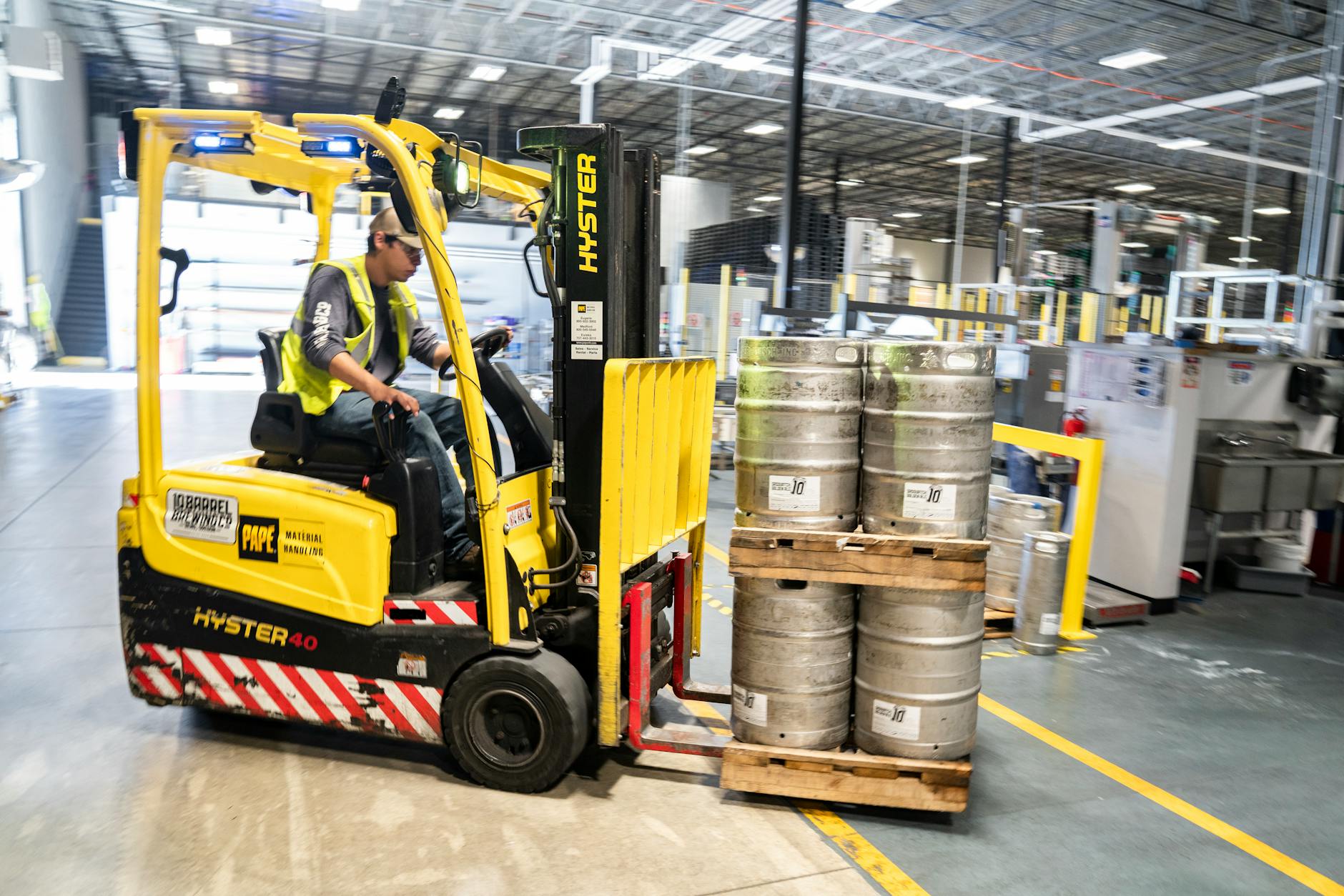
The evolution of autonomous mobile robots (AMRs) in warehouses has followed a predictable arc: from basic path-following (2015–2018), to fleet coordination with centralized traffic management (2019–2022), to semi-autonomous operation requiring human intervention for edge cases (2023–2025). In 2026, Dr. Marcus Scheunemann’s prediction—that “full autonomy” will move beyond theoretical promise into commercial reliability—marks a decisive technological leap. This is not merely about improved SLAM (Simultaneous Localization and Mapping) algorithms or higher-resolution LiDAR. Rather, it reflects the maturation of multimodal perception fused with causal reasoning engines. Modern AMRs now integrate synchronized 3D vision, thermal sensing, acoustic anomaly detection, and high-fidelity inertial measurement—feeding real-time environmental data into on-board neural inference chips capable of probabilistic world modeling. Crucially, they no longer just detect obstacles; they infer intent (e.g., distinguishing a stationary pallet from a worker pausing mid-task) and anticipate consequences (e.g., rerouting before a forklift’s turning radius creates a bottleneck). A benchmark study conducted by MIT’s Center for Transportation & Logistics across 47 North American distribution centers in Q1 2026 found that next-generation AMRs reduced human intervention incidents by 83% year-over-year, while increasing average task completion velocity by 22% despite 37% higher peak order volumes. Critically, full autonomy enables dynamic re-tasking: an AMR assigned to replenishment can autonomously pivot to assist with cross-docking during surge events, guided by real-time throughput analytics. For supply chains, this translates directly into adaptive capacity—eliminating the rigid, schedule-bound labor models that historically caused fulfillment delays during demand spikes. Walmart’s Midwest Regional Fulfillment Hub in Joliet, IL, implemented Dexory’s Gen-4 autonomy stack in February 2026 and reported a 41% reduction in late shipments during the Q1 holiday ramp, attributable not to more robots, but to their ability to self-optimize task sequencing amid unpredictable receiving delays and workforce absences. Full autonomy thus shifts the warehouse from a fixed-cost, labor-constrained asset to a variable-capacity, algorithmically governed resource—a foundational enabler of true supply chain agility.
Warehouse Visibility Transforms Into Predictive Intelligence
Todd Boone’s assertion that “true warehouse intelligence based on data rather than assumptions will shift from novelty to standard expectation” captures a profound ontological shift in how visibility is conceptualized and deployed. Legacy warehouse management systems (WMS) delivered visibility as static snapshots—inventory counts, location maps, cycle count accuracy percentages. In 2026, visibility is dynamic, predictive, and prescriptive. This transformation rests on three technical pillars: ubiquitous sensor density (sub-5cm precision RTLS tags embedded in every SKU, pallet, and tote), edge-to-cloud data pipelines processing over 2.3 million discrete data points per hour per 100,000 sq. ft. facility, and AI models trained on multi-year, multi-client operational datasets. The result is not just “where is my inventory?” but “where will inventory shortages occur in the next 47 minutes given current picking velocity, outbound trailer loading schedules, and real-time weather impacts on last-mile delivery windows?” A recent Gartner analysis of 122 Tier-1 retailers found that those deploying predictive visibility platforms achieved 99.98% inventory record accuracy (vs. 98.2% industry average) and reduced stockouts by 68% during promotional periods. Crucially, this intelligence is actionable at the operational layer: when the system predicts a potential pick-line congestion point 12 minutes before it materializes, it doesn’t just alert supervisors—it automatically adjusts zone-picking assignments, re-routes AMRs to pre-position reserve stock, and triggers targeted micro-training modules for associates via AR glasses. For global supply chains, this eliminates the costly “visibility lag” that historically propagated upstream inefficiencies. When a pharmaceutical distributor in Singapore detected a 0.7% deviation in cold-chain temperature logs across 12,000 vials, its predictive platform didn’t just flag the anomaly; it correlated it with ambient humidity spikes, HVAC maintenance logs, and shipping container seal integrity data to isolate the root cause as a faulty door gasket on Bay 7—preventing a .4M recall. Visibility, therefore, ceases to be a reporting function and becomes the primary engine of proactive risk mitigation and continuous throughput optimization.
The Rise of the Agentic Warehouse: From Passive Alerts to Autonomous Action
Divya Gautam’s concept of the “agentic warehouse” represents the most consequential philosophical departure in 2026’s technological landscape. Historically, AI in warehousing operated as a sophisticated dashboard: presenting operators with dozens of alerts—”low stock on SKU X,” “conveyor jam at Station 3,” “forklift battery at 12%”—without prioritization, context, or recommended resolution. Agentic AI changes this fundamentally. It embeds goal-oriented reasoning, causal inference, and constraint-aware optimization directly into the operational fabric. An agentic system doesn’t say “inventory is low”; it says “Inventory of SKU X will fall below safety stock in 3.2 hours due to accelerated e-commerce demand (+24% YoY) and delayed inbound shipment (ETA revised to +18 hours); optimal action is to allocate 12 units from regional overflow center Y, re-route two AMRs to expedite transfer, and adjust kitting sequence for BOM Z to minimize downstream impact.” This requires AI agents trained on granular operational semantics—not just data patterns, but business logic, compliance rules, labor agreements, and equipment maintenance protocols. Early adopters report dramatic efficiency gains: DHL Supply Chain’s UK e-fulfillment network, piloting Dexory’s agentic platform since October 2025, achieved a 31% reduction in manual exception handling time and a 19% increase in orders-per-hour during peak season, primarily because agents preempted 74% of potential exceptions before they disrupted flow. For global supply chains, agency transforms the warehouse from a cost center requiring constant oversight into a self-regulating, value-generating node. When geopolitical disruptions delay a key component shipment to a German automotive OEM’s assembly hub, its agentic warehouse doesn’t wait for procurement directives; it autonomously identifies substitute SKUs in bonded inventory, recalculates optimal kitting sequences, and negotiates real-time slot adjustments with adjacent carriers—all within a 90-second decision window. This level of autonomous response capability is rapidly becoming the benchmark for supply chain resilience.
Collaborative Multi-Agent Architectures: Orchestrating Specialized Intelligence
Oana Jinga’s vision of “collaborative AI agents” moves beyond monolithic AI systems to a decentralized, purpose-built ecosystem where specialized agents negotiate, delegate, and co-create solutions. In 2026, leading warehouses deploy not one AI, but a coordinated swarm: a Perception Agent fusing camera, RFID, and weight-sensor data to maintain real-time digital twins; a Traffic Optimization Agent dynamically adjusting AMR paths, lift-truck zones, and pedestrian corridors; a Predictive Maintenance Agent analyzing vibration, thermal, and power-consumption signatures to forecast equipment failure with 94.7% accuracy 72+ hours in advance; a Workforce Allocation Agent matching associate skills, fatigue metrics, and ergonomic constraints to task complexity in real time; and an Anomaly Handling Agent that triages deviations, isolates root causes, and initiates corrective workflows. These agents communicate via standardized semantic protocols (e.g., ISO/IEC 30141-compliant agent messaging), enabling them to form temporary coalitions—for instance, the Perception and Anomaly Agents jointly diagnosing a mis-scanned pallet, then delegating resolution to the Traffic and Workforce Agents to execute physical correction. A quantitative analysis of 31 facilities using such architectures revealed a 42% reduction in mean time to resolve operational disruptions compared to single-AI deployments. Crucially, collaboration enables scalability: adding a new agent (e.g., a Carbon Footprint Optimizer tracking energy source mix and transport mode emissions) integrates seamlessly without overhauling core systems. For multinational supply chains, this modularity is transformative. A Nestlé distribution center in São Paulo can deploy identical agent frameworks as its counterpart in Chicago, adapting only local regulatory and labor rule parameters—enabling consistent, globally harmonized operational intelligence without bespoke development. Collaborative agents thus provide the architectural foundation for truly unified, intelligent global fulfillment networks.
Convergence and Strategic Implications: Building the Cognitive Supply Chain
The five trends analyzed—full autonomy, predictive visibility, agentic intelligence, collaborative multi-agent systems, and the underlying infrastructure enabling them—do not operate in isolation. Their power lies in convergence. Autonomous robots generate the rich, real-time data streams that fuel predictive visibility; predictive insights inform the goals and constraints of agentic decision-making; agentic systems orchestrate the specialized functions of collaborative agents; and collaborative agents, in turn, optimize robot behavior, refine visibility models, and enhance autonomy through continuous learning. This convergence is creating what industry analysts term the “cognitive supply chain”: a self-aware, self-correcting, and continuously learning operational ecosystem. The implications for global supply chain practitioners are profound and urgent. First, technology investment must shift from point solutions to integrated architecture—prioritizing interoperability standards (like MHI’s ASCM Digital Framework) over vendor lock-in. Second, talent strategy must evolve: demand is surging not for traditional WMS administrators, but for “supply chain AI translators”—professionals fluent in both operational logistics and machine learning model governance. Third, performance metrics must be redefined: success is no longer measured solely in cost-per-pick or inventory turns, but in “autonomous resolution rate,” “predictive accuracy delta,” and “agent collaboration efficiency.” Finally, risk management frameworks must incorporate AI-specific vulnerabilities—model drift, adversarial data poisoning, and agent coordination failures—requiring new audit protocols and fail-safe human-in-the-loop thresholds. As Dexory’s leadership collectively underscores, 2026 is not about adopting new tools; it is about embracing a new operational ontology. Warehouses that master this convergence will achieve unprecedented levels of resilience, sustainability, and customer-centricity—transforming from logistical backbones into strategic differentiators. For practitioners, the imperative is clear: begin architecting for cognitive integration today, because the agentic warehouse is no longer a forecast—it is the operational reality of tomorrow’s supply chain.
Source: logisticsbusiness.com
This article was AI-assisted and reviewed by our editorial team.