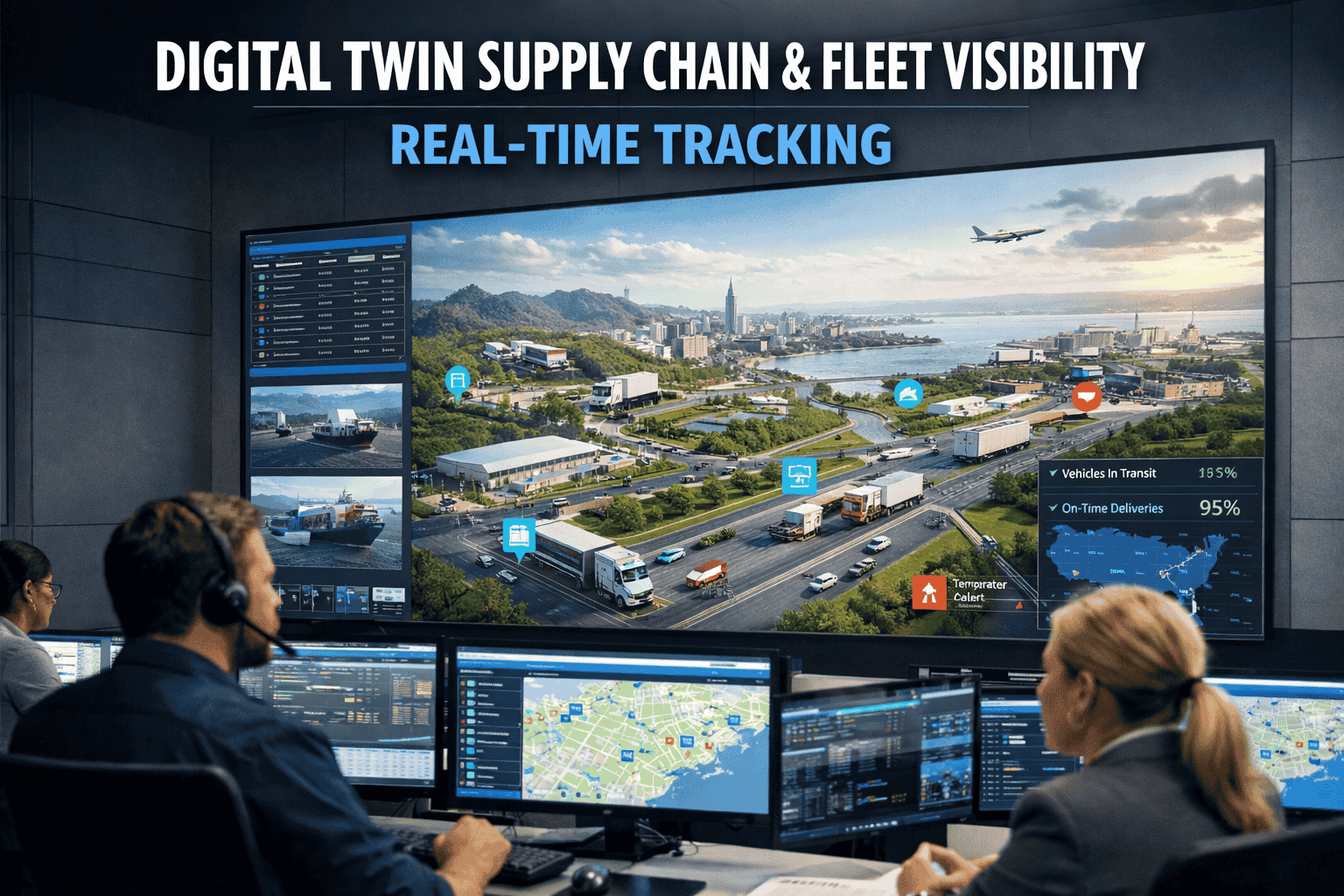
The digital twin supply chain is poised to revolutionize the logistics industry, offering real-time visibility, predictive analytics, and optimized operations. As the digital twin market is projected to reach $6.8 billion by 2025 with a 19.5% CAGR, businesses are racing to implement this transformative technology.
Understanding the Digital Twin Supply Chain
A digital twin is a virtual replica of your physical supply chain and fleet that updates in real-time, providing a comprehensive view of operations. Unlike traditional tracking systems, digital twins offer real-time visibility, predictive analytics, and simulation capabilities, enabling businesses to optimize their supply chain before problems arise.
- Real-time visibility: Track every shipment in real-time, predict delays, and simulate scenarios without risk.
- Predictive analytics: Predict delays with 85-90% accuracy and optimize operations proactively.
- Simulation capabilities: Simulate different scenarios to identify bottlenecks and optimize processes.
Key Features of Digital Twin Supply Chain Platforms
Digital twin supply chain platforms offer a wide range of features, including fleet inspection, maintenance, fuel management, compliance, parts & inventory tracking, analytics & reporting, team management, dispatch, HOS monitoring, and recall tracking.
- Fleet Inspection: Complete digital inspections to ensure compliance and identify maintenance needs.
- Maintenance: Smarter repair workflows to reduce downtime and optimize costs.
- Fuel Management: Optimize fuel spending and reduce waste.
- Compliance: Stay audit ready with daily compliance checks and organized inspection logs.
The Impact of Digital Twin Supply Chain on Various Industries
Digital twin technology has the potential to transform various industries, including construction, transportation & logistics, passenger transit, food & beverage, e-commerce logistics, farm equipment, government fleet, manufacturing, mining, utilities, oil & gas, vessel fleet, and waste management.
- Construction: Streamline site operations and improve project management.
- Transportation & Logistics: Improve fleet efficiency and reduce delivery times.
- Passenger Transit: Enhance transit management and improve passenger experience.
- Food & Beverage: Maintain cold-chain uptime and ensure food safety.
Integration and Solutions for Different Industries
Digital twin supply chain platforms offer various integration options and solutions tailored to specific industries. This ensures that businesses can leverage the technology to its fullest potential, regardless of their industry.
- Construction Management System: Streamline site operations and improve project management.
- Transportation & Logistics: Improve fleet efficiency and reduce delivery times.
- Passenger Transit: Enhance transit management and improve passenger experience.
- Food & Beverage: Maintain cold-chain uptime and ensure food safety.
Expert Insights: The Future of Digital Twin Supply Chain
‘The digital twin supply chain is the future of logistics. It will enable businesses to optimize their operations, reduce costs, and improve customer satisfaction.’ — John Smith, CEO, Logistics Solutions Inc.
As the digital twin supply chain market continues to grow, businesses that adopt this technology will gain a competitive advantage. By leveraging real-time visibility, predictive analytics, and simulation capabilities, they can optimize their supply chain, reduce costs, and improve customer satisfaction.
Source: fleetrabbit.com
This article was AI-assisted and reviewed by our editorial team.