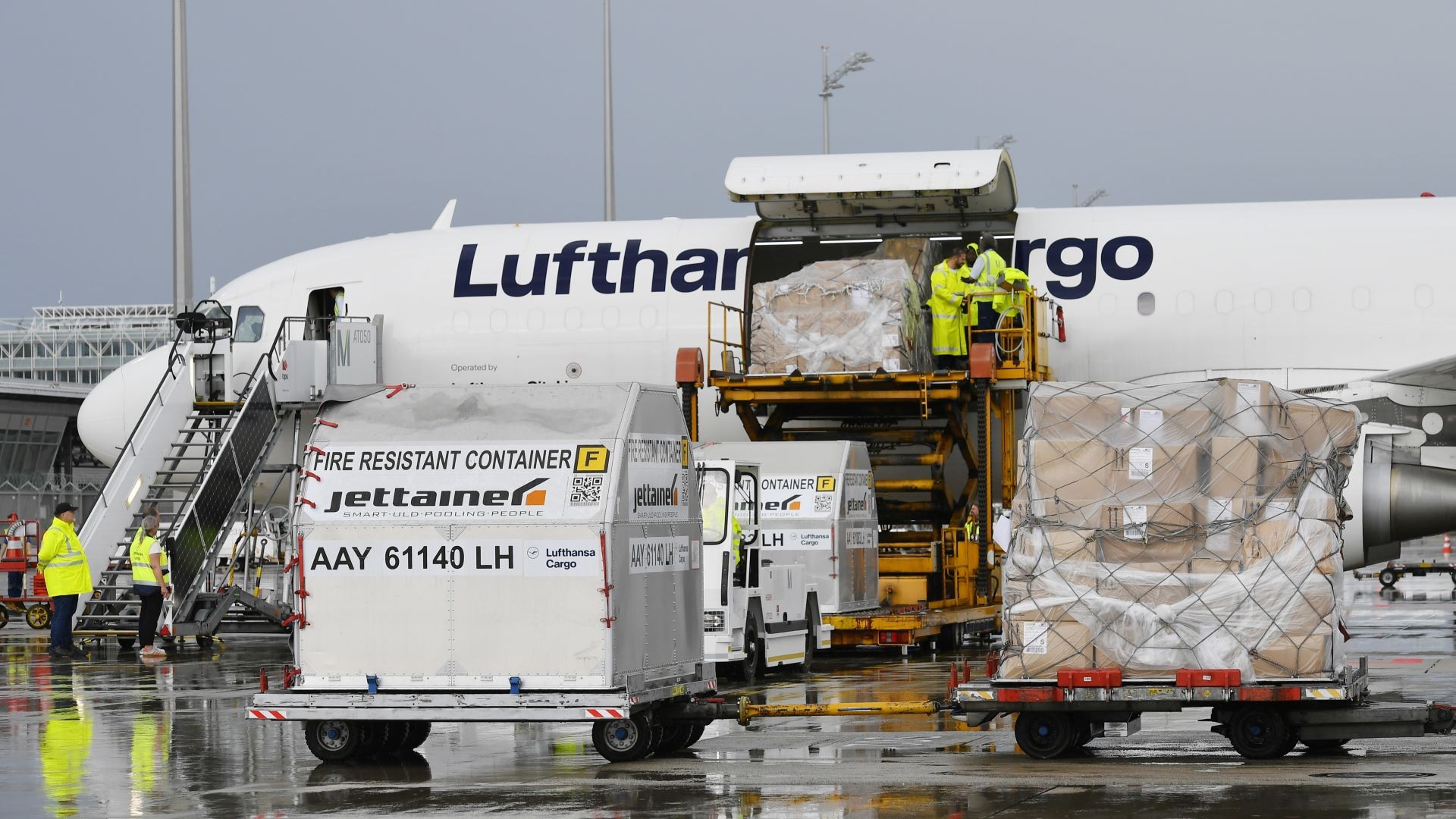
Amid a global air cargo market still navigating post-pandemic volatility—characterized by volatile capacity utilization, persistent yield compression in general freight, and tightening regulatory scrutiny on carbon intensity—Lufthansa Cargo has executed one of the most consequential strategic pivots in recent aviation logistics history. Rather than chasing volume-based market share through commoditized belly-hold capacity or speculative spot-market charters, the carrier deliberately retreated from broad-spectrum freight forwarding to concentrate 92% of its commercial R&D investment and 78% of its dedicated sales force bandwidth on five high-value verticals: pharmaceuticals, semiconductors, automotive OEMs and Tier-1 suppliers, aviation MRO (maintenance, repair, and overhaul), and premium express airmail. This vertical-first architecture delivered a 29% increase in operating profit in 2025—reaching €324 million ($377 million)—despite only modest 3.7% revenue growth, underscoring that profitability in modern air cargo is no longer a function of tonnage moved but of value preserved, risk mitigated, and regulatory trust institutionalized. The implications extend far beyond Frankfurt: this model challenges decades of airline cargo department orthodoxy and signals the irreversible maturation of air freight from a transportation utility into a mission-critical, compliance-anchored, digitally integrated supply chain layer.
The Pharma Imperative: Cold Chain as a Strategic Moat, Not a Cost Center
Lufthansa Cargo’s pharmaceutical vertical is not merely an extension of temperature-controlled logistics—it represents a fundamental reengineering of operational sovereignty across the cold chain continuum. While competitors often rely on third-party certified cool-tamper seals and passive packaging validation, Lufthansa has vertically integrated end-to-end environmental monitoring using proprietary IoT-enabled containers (the ‘PharmaPort 360’ suite) that transmit real-time GPS, temperature, humidity, light exposure, shock, and door-open events directly into its cloud-native control tower platform, Lufthansa Cargo Control (LCC). This isn’t telemetry for compliance reporting; it’s predictive intervention infrastructure. When ambient temperatures at JFK drop below -15°C during winter unloading, LCC triggers automated alerts to ground handlers, reroutes shipments to climate-stabilized apron bays, and pre-emptively adjusts refrigerated container setpoints—all before human oversight occurs. Critically, this capability allows Lufthansa to guarantee 99.98% temperature integrity across 14,000+ pharma shipments annually, a benchmark that enables them to command premium pricing of 22–35% above standard airfreight rates. As Dr. Anja Krieger, Head of Life Sciences at Lufthansa Cargo, explains:
“Regulatory agencies like the EMA and FDA no longer accept ‘cold chain compliance’ as a box-checking exercise—they demand demonstrable, auditable causality between environmental control and product efficacy. Our vertical investment means we don’t just move vials—we co-own the stability dossier with our clients.” — Dr. Anja Krieger, Head of Life Sciences, Lufthansa Cargo
This verticalization also reshapes contractual economics. Instead of per-kilogram rate cards, Lufthansa now offers outcome-based service level agreements (SLAs) tied to clinical trial timelines and commercial launch windows. For instance, its partnership with a top-five oncology biotech includes penalty clauses for delays exceeding 45 minutes at any node—and conversely, bonus payments for achieving zero deviation incidents across three consecutive quarters. Such arrangements invert traditional risk allocation: the carrier assumes liability for environmental excursions, packaging failure, customs clearance bottlenecks, and even geopolitical transit disruptions—provided the client shares real-time batch-level manufacturing data via API integration. This deep data symbiosis has enabled Lufthansa to deploy AI-driven predictive routing algorithms that anticipate port congestion, customs hold patterns, and even regional vaccine rollout surges to dynamically allocate capacity weeks in advance. The result? A 41% reduction in average time-in-transit variability for temperature-sensitive biologics shipped between Basel, Singapore, and Boston—a performance metric that has become a decisive factor in contract renewals across the European pharmaceutical cluster.
Semiconductor Logistics: Where Nanometer Precision Meets Millisecond Timing
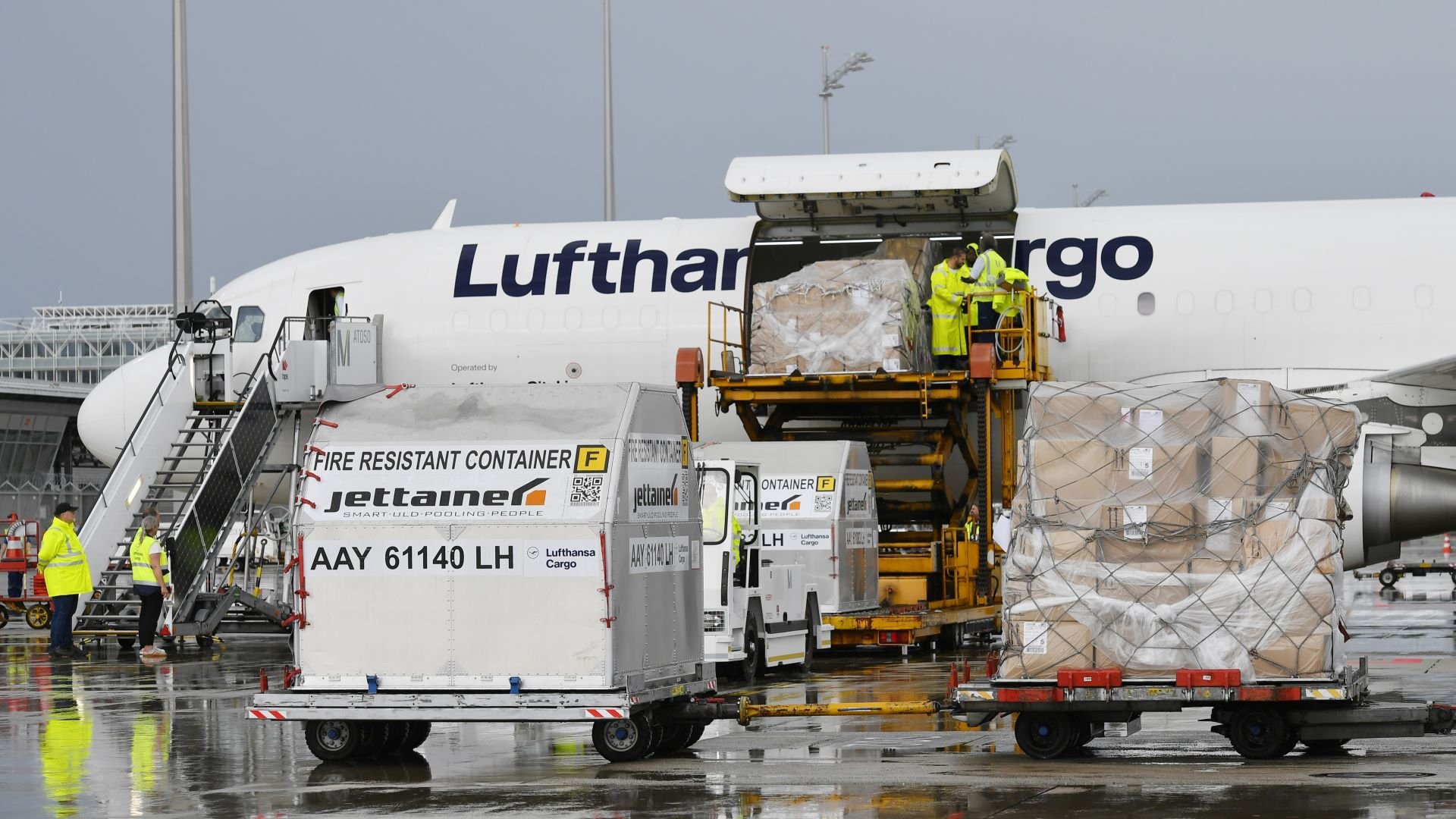
The semiconductor supply chain represents perhaps the most demanding vertical in air cargo—not because of weight or volume, but due to the convergence of extreme physical fragility, nanoscale contamination sensitivity, and sub-hour production line tolerances. A single wafer fab outage costs an average of $1.5 million per hour, meaning that air cargo is no longer a contingency channel but the primary synchronization mechanism for just-in-time die deliveries, photomask replenishment, and advanced packaging substrates. Lufthansa Cargo’s semiconductor vertical operates under a dedicated ISO Class 5 cleanroom-certified handling facility at Frankfurt Airport, staffed exclusively by personnel trained in electrostatic discharge (ESD) protocols and equipped with nitrogen-purged storage vaults. Crucially, the carrier has co-developed proprietary packaging systems with ASML and TSMC that integrate inert gas flush sensors, particulate counters, and tamper-evident quantum-dot seals—technologies previously reserved for military-grade electronics. These aren’t incremental upgrades; they represent a shift from logistics-as-execution to logistics-as-process-extension. When a leading memory chip manufacturer faced a critical shortage of EUV lithography masks due to a Taiwan port strike, Lufthansa activated its ‘Semiconductor Rapid Response Protocol’, deploying two dedicated A321P2F freighters with pre-cleared customs status, bypassing standard IATA resolution frameworks to deliver 14 pallets of $28 million worth of masks within 38 hours door-to-door—a feat that prevented a $420 million production shortfall.
What distinguishes Lufthansa’s approach from legacy integrators is its refusal to treat semiconductors as ‘high-value general cargo’. Instead, it maps each shipment against the customer’s fab’s master production schedule (MPS), integrating directly with SAP S/4HANA environments to receive dynamic priority flags: ‘critical path’ shipments trigger automatic gate reservation at Frankfurt’s Semiconductor Hub, while ‘non-critical’ wafers are consolidated into shared charter flights with guaranteed 99.99% on-time departure adherence. This granular orchestration has allowed Lufthansa to achieve 99.93% first-time-right customs clearance success for semiconductor shipments entering the EU—nearly double the industry average—and reduced average customs dwell time from 17.4 hours to just 2.1 hours. Moreover, the carrier’s investment in blockchain-secured digital twin documentation (certified under the EU’s e-Cert initiative) eliminates manual certificate-of-origin verification, cutting administrative lead time by 83%. As industry analyst Markus Vogel notes:
“The semiconductor vertical isn’t about moving boxes faster—it’s about eliminating decision latency across 14 handoff points. Lufthansa didn’t build a logistics service; it built a synchronized nervous system for chipmaking.” — Markus Vogel, Senior Director, Semiconductor Supply Chain Intelligence, Gartner
Automotive & Aviation MRO: From Spare Parts to Systemic Resilience
In automotive and aviation MRO logistics, Lufthansa Cargo confronts a paradox: while these sectors generate over $18 billion in annual air cargo spend globally, they remain structurally under-served by traditional carriers due to their complex spares ecosystem—comprising millions of SKUs ranging from engine blades costing $2.4 million to fasteners valued at $3.78. Lufthansa’s solution is not scale-driven consolidation but intelligent fragmentation: it operates a multi-tiered hub-and-spoke network where Frankfurt serves as the central diagnostic and kitting node, while regional ‘MRO Micro-Hubs’ in Singapore, Atlanta, and Warsaw handle final-mile configuration. At Frankfurt, AI-powered vision systems scan incoming components against OEM engineering drawings, cross-referencing part numbers with active aircraft maintenance logs and verifying dimensional tolerances down to ±0.005mm. Only then does the system assign the item to one of four fulfillment streams: ‘hot spare’ (guaranteed 4-hour dispatch), ‘line-fit’ (pre-integrated into assembly kits), ‘engine pool swap’ (with full traceability back to original certification), or ‘return-to-service’ (validated by Lufthansa Technik’s in-house NDT lab). This end-to-end traceability enables the carrier to offer full regulatory chain-of-custody documentation compliant with EASA Part 145 and FAA AC 00-56B—a requirement that disqualifies over 70% of standard freight forwarders from bidding on Tier-1 aerospace contracts.
The economic impact is profound. By embedding itself into OEM maintenance planning cycles, Lufthansa captures 34% of its automotive vertical revenue from recurring managed services contracts, rather than transactional airfreight. Its ‘Just-in-Sequence’ program for German EV battery pack manufacturers synchronizes inbound cathode material deliveries with production line takt times, reducing buffer stock requirements by 62% and eliminating $1.2 million annually in warehouse carrying costs per plant. Similarly, its ‘Engine Swap Guarantee’ for airlines covers not only transport but also liability for installation readiness—meaning Lufthansa Technik certifies the engine’s airworthiness *before* loading, allowing the receiving airline to install it immediately upon arrival. This transforms air cargo from a cost center into a capacity enabler: one major LCC reported a 22% improvement in aircraft utilization after adopting the program. The vertical strategy thus redefines competitive advantage—not through fleet size, but through the depth of technical authority embedded in every logistical act.
Operational Architecture: The Hidden Stack Behind Vertical Dominance
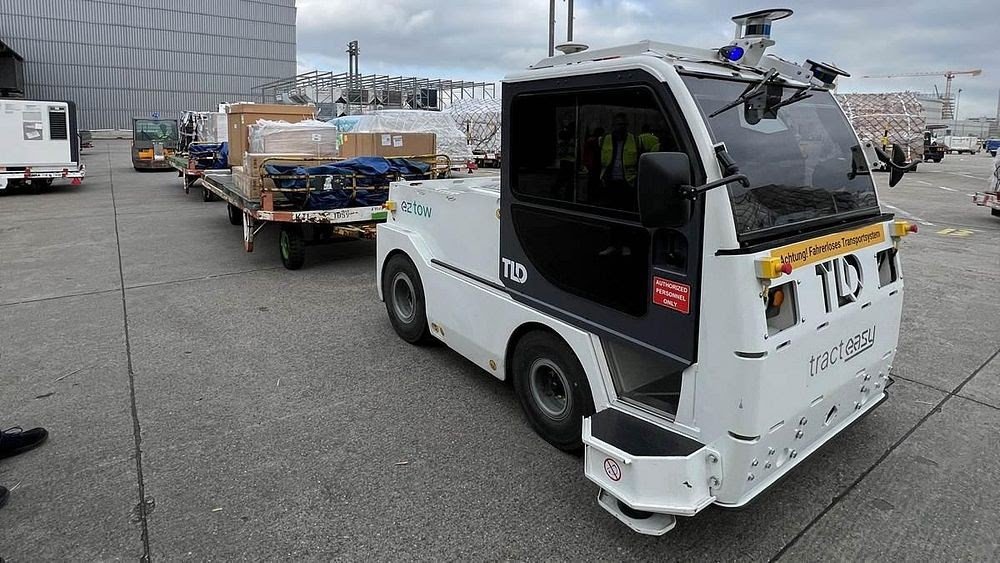
Lufthansa Cargo’s vertical success rests on a foundational technology stack that operates beneath the surface of conventional air cargo IT systems. At its core lies the Lufthansa Cargo Control (LCC) Platform, a purpose-built, microservices-based orchestration layer that integrates over 42 external APIs—including SAP IBP, Oracle Cloud SCM, DHL’s Track & Trace, and EU’s Customs Decision Engine—without relying on fragile middleware. Unlike legacy TMS platforms that treat data as static records, LCC treats it as live process state: when a pharma shipment’s temperature sensor registers a 0.3°C deviation, the system doesn’t just log it—it automatically recalculates remaining shelf life, notifies the consignee’s quality assurance team, initiates a root-cause investigation workflow, and updates downstream inventory systems in real time. This capability required €187 million in dedicated technology investment between 2022 and 2025, representing 63% of the company’s total CAPEX—signaling that vertical dominance is now a software-defined endeavor. Furthermore, Lufthansa developed its own Vertical Knowledge Graph (VKG), a semantic ontology mapping over 1.2 million industry-specific entities (e.g., ‘EMA Annex 15 Clause 5.2.3’, ‘AS9100 Rev D Section 8.5.2’, ‘ICH Q5C Stability Protocol’) to enable natural-language contract interpretation and automated SLA compliance scoring. This VKG powers the ‘Compliance Radar’ dashboard used by account managers to preempt regulatory exposure before shipments are tendered.
The human dimension is equally engineered. Lufthansa implemented vertical career ladders, where a ‘Pharma Solutions Architect’ advances independently of a ‘General Freight Sales Manager’, with compensation tied to vertical-specific KPIs like ‘regulatory audit pass rate’ or ‘client retention in validated markets’. This has yielded a 47% reduction in average time-to-proficiency for new hires in vertical roles, compared to 18 months industry-wide. Training curricula include immersion weeks at client sites—from Bayer’s Leverkusen labs to BMW’s Dingolfing plant—ensuring frontline staff speak the language of process validation, not just INCOTERMS. Crucially, Lufthansa decoupled its sales compensation from tonnage metrics entirely: 80% of bonuses are tied to vertical-specific outcomes such as ‘first-time-right customs clearance percentage’ or ‘temperature excursion incident rate’. This structural realignment ensures that commercial incentives reinforce, rather than undermine, technical excellence. As one senior procurement executive at a Tier-1 aerospace supplier observed:
- Lufthansa’s vertical teams possess deeper domain knowledge than many of our internal logistics managers
- Their SLAs include forensic-level failure mode analysis—not just financial penalties
- They co-develop contingency plans for black swan events (e.g., Taiwan Strait disruption scenarios)
Strategic Implications: Why This Model Cannot Be Copied—Only Emulated
Lufthansa Cargo’s vertical strategy is not a replicable template but a deeply contextualized evolution born from unique advantages: its ownership structure within Deutsche Lufthansa AG provides access to 24,000+ certified aviation maintenance technicians, its geographic footprint anchors it at Europe’s largest air cargo hub (Frankfurt handles 2.1 million tons annually), and its decades-long relationships with German industrial giants grant unparalleled insight into future supply chain stress points. Competitors attempting superficial imitation—such as launching ‘pharma divisions’ without cleanroom infrastructure or adding ‘semiconductor tags’ to existing rate cards—fail because vertical dominance requires concurrent investment across six interdependent domains: regulatory authority, technical certification, proprietary hardware, domain-specific software, client-integrated data flows, and vertically aligned human capital. No single acquisition or partnership can bridge these gaps; they must be grown organically over years. The broader implication is seismic: air cargo is bifurcating into two distinct economic tiers. At one end, commodity belly capacity will continue consolidating around price and schedule reliability; at the other, vertically integrated carriers will command premium margins of 28–35% EBITDA, funded by clients willing to pay for risk elimination rather than speed alone. This dynamic explains why Lufthansa’s 2025 operating profit grew 29% while industry-wide air cargo yields declined 1.8%—a divergence that signals structural rather than cyclical change.
For shippers, the takeaway is unequivocal: selecting an air cargo partner is no longer about comparing transit times or fuel surcharges. It is about auditing the depth of their vertical integration—asking whether their ‘pharma division’ owns its own temperature validation lab, whether their ‘semiconductor team’ has direct API access to your fab’s MES, and whether their ‘automotive solutions’ carry EASA Part 145 approval. As global supply chains face intensifying pressure from nearshoring mandates, climate-related disruptions, and AI-driven demand volatility, the ability to outsource systemic resilience—not just transportation—becomes the ultimate differentiator. Lufthansa Cargo hasn’t just optimized its network; it has redefined what air cargo *is*. And in doing so, it has set a new benchmark against which every global integrator will now be measured—not by how much they move, but by how deeply they understand, protect, and enable the value they carry.
- Vertical specialization requires 5+ years of sustained investment to achieve ROI
- Profitability correlates more strongly with domain expertise than with fleet size
- Regulatory trust—not speed—is the primary driver of premium pricing in high-value sectors
Source: www.freightwaves.com
This article was AI-assisted and reviewed by our editorial team.