The Overlooked Last Mile: Why Dispatch is AI’s First Strategic Beachhead in Manufacturing
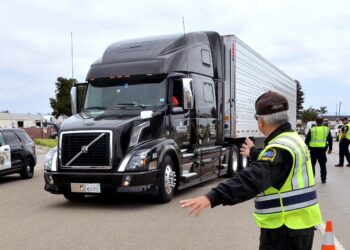
In the grand narrative of manufacturing digitalization, production execution systems (MES), predictive maintenance, and digital twin factories often command center stage, while the factory dispatch department—the physical interface connecting internal production with external logistics—has languished in a digital desert. Data reveals that 86% of manufacturers track Overall Equipment Effectiveness (OEE), yet almost none systematically monitor gate pass processing time, dispatch Service Level Agreement (SLA) compliance rates, or incident resolution speed. This structural imbalance is no accident: OEE measures ‘output capacity,’ while dispatch metrics measure ‘delivery certainty’—the former concerns production efficiency, the latter directly determines customer satisfaction, contractual penalty triggers, and inventory turnover quality. When an automotive parts supplier’s gate system congestion causes trucks to idle for an average of 47 minutes, it not only incurs $210 per vehicle in waiting costs but risks triggering OEM JIT delivery window violations, potentially cascading into entire production line shutdowns. The dispatch department is therefore not a peripheral support function but the first pressure test valve for supply chain resilience.
At a deeper level, dispatch represents the most fragmented data flow and blurriest accountability boundary within the factory. It spans five functional domains: IT (WMS/TMS systems), OT (gate barriers, weighbridges, RFID readers), logistics (carrier scheduling), quality (vehicle compliance inspection), and legal (electronic gate passes, customs documentation). Traditionally reliant on paper forms, Excel spreadsheets, and manual phone coordination, this ‘multi-headed management, master-data-absent’ state paradoxically provides AI with its most fertile implementation ground—because AI doesn’t require perfect systems but excels at reconstructing logic chains from fragmented signals. As Bosch’s Hamburg plant demonstrated in 2025: when AI modeled weighbridge timing, gate barrier response, driver scan actions, and electronic waybill generation into a unified timeline, simply optimizing vehicle queuing strategies reduced average gate processing time from 19.2 minutes to 2.5 minutes across 386 daily vehicle movements, effectively unlocking 104 hours of hidden capacity daily. This confirms a critical insight: AI’s value inflection point in manufacturing lies not in high-precision equipment control but in the ‘low-hanging fruit’ obscured by process inertia.
Notably, this transformation is spreading globally in a gradient pattern. Electronics contract manufacturers in Bangalore, India, have embedded AI gate systems into export customs pre-clearance workflows, enabling automated document verification and customs risk alerts. Food processing plants in Jebel Ali Free Zone, UAE, use AI to analyze refrigerated vehicle temperature logs against gate transit patterns, reducing temperature-related returns by 73%. These cases collectively point toward a trend: dispatch is evolving from a cost center to a data origination hub. When every inbound and outbound vehicle becomes a mobile sensor node, when every loading/unloading action generates structured event streams, the factory ceases to be merely a physical producer of goods and becomes a native producer of trusted supply chain data. This holds particular significance for Chinese manufacturers accelerating overseas expansion—a lithium battery factory newly built in Southeast Asia that fails to deploy AI-powered dispatch hubs will face European Union CSDDD (Corporate Sustainability Due Diligence Directive) compliance gaps in full-chain carbon footprint traceability, with those gaps precisely originating at the factory gate’s data discontinuity.
From Firefighting to Foresight: How AI Redefines Dispatch Exception Management
Traditional dispatch exception management operates on a ‘reactive fire brigade model’: events like transport vehicles exceeding departure windows, shipping lists severely mismatching purchase orders, or hazardous materials vehicle certification expirations are typically identified only after triggering customer complaints or contract violations. Advanced factory practices in 2026 demonstrate that AI is elevating exception management to ‘proactive governance’—identifying risks 2–3 hours before incidents occur, sometimes even before operators click ‘confirm dispatch,’ through multi-dimensional data cross-validation and risk scoring. For example, an AI engine deployed at a Tier 1 automotive supplier in Michigan, USA, continuously compares current order BOM versions, daily workshop completion data, warehouse inventory lock status, and carrier historical mis-shipment patterns. When it detects an 82%+ probability of version conflict between a batch of steering knuckle serial numbers and the latest Engineering Change Notice (ECN), the system immediately freezes the dispatch instruction, pushes an alert to quality engineers’ terminals, and automatically generates alternative solutions (calling up ECN-compliant spare parts from inventory). This intervention isn’t based on simple rule-matching but on continuously optimized decision models through reinforcement learning.
This shift represents a fundamental transformation in data cognition. Historically, dispatch exceptions were categorized as ‘occasional operational errors,’ with managers investing heavily in post-incident reviews and personnel training. Today, AI reveals that exceptions exhibit significant spatiotemporal clustering and traceable patterns. iFactory platform analysis of 142 global plants shows:
- 78% of PO mismatch incidents occur within 72 hours before month-end financial closing, highly correlated with warehouse staff rushing to clear backlogged documents
- 63% of vehicle certification failures concentrate in three fleets of specific carriers, negatively correlated with their vehicle renewal cycles
- 91% of loading omission errors trace back to BOM data synchronization delays exceeding 4.7 hours between WMS and PLM systems
This means exception management is shifting from ‘human-factor attribution’ to ‘system entropy governance.’ When AI identifies a 40% increase in goods location error rates in a warehouse area during rainy seasons, it doesn’t demand enhanced forklift driver training but automatically triggers specialized inspection work orders for UWB positioning base station waterproofing—this root-cause identification based on causal inference is reshaping manufacturing quality management philosophy.
For Chinese companies expanding overseas, this paradigm shift is particularly urgent. When a Ningbo home appliance manufacturer’s new assembly plant in Mexico experienced frequent customs delays, surface analysis pointed to customs broker errors. However, AI-powered dispatch audit systems penetrated deeper, revealing the root cause: HS code versions provided by the domestic parent factory weren’t synchronized to the local Mexican WMS, causing electronic manifest discrepancies with actual cargo attributes. Such ‘systemic knowledge gaps’ cannot be solved by enhanced overseas staff training but require cross-geography, cross-system AI collaborative governance mechanisms.
The Gate as Digital Trust Anchor: How AI-Powered Smart Gates Reconstruct Supply Chain Trust Foundations
Factory gate systems are undergoing a silent revolution—evolving from mere vehicle access control devices into digital trust anchors for supply chain collaboration. Traditional gates rely on IC cards, license plate recognition, and manual verification, but these prove insufficient for increasingly complex cross-border trade scenarios (e.g., China-Europe Railway Express multimodal transport, ASEAN RCEP electronic origin declarations). Leading factories in 2026 deploy AI smart gates capable of simultaneously parsing 14 data source types: vehicle GPS trajectories, electronic Air Waybills (e-AWB), customs pre-declaration status, dangerous goods transport permit validity, driver biometric authorization, temperature/humidity sensor data, container seal integrity images, even satellite remote sensing showing actual vehicle parking positions. When a refrigerated truck carrying medical devices enters a factory in Shenzhen’s export processing zone, the AI gate completes all verifications in 0.8 seconds and generates a ‘Trusted Handover Certificate’ containing 237 fields, automatically synchronized to customs single windows, freight forwarder TMS, and customer ERP systems as universally recognized delivery commencement evidence. This deep integration isn’t technological showmanship but a necessary response to tightening global regulations.
This transformation fosters new commercial contractual relationships. Historically, responsibility demarcation between shippers and carriers often descended into ‘evidence dilemma’: when goods are damaged in transit, were defects present during loading or caused by transportation impacts? AI gates construct tamper-proof ‘handover digital twins’ through multimodal sensing. A German chemical giant’s AI gate automatically captures 360-degree high-definition images and records interior temperature/humidity and vibration spectra upon vehicle entry; rescans after loading completion, generating two comparative datasets; and upon departure, automatically calculates maximum impact acceleration and temperature gradient changes during loading. When customers question catalyst batch activity degradation, both parties directly access that batch’s exclusive data package, with blockchain timestamping reducing dispute resolution cycles from an average of 47 days to 3.2 days. This objective data-based rapid attribution mechanism is lowering transaction costs across supply chains, particularly benefiting Chinese new energy vehicle manufacturers’ European after-sales parts networks—when Berlin service centers receive battery modules from CATL, they don’t await Chinese factory paper inspection reports but can initiate installation procedures based solely on AI gate-generated ‘Factory Health Records.’
The Oasis in the Data Desert: Why Dispatch Delivers Manufacturing AI’s Fastest ROI
The global AI in manufacturing market expands at a 37.9% compound annual growth rate, projected to reach $128.8B by 2034, yet Return on Investment (ROI) distribution is highly uneven. McKinsey’s 2025 survey shows that among manufacturing enterprises deploying AI, only 29% achieve positive ROI in equipment predictive maintenance, while a striking 87% recoup full investments within six months in AI-powered dispatch operations. This stark contrast stems from fundamental differences: equipment maintenance relies on high-precision sensors and vast historical failure data, while dispatch data collection barriers are extremely low—weighbridges, cameras, RFID, gate barriers, and WMS logs are all readily available data sources with clear business logic (vehicle → verification → loading/unloading → departure). More importantly, dispatch losses exhibit three characteristics: ‘quantifiable, easily attributable, and rapidly feedbackable.’ Per-minute gate idle costs, per-misshipment rework expenses, and per-SLA violation penalties can all be precisely calculated. When AI reduces gate processing time by 87%, the saved labor costs, reduced waiting losses, and avoided penalty fees directly appear in weekly operational reports. This ‘visible, tangible’ value demonstration dramatically reduces organizational change resistance.
Another often-overlooked key factor is data governance maturity. Many manufacturers invest heavily in industrial internet platforms only to become trapped in ‘data-rich but value-poor’ dilemmas due to inconsistent data standards and system silos. Dispatch naturally possesses data integration hub attributes: it must interface with at least five system types—ERP (orders), WMS (inventory), TMS (transportation), customs systems (declaration), and gate hardware (IoT). Consequently, AI dispatch projects often become ‘ice-breaking initiatives’ for enterprise data platform construction. When Tata Steel implemented an AI dispatch system at its Jamshedpur plant, it mandated all connected systems to open API interfaces and unified 12 core standards including material coding, carrier master data, and timestamp precision. While increasing initial implementation difficulty, this paved the way for subsequent MES and QMS system AI integration. This ‘business pain point-driven data governance upgrade’ path proves far more effective than top-down data standardization mandates. For Chinese manufacturing, this suggests a pragmatic approach: rather than waiting for complete factory digitalization blueprints, prioritize dispatch AI implementation as a data governance capability training ground and demonstration window.
From Point Intelligence to Systemic Emergence: How Dispatch AI Elevates Whole-Plant Operations
AI’s value in dispatch extends far beyond departmental efficiency gains; its generated data streams are becoming ‘neurotransmitters’ activating whole-plant operations. When AI precisely predicts a batch will complete loading at 14:30, this information feeds back to MES systems in real-time, triggering downstream packaging lines to initiate buffer material preparation. When AI identifies excessive vibration risks for certain precision instruments during loading, it automatically increases factory inspection frequency through quality system linkages. When AI detects a carrier exhibiting GPS trajectory anomalies three consecutive times during rainy conditions, its risk rating updates synchronously in procurement systems, affecting bidding weightings. This cross-system, cross-functional intelligent linkage is breaking down traditional manufacturing enterprises’ siloed management structures. Siemens’ Amberg plant offers an enlightening example: its AI dispatch system deeply couples with Energy Management Systems (EMS). When predicting 12 heavy trucks will concentrate at the factory within two hours, the system automatically adjusts plant lighting power, pre-cools loading area air conditioning, and postpones non-urgent equipment energy peaks, reducing daily comprehensive energy consumption by 11.3%. This reveals a profound pattern: dispatch is the factory’s ‘breathing interface’ with the external world, its data containing the most authentic supply-demand rhythm signals.
Toward Autonomous Supply Chain Orchestration: The 2026 Dispatch AI Imperative
Looking back from 2026, AI application in dispatch has quietly traversed three phases: from initial ‘automation substitution’ (e.g., OCR waybill recognition), to ‘intelligence augmentation’ (e.g., SLA risk prediction), to the currently unfolding ‘autonomous coordination.’ The latter signifies AI systems not only make independent decisions but proactively initiate cross-organizational collaboration. A representative case is Rotterdam Port’s ‘AI Dispatch Alliance’ with 12 surrounding manufacturers: when a power plant’s AI system predicts tomorrow’s dispatch volume will exceed port berth capacity, instead of awaiting manual coordination, it automatically sends ‘capacity assistance requests’ to alliance members, proposing temporary storage of partial goods in neighboring factories’ bonded warehouses while sharing real-time inventory data to ensure ownership clarity. This trusted data-based autonomous negotiation increased Rotterdam’s yard turnover rate by 22% and catalyzed new industrial collaboration models. This heralds a fundamental shift: supply chain competition is transitioning from ‘single-enterprise efficiency’ to ‘networked autonomous capability.’
This shift presents both challenges and opportunities for Chinese companies expanding overseas. When Ho Chi Minh City electronics assembly plants, Shenzhen component suppliers, and Singapore logistics service providers form an AI dispatch alliance, they can jointly train an ‘RCEP-wide fulfillment prediction model’ incorporating hundreds of features like customs policy changes, regional weather patterns, and port congestion indices, generating optimal customs clearance paths and transportation plans for each shipment. Such capability cannot be monopolized by single enterprises but requires alliance mechanisms with clear data sovereignty and transparent benefit distribution. Chinese enterprises can play pivotal roles—leveraging technological accumulation in 5G private networks, edge computing, and blockchain timestamping to lead construction of AI collaboration infrastructure aligned with Asian supply chain characteristics. Indeed, China’s Ministry of Industry and Information Technology’s 2025 ‘Intelligent Manufacturing System Solution Supplier Directory’ prioritizes ‘cross-enterprise AI collaboration platforms,’ providing policy leverage for Chinese enterprises to export ‘AI supply chain operating systems.’
Source: ifactoryapp.com
This article was AI-assisted and reviewed by our editorial team.