Skip to content

Strategy & Planning · Supply Chain · Warehousing & Transport

Opinion | Port Workers Try to Halt Automation Advances, But Failure Is Inevitable.

Unions Must Help Shape the Future of Work to Ensure Outcomes That Benefit the Greatest Number

Original source: Source information pending

Opinion | Port Workers Try to Halt Automation Advances, But Failure Is Inevitable.

Ask SCI.AI about this story

📋 本文要点

Unions Must Help Shape the Future of Work to Ensure Outcomes That Benefit the Greatest Number

**Trucks queue up to enter the Port of Miami after the union representing 45,000 striking US longshoremen reached an agreement on October 4 to suspend a three-day strike.** (Marta Lavandier/AP)

Author: Eduardo Porter

October 15, 2024, 7:00 AM (EDT)

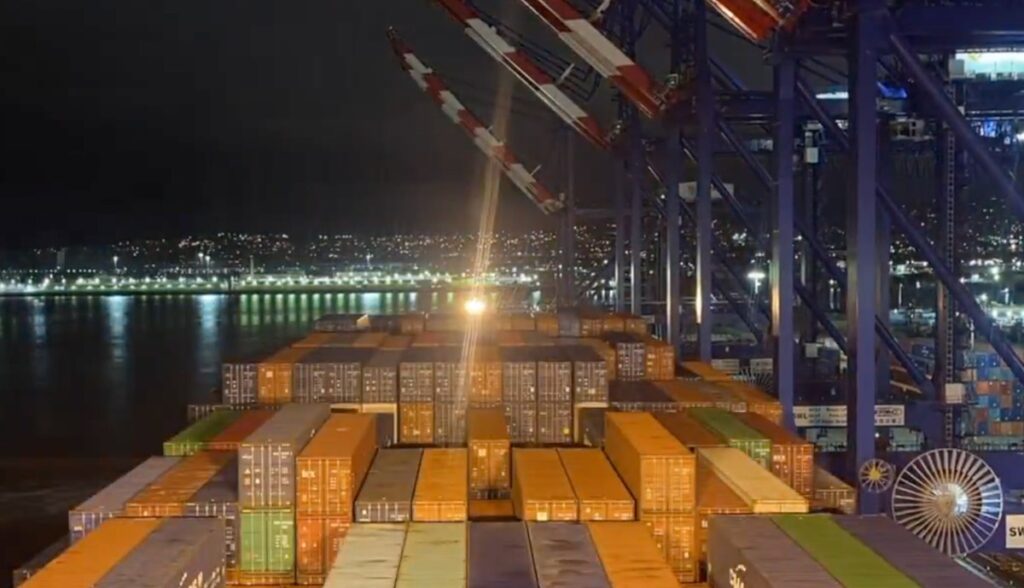
From 1964 to 1977, not a single longshoreman was employed at ports along the US East Coast. At that time, a technological revolution was underway, replacing workers who manually handled cargo from ship holds with cranes capable of moving massive containers from ship decks in just minutes.

—

Source: Washington Post

Ask SCI.AI Finished reading? Continue with SCI.AI. Explore the related policy, route, company and historical context. Continue asking
Stay ahead of supply chain shifts

One email a week: the stories that matter and new risk events — in English, free.

Prefer RSS? Articles Risk events

North American robot orders hit highest level since 2022 boom
Strategy & Planning

North American robot orders hit highest level since 2022 boom

North American robot orders climbed to their highest level since the 2022 boom and continued that trend into 2026, according to Association for Advancing Automation data reported by DC Velocity. Strong demand from semiconductor and electronics, pharmaceutical, and food and beverage industries offset declining automotive orders in the first half of 2026, with shipments up 21% and 24% year over year. Rocrich AGV, a joint venture of Logisnext Americas and Jungheinrich, supplies automated guided vehicles for warehouse automation. Shifting trade policies and a warehouse labor shortage intensified by tightened immigration policies are pushing more companies toward automation, while falling costs are making the technology accessible to small and medium-sized players.

Xeneta: Asia-US West Coast spot rates jump 343% on Iran war
Warehousing & Transport

Xeneta: Asia-US West Coast spot rates jump 343% on Iran war

Asia-U.S. West Coast container spot rates were 343% above their February 28 level in October, just 14% below the pandemic-era record, according to freight-rate intelligence provider Xeneta. The company forecasts a 5% decline in long-term contract rates for 2027, with the global container fleet expected to grow 6.8% while demand rises between 2.5% and 4%. Xeneta chief analyst Peter Sand traces the volatility to the Red Sea conflict in 2024, U.S. tariffs in 2025 and the Strait of Hormuz closure in 2026, and warns that fuel costs and route disruptions could still upend the outlook.

AI hardware demand lifts air cargo rates 30% year over year
Warehousing & Transport

AI hardware demand lifts air cargo rates 30% year over year

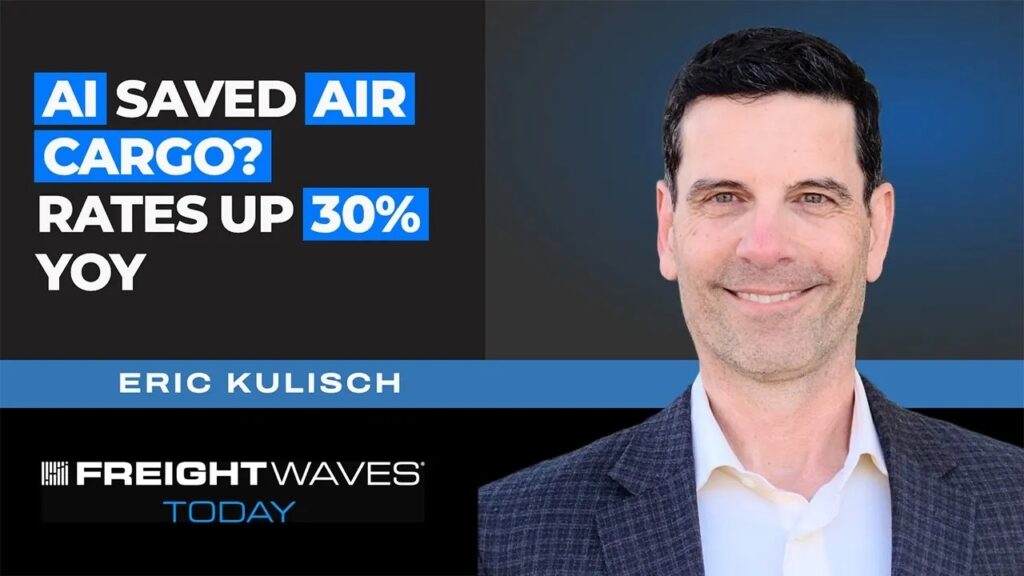
Air cargo rates are up 30% year over year and volumes have grown about 6%, according to FreightWaves, as surging AI equipment demand offsets slower e-commerce and automotive flows. The strength has defied forecasts of a 2025 softening after a down 2024. Meanwhile, Walmart is deploying Wing and Zipline drones across nearly 300 stores; Zipline raised $1.5 billion and Wing plans a $125 million Texas factory ahead of anticipated FAA beyond-line-of-sight rules.

Welcome Back!

Login to your account below

Create New Account!

Fill the forms below to register

Retrieve your password

Please enter your username or email address to reset your password.

Scan to share via WeChat

Open WeChat and scan the QR code to share

QR Code

Add New Playlist