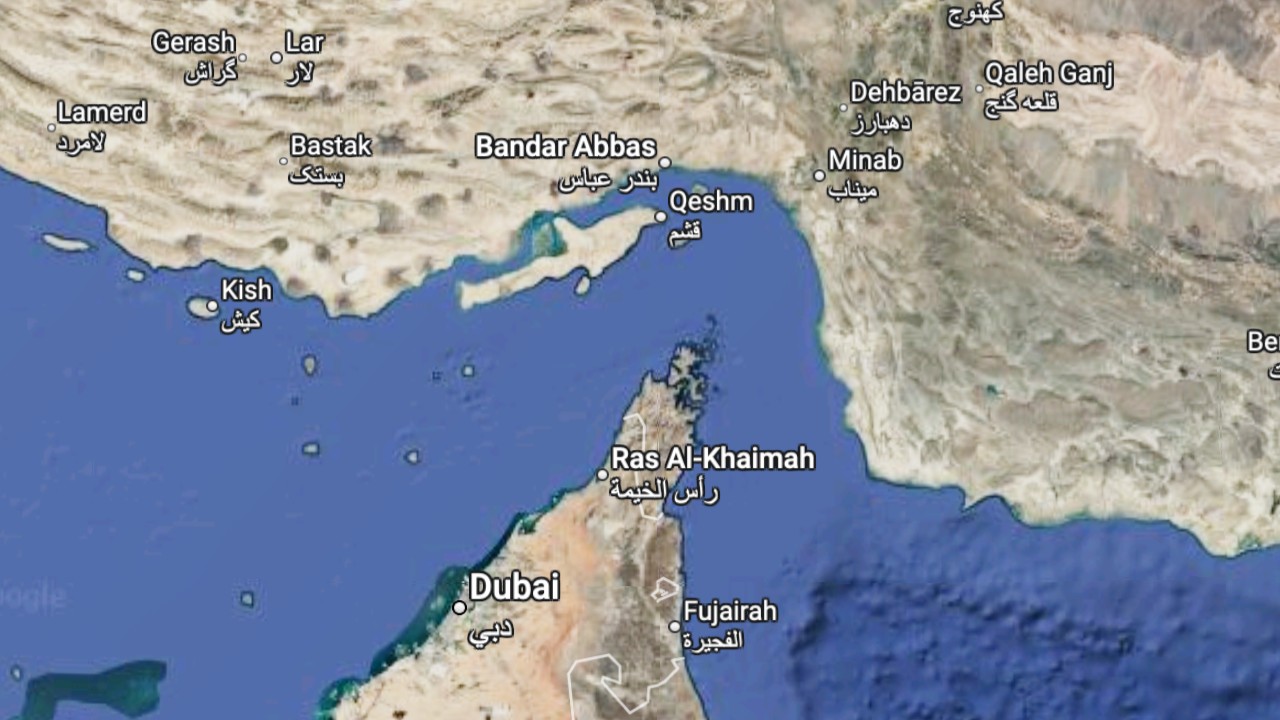
Iran conflict drives up Asia-US container rate by 276% — FreightWaves SONAR Demo | SONAR Login | Customer Support | SONAR Demo | Subscribe | Newsletters Contact Us Brands Search Close Search for: Search Read Brands FreightWaves American ShipShipCheckpoint SONAR Trending Topics Startups Reindustrialization Global Supply Chain Trade and Compliance Borderlands: Mexico Fuel News Legal Issues Trucking Compliance Company Earnings Modes Truckload Less than Truckload (LTL) Parcel Freight Railroad Maritime Air Cargo Insights SONAR Chart of the Week SONAR Sitreps State of Freight Insights #WithSONAR SONAR Freight Market Updates Sponsored Insights Warehouse In The Sky Insurance & Risk Management Watch FreightWaves Today What the Truck?!? Brake Check The Long Haul TruckTech Loaded & Rolling Listen Newsletters SONAR Learn More Request a Demo SONAR Knowledge Center SONAR API Awards Fraud Fighters Awards AI Excellence in Supply Chain Awards FreightTech Awards ShipChoice Awards Events Supply Chain AI Symposium Future of Rail Summit Enterprise Fleet Summit F3: Future of Freight Festival F3 Awards Dinner Resources Advertise Freight Industry White Papers FreightWaves Webinars About Us Our Mission Market Experts Editorial Team RSS Facebook Twitter LinkedIn YouTube Instagram ● Watch Now –> Click here to open Menu Click to close the product launchpad Home / American Shipper / Iran conflict drives up Asia-US container rate by 276% American ShipShipping Maritime News Iran conflict drives up Asia-US container rate by 276% Some relief for shippers over soaring spot prices Stuart Chirls · Monday, July 13, 2026 (Photo: Google Maps)
Spot rates stabilize amid escalating Middle East hostilities
It’s a good sign that, after months of supply chain anxiety driven by tariffs and the Strait of Hormuz, shippers can finally welcome some mixed metaphors from shipping analysts. Those characterizations come as spot rates on the benchmark trans-Pacific moderated in the latest week’s data despite the now-inflamed conflict gripping the Middle East.
“It is still a very challenging market, but there is a faint glimmer of light at the end of the tunnel for shippers after spot rates remained essentially flat on major trades out of the Far East this week and carriers continue to increase offered capacity,” said Xeneta Chief Analyst Peter Sand, in an update to clients.
But he warned, “This is by no means an end to the freight rate spike driven by the Strait of Hormuz crisis and further increases are expected mid-July, but these should be of a lower order of magnitude compared to the start of the month.” Sand’s comments came before Iran and the U.S. stepped up military hostilities across the Persian Gulf.
Rate surges persist from February escalation
Spot rates from the Far East to U.S. West Coast and U.S. East Coast ports still sit 276% and 232% higher since Israel and the U.S. attacked Iran in late February. Sand termed the soaring rates as “extraordinary,” with shippers still paying multiples of what they had budgeted at the start of the year.
Spot rates are quoted for services outside of contract terms, for instance, for shipments that have been rolled or delayed. They’re a closely watched indicator that helps guide contract pricing. Xeneta quoted Far East to U.S. West Coast rates of $7,069 foot equivalent (FEU), essentially unchanged at 0.1% lower for the week ending July 10. Far East to U.S. East Coast came in at $8,808 up a narrow 0.3%.
Supply-side response begins to ease pressure
“What has changed is the supply side,” Sand said. “Carriers have continued to deploy more capacity into the market – Far East to U.S. West Coast is up 5.5% week on week, U.S. East Coast up 6.2% and North Europe up 3.1%. That sustained capacity injection appears to be having an effect, easing some of the pressure and helping shippers to move goods more reliably, even if it is not yet translating into lower rates.”
En toto, spot rate changes since pre-crisis end of February through July 10 are up 276% for Asia to U.S. West Coast, and 232% for Asia to U.S. East Coast. The trans-Pacific is at the beginning of the traditional peak shipping season, said Sand, and that maritime stakeholders were taking a breather from months of pressures and spiraling costs from the follow-on effects of the conflict in the Mideast.
Hormuz closure and geopolitical volatility deepen uncertainty
Sand’s pronouncement that “the Strait of Hormuz remains effectively closed to container shipping” presaged similar statements by Iran over the weekend, after it attacked a merchant container ship for the first time since May. The flaring war has already pushed up oil prices, which are likely to pressure ocean rates.
President Donald Trump contradicted those assertions, saying Monday that the U.S. could seize control of the strait and charge a 20% toll on cargo for safe passage, although observers questioned what transportation law made that provision. Read more articles by Stuart Chirls here.
- New chief at busy East Coast box gateway
- Container ship attacked in Strait of Hormuz as Iran widens war
- Savannah opens last piece in project to ease port truck traffic
- 2M+ import containers to set new record, say retailers
- Container rates near $9,000 as Iran war flares
Upcoming industry events
Supply Chain AI Symposium — Past the hype. Join operators, founders, and enterprise leaders figuring out how to deploy AI in supply chain. July 15, 2026 at The Old Post • Chicago, IL.
F3: Future of Freight Festival — Industry-defining keynotes, rapid-fire technology demos, and industry leaders networking in experiences across Chattanooga — plus the inaugural F3 Awards Dinner featuring the FreightTech and ShipChoice reveals. October 27, 2026–October 28, 2026 at The Signal at Chattanooga Choo Choo • Chattanooga, TN.
Source: FreightWaves
Compiled from international media by the SCI.AI editorial team.