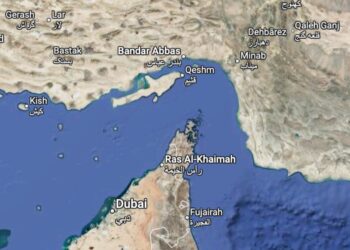
Iran targeted a container ship in the Strait of Hormuz as it widened its war with the United States amid a crumbling ceasefire and climbing gas prices.
Attack on feeder vessel triggers emergency response
Iran on Saturday attacked a feeder container ship transiting the Strait of Hormuz. British security monitors reported the vessel had been set afire, and the crew abandoned ship.
The GFS Galaxy, a 7000-TEU container ship, is owned by a company out of the United Arab Emirates and was exiting the strait on a service calling Jebel Ali and Dammam in Saudi Arabia and Bahrain to Port Klang, Malaysia, Dachan Bay, Xiamen and Qingdao, China, and Busan, South Korea.
This incident marks the first attack on container shipping in the strait since May 6, when crew members were injured in an attack on the CMA CGM San Antonio.
Strait closure and regional escalation
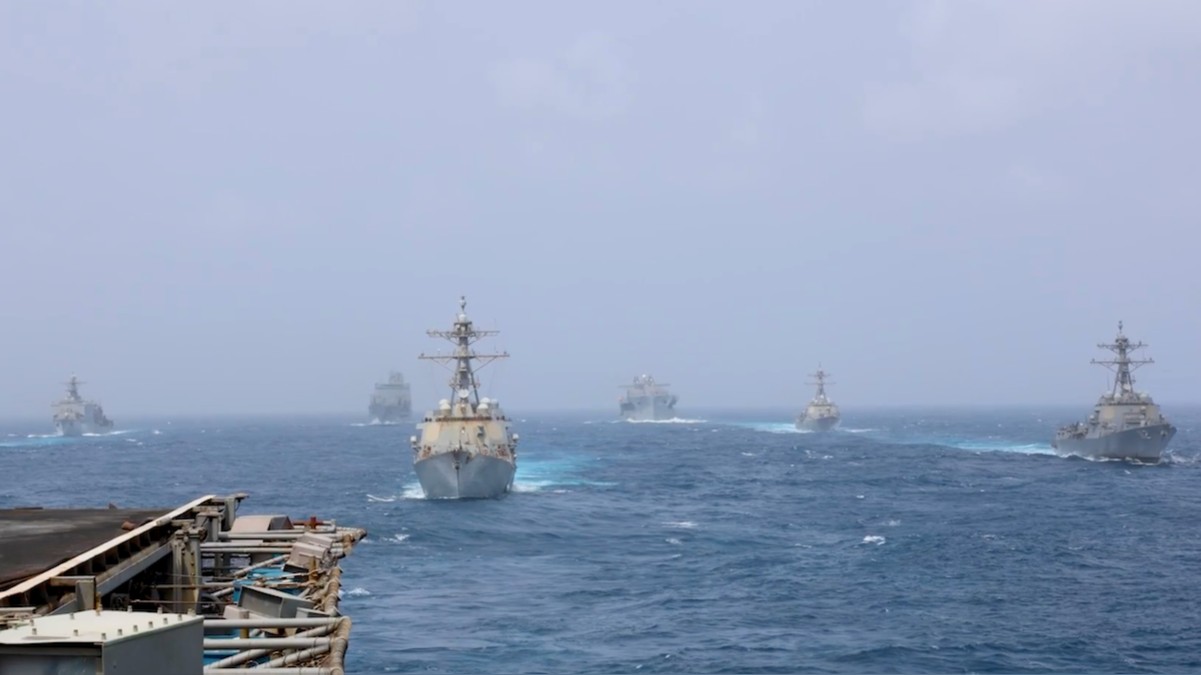
Iran over the weekend declared the strait closed to vessel traffic, and expanded missile and drone attacks on Bahrain, Kuwait, Qatar, the UAE and Jordan. The U.S. has stepped up its response, including large-scale assaults on Iranian refineries.
The U.S. Central Command in a social media post Sunday said that more than 140 vessels had transited the waterway in the past seven days.
Iran’s actions have intensified geopolitical pressure across the Gulf region, directly affecting maritime access for commercial carriers operating under international law and standard trade routes.
Energy markets surge amid supply fears
Iran has pushed energy prices higher over the weekend by raising fears of supply disruption in the Middle East, especially around the Strait of Hormuz, which handles a large share of global oil and liquefied natural gas flows.
Brent crude futures were up about 12% since Friday, European natural gas jumped nearly 70% since Friday, while U.S. gasoline futures rose roughly 10% since late last week.
These price spikes reflect immediate market reactions to physical risk — not speculation — given that the Strait of Hormuz accounts for approximately 20% of globally traded oil and 30% of seaborne LNG shipments.
Maersk’s Suez plans cast in doubt
The flaring hostilities also shadow Maersk’s announced plans to restart scheduled services through the Suez Canal and Red Sea. The world’s second-largest liner (OTC: AMKBY) in January set a return to the Suez route only to pull back after security appeared too dicey.
Container rates near $9,000 as Iran war flares, ’ SONAR data, underscoring how rapidly pricing resets when chokepoints face active military threat.
With no ceasefire holding and Iranian forces now targeting commercial shipping beyond naval assets, rerouting decisions by major carriers will depend less on cost calculus and more on real-time threat assessments from maritime security firms and national defense commands.
Broader shipping implications
The attack disrupts services connecting major Asian manufacturing hubs — including Xiamen, Qingdao and Busan — with Gulf and Indian Ocean ports. It also complicates logistics for retailers expecting record import volumes: 2M+ import containers are projected to set a new annual record, retailer forecasts cited by FreightWaves.
Ports such as Jebel Ali and Dammam serve as critical transshipment nodes for goods moving between Asia, Africa and Europe. Any sustained reduction in throughput at these facilities risks cascading delays across multimodal networks, particularly for time-sensitive electronics and automotive components.
Meanwhile, Savannah opens the last piece in its project to ease port truck traffic, signaling continued investment in U.S. infrastructure resilience even as Middle Eastern chokepoints deteriorate.
Source: FreightWaves
Compiled from international media by the SCI.AI editorial team.