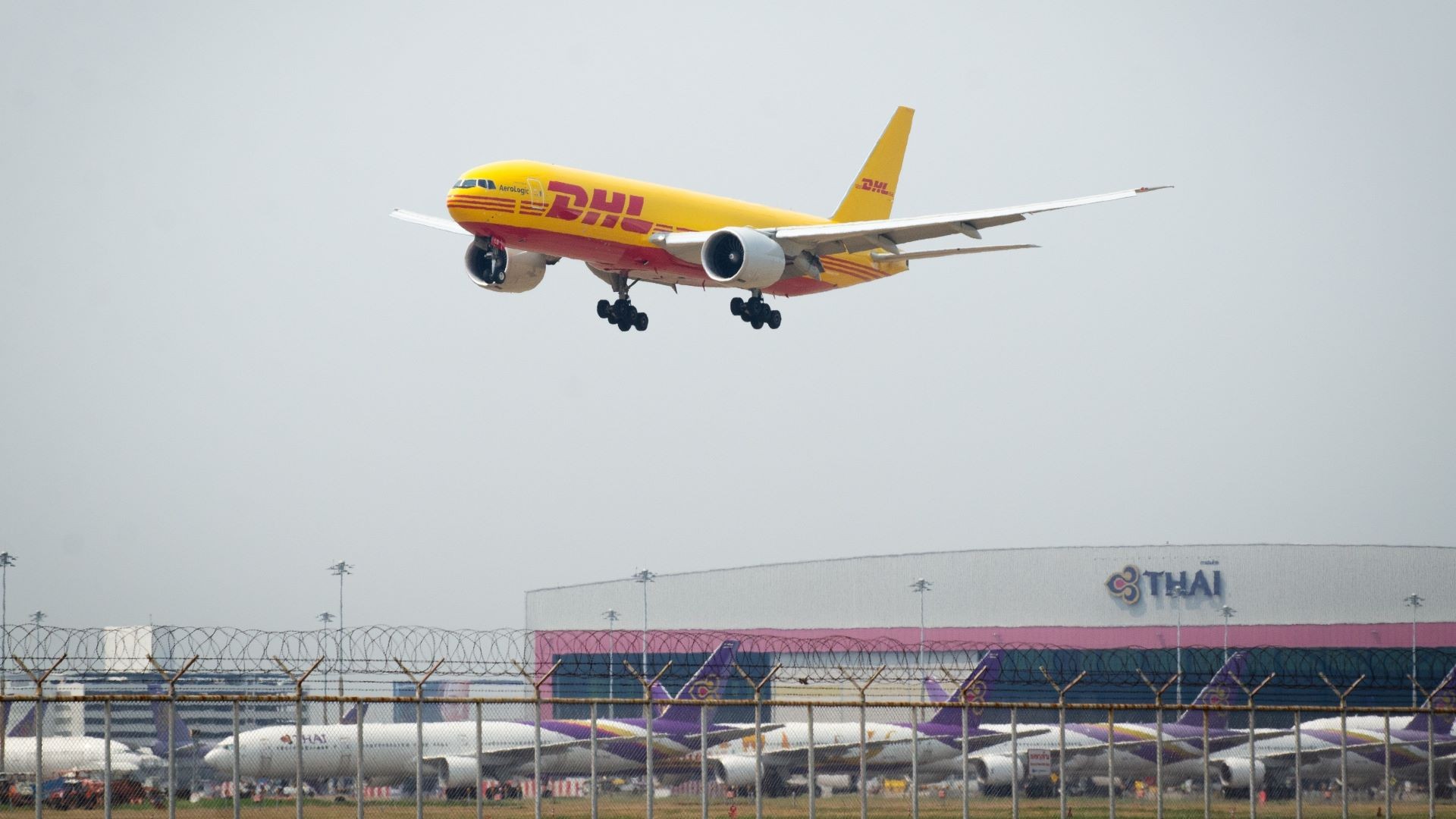
According to www.freightwaves.com, DHL Global Forwarding launched dedicated air cargo services between Southeast Asia and the U.S. Midwest in July 2026, deploying chartered Boeing 777 freighters to strengthen Transpacific capacity amid rising demand for predictable, controlled logistics flows.
Expanded dedicated flight network
DHL Global Forwarding initiated three weekly flights each from Hanoi, Vietnam and Taipei, Taiwan to Cincinnati-Northern Kentucky International Airport and Chicago O’Hare Airport, with destinations alternating weekly between Chicago and Cincinnati. A separate service linking Bangkok, Thailand to Cincinnati also commenced three times per week, as confirmed in a company news release issued last week. Cincinnati serves as DHL Express’s primary North American air hub, anchoring the new routing strategy.
The new routes support importers requiring stable transit times and schedule reliability — particularly critical during periods of geopolitical volatility and freight rate fluctuations. Road feeder service connects the two U.S. hubs daily and extends coverage to additional cities across the Midwest, enabling seamless inland distribution after air arrival.
Aircraft operations and carrier partnerships
Kalitta Air operates a Boeing 777-300 converted freighter on the Hanoi–Chicago route, according to both a DHL spokesperson and aviation tracking database Flightradar24. The remaining flights — including those from Bangkok and Taipei — fall under the management of DHL Aviation, the in-house airline unit of DHL Express. However, the source states it remains unclear whether DHL operates its own aircraft or relies on partner carriers beyond Kalitta Air for these specific services.
This move follows DHL’s broader charter expansion across key trade lanes: weekly flights between Liège, Belgium, and Hong Kong launched at the end of March 2026, and a Shanghai–Leipzig service began on June 1, 2026. All services are intended as long-term operations extending through the peak winter shipping season, with market conditions determining any further extension, a DHL spokesperson explained.
Competitive context and strategic rationale
DHL joins Ceva Logistics, Kuehne+Nagel, and DSV as global forwarders that have recently established dedicated air services into the Chicago area — specifically targeting O’Hare and Chicago-Rockford airports — to meet surging import demand from Asia and Europe. According to the report, operating self-controlled aircraft delivers measurable advantages over tendering freight to multiple commercial carriers: guaranteed capacity, fixed routes and schedules, improved cost predictability, optimized airport ground handling, and shorter transit times — all of which enhance supply chain planning accuracy for shippers.
The decision reflects an industry-wide shift toward asset-light but capacity-secured models, where forwarders leverage charter agreements not to own fleets, but to lock in priority access during disruptions. As Eric Kulisch, Parcel and Air Cargo Editor at FreightWaves, reported, this trend is accelerating in response to persistent port congestion, airspace restrictions, and tariff-related uncertainty along traditional corridors.
Operational timeline and geographic scope
The first dedicated flight touched down at Suvarnabhumi International Airport in Bangkok on March 19, 2024, marking the earliest documented operational milestone referenced in the source. The current Transpacific expansion covers four origin points — Hanoi, Taipei, Bangkok, and Shanghai — feeding into three major destination hubs: Cincinnati, Chicago, and Leipzig. Combined, the new and expanded services deliver 6 weekly dedicated flights between Southeast Asia and the U.S. Midwest alone — a quantifiable increase in scheduled air cargo frequency directly tied to customer demand signals.
Each flight utilizes a Boeing 777 freighter, a wide-body aircraft capable of carrying up to 100 metric tons per sortie, significantly exceeding narrow-body alternatives in payload and range efficiency on ultra-long-haul routes like Hanoi–Chicago (approximately 8,500 miles). This aircraft selection aligns with DHL’s emphasis on balancing volume throughput with schedule integrity — a core requirement cited by manufacturers and e-commerce fulfillment centers in the Midwest.
Source: FreightWaves
Compiled from international media by the SCI.AI editorial team.