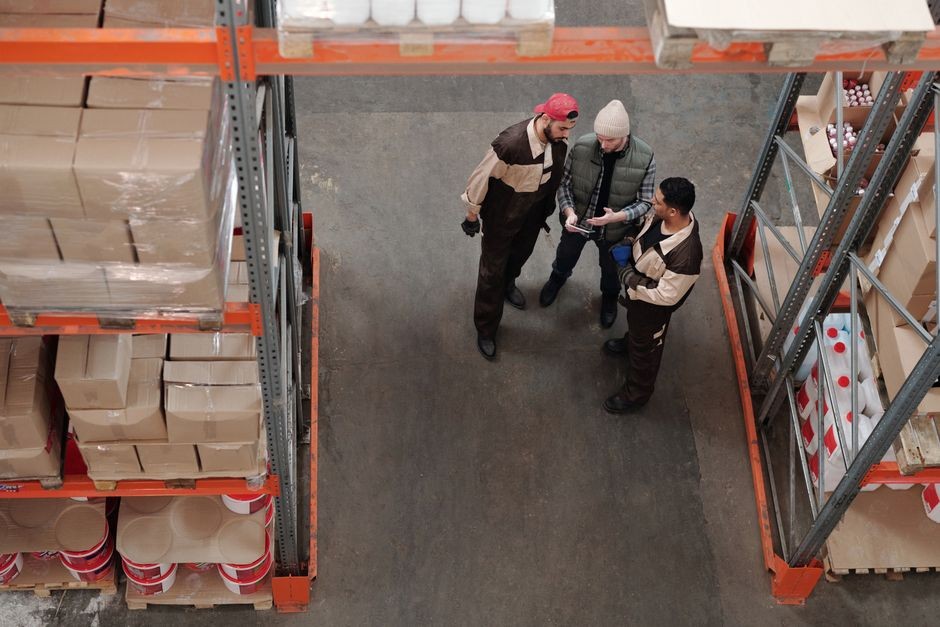
According to www.supplychaindive.com, Amazon plans to break ground on a $48 million robotics-equipped sorting warehouse in Georgetown, Texas on August 30, 2026, with completion scheduled for July 2027.
Facility scale and automation architecture
The new facility will span 248,687 square feet and integrate robotic systems designed to transport items directly to human workers for order assembly — a model Amazon describes as ‘goods-to-person’ automation. According to the Texas Department of Licensing and Regulation filing dated July 6, 2026, the site falls within Amazon’s broader fulfillment network and is engineered to handle diverse product categories.
The warehouse will include dedicated storage zones for specialty goods and temperature-sensitive items, including cold-storage capacity — a strategic adaptation to rising demand for perishable e-commerce fulfillment. Office and support infrastructure will also be embedded onsite, per the regulatory document. Amazon spokesperson Austin Stowe confirmed to Supply Chain Dive that the robotic systems are intended to accelerate sorting throughput ahead of final packaging and outbound dispatch.
Strategic placement and operational role
Located in Georgetown, Texas, the facility serves as a regional sorting hub positioned to optimize inbound inventory flows from upstream distribution centers and outbound parcel routing to last-mile delivery networks across Central and South Texas. Its integration into Amazon’s existing logistics footprint reflects a deliberate scaling of automated sortation capacity outside primary metropolitan fulfillment clusters.
This project marks Amazon’s third major sorting facility investment announced in 2026 — following similar robotics-integrated builds in Greenville, Ohio (completed Q1 2026) and San Bernardino, California (under construction, slated for Q4 2026). Each site adheres to Amazon’s standardized modular design for rapid deployment and interoperability with its proprietary Kiva and Rivian-integrated logistics software stack.
Industry context and practitioner implications
Amazon’s $48 million Texas investment aligns with industry-wide acceleration in warehouse automation: a 2025 MHI Annual Industry Report found that 73% of large U.S. logistics operators now deploy autonomous mobile robots (AMRs) in at least one facility, up from 41% in 2021. The Georgetown project also mirrors recent moves by UPS, which launched its first fully automated regional sortation hub in Louisville, Kentucky in May 2026, and FedEx, which expanded AMR deployment across 12 U.S. hubs between Q3 2025 and Q2 2026.
For supply chain professionals, the facility signals intensified pressure to standardize data interfaces between WMS, TMS, and robotic control layers. Practitioners report that successful integration hinges less on hardware selection than on consistent API documentation and real-time telemetry synchronization — particularly for cold-chain modules where environmental sensor feeds must trigger dynamic rerouting logic. As Austin Stowe noted,
“The robots don’t replace people — they reposition labor to higher-value tasks like quality verification and exception handling.” — Austin Stowe, Amazon spokesperson
Timeline and regulatory alignment
Construction is formally scheduled to begin on August 30, 2026, with full operational readiness targeted for July 2027. The project received preliminary approval under Texas TABS (Texas Automated Building System) Permit No. TABS2026024548, filed with the Texas Department of Licensing and Regulation on July 6, 2026. Final occupancy certification will require compliance with state-mandated fire suppression standards for high-bay automated storage and UL-certified power distribution for robotic charging stations.
The timeline places the Georgetown facility on pace to support Amazon’s 2027 holiday season volume surge — projected by internal logistics modeling to exceed 1.2 billion packages shipped in November–December alone. That projection assumes no material disruption to U.S. inland freight capacity, a risk flagged in the 2026 Federal Highway Administration Freight Analysis Framework due to ongoing rail congestion in the Southwest corridor.
Source: Supply Chain Dive
Compiled from international media by the SCI.AI editorial team.