According to industry reports, robotic unloading—long considered one of the last manually intensive frontiers in warehouse automation—is becoming increasingly accessible and operationally viable for global supply chain operators.
Why unloading automation lagged behind
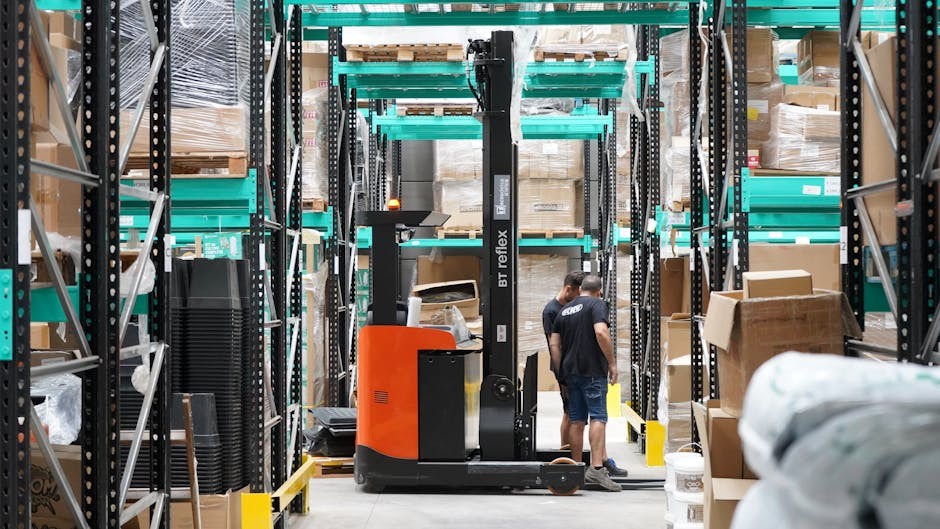
Historically, case-picking robotics achieved broader adoption faster than loading/unloading systems due to quicker return on investment, per Michael Perry, head of commercial strategy at Persona AI and former executive at Dexterity and Boston Dynamics. AI-powered picking robots offer workflow adaptability and mobility across multiple warehouse locations—advantages not yet fully matched in dock automation. As Perry noted, unloading automation has often been viewed by companies as “the last piece of the puzzle,” with many deeming it impossible or impractical.
“This is a very manually intensive job, to unload these trailers in a lot of cases.” — Ken Barbour, director at consultancy BRG, specializing in retail performance and supply chain
Yet cost parity is emerging: Perry observed that the implementation cost of loading/unloading robotics and case-picking systems can approach equivalence depending on utilization. Robotics also reduce exposure to injury, theft, and product damage—and in some cases, may replace lumper services commonly used by smaller third-party logistics (3PL) providers.
DHL’s scale-up signals industry momentum
In 2021, Boston Dynamics launched Stretch, a material handling robot engineered for trailer unloading, with a target pick rate of 800 cases per hour, lifting capacity up to 50 pounds, and an eight-hour battery life. DHL brought Stretch to market and has since committed to deploying more than 1,000 units across its global operations—a concrete indicator of growing confidence in dock automation scalability.
However, deployment is not universal. Omer Rashid, VP of operations development for automation, innovation and analytics at DHL Supply Chain, emphasized that retrofitting requires careful operational assessment: “We consider factors such as volume, product size, shape or orientation, product weight, etc. Our unloading robots are deployed to all sites with the right operational fit.” DHL will not roll out unloading robots at every North American warehouse location, reflecting the need for tailored integration rather than blanket automation.
Practical constraints and data-driven evolution
Current limitations remain significant. Rashid cited challenges with irregular loads—including variable shapes, excessively light or heavy items—as key barriers. Standardizing inbound flows (e.g., pallet configuration, labeling consistency) helps mitigate these issues. While future improvements in visual identification, self-correction capabilities, and battery longevity are expected, Perry cautioned that incremental hardware gains—like stronger robots—won’t transform business outcomes alone.
What will drive real change, he stressed, is data integration: stitching together information across warehouse functions so machines can share context and anticipate variability. For example, if a robotic system knows a specific truck line is typically late, it can pause order building for that shipment, prioritize other work, and resume only upon arrival—optimizing labor, space, and throughput in real time.
Industry context reinforces this shift: Amazon has deployed over 750,000 mobile robots in its fulfillment centers (per 2023 company disclosures), while FedEx and UPS have accelerated investments in autonomous yard trucks and AI-guided sortation. Yet dock automation remains comparatively underpenetrated—making DHL’s 1,000+ Stretch commitment a notable inflection point. For practitioners, the takeaway is clear: unloading robotics are no longer theoretical. Success hinges on aligning technology with process discipline, data infrastructure, and site-specific operational readiness—not just capital spend.
Compiled from international media by the SCI.AI editorial team.