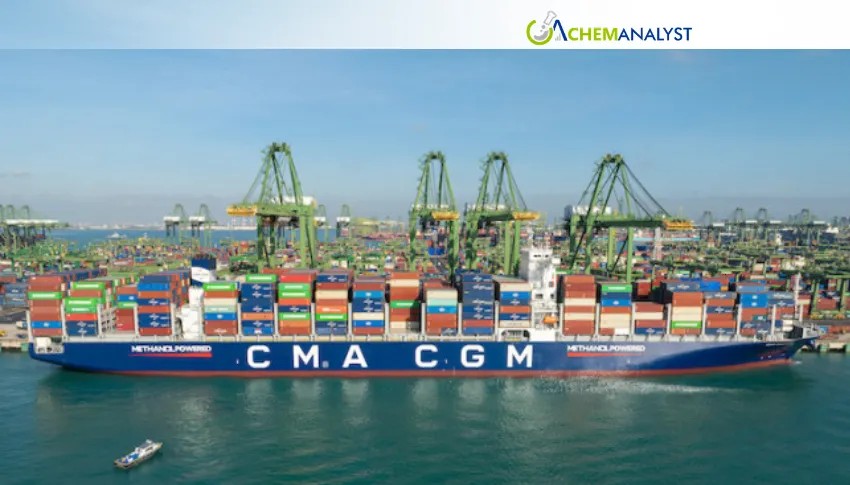
Southern African trade growth is being stifled by supply chain bottlenecks stemming from Persian Gulf conflict, with South Africa’s citrus exports down 24% year-on-year — from 15.2 million to 11.5 million cartons. While total citrus exports rose 2.1% to 62.1 million cartons, regional shifts accelerated: Europe took 24.3 million (+18.6%), the UK 6.2 million (+12.7%), and Asia 2.9 million (+28.2%). Port congestion worsened, with Cape Town and Durban vessel waits exceeding 48 hours. May 2026 container throughput hit 17.3 million TEU — up 6.2% month-on-month — revealing demand resilience amid infrastructure strain.
According to The Loadstar, Southern Africa’s trade growth is being severely constrained by cascading supply chain disruptions triggered by conflict in the Persian Gulf — particularly impacting container shipping capacity, port operations, and inland logistics networks.
Sharp citrus export decline
South Africa’s citrus exports have collapsed 24% year-to-date compared with the same period last year, falling from 15.2 million cartons to 11.5 million cartons. Though citrus accounts for only 4% of South Africa’s total merchandise exports, the sector carries outsized economic importance due to its high-value fruit and meat shipments to the Middle East — a region where demand remains highly sensitive to routing volatility.
“This makes the UAE/Saudi-linked routing and demand risks material, despite the limited aggregate share,” one industry source told The Loadstar, noting that alternative markets have partially offset the shortfall. Total year-to-date citrus exports across all destinations have risen slightly — up 2.1% to 62.1 million cartons.
Regional reallocation under pressure
European markets absorbed 24.3 million cartons of South African citrus — an 18.6% increase year-on-year — while the UK received 6.2 million cartons (12.7% growth) and Asia took 2.9 million cartons (28.2% growth). “Citrus is ramping up,” the source added, underscoring both resilience and structural recalibration in export flows.
These shifts reflect broader trade re-routing away from Persian Gulf chokepoints. The conflict has disrupted traditional eastbound maritime lanes, forcing carriers to reroute via the Cape of Good Hope — increasing voyage times, vessel dwell, and refrigerated container (reefer) demand at Southern African gateways.
Port congestion intensifies
Container port throughput across South Africa reached 17.3 million TEU in May 2026 — a record monthly figure and a 6.2% month-on-month increase — according to Container Trades Statistics (CTS). Yet this surge in volume has exposed systemic bottlenecks: seven-day average vessel waiting times at Cape Town and Durban have exceeded 48 hours.
Kuehne + Nagel has identified Cape Town as “the port… most constrained” in its regional network. Compounding reefer demand for citrus, the port is also grappling with surging “late-stack volumes” — containers arriving after cut-off deadlines — heightening the risk of delays and rollings. At Durban, landside congestion and poor truck turnaround times are worsening operational strain; the gateway is “currently experiencing heightened tensions and sporadic disruptions, linked to anti-immigration protests.”
Underlying demand remains strong
The data confirms that current supply chain stress stems not from weak cargo volumes but from infrastructure saturation. As the source observed: “This suggests current strains are being driven not by weak volumes, but by the system’s difficulty in absorbing elevated flows across already-constrained port, vessel, and inland logistics networks.”
This dynamic is consistent with broader global trends: February 2026 container volumes surged well above five-year norms despite seasonal weakness, per Braemar and CTS data. However, geopolitical instability — especially in the Red Sea and Strait of Hormuz — continues to fragment trade lanes, inflate transit costs, and compress margins for forwarders serving Sub-Saharan Africa.
Source: The Loadstar
Compiled from international media by the SCI.AI editorial team.