Digital Logistics as Strategic Imperative: Beyond Cost Center to Value Driver
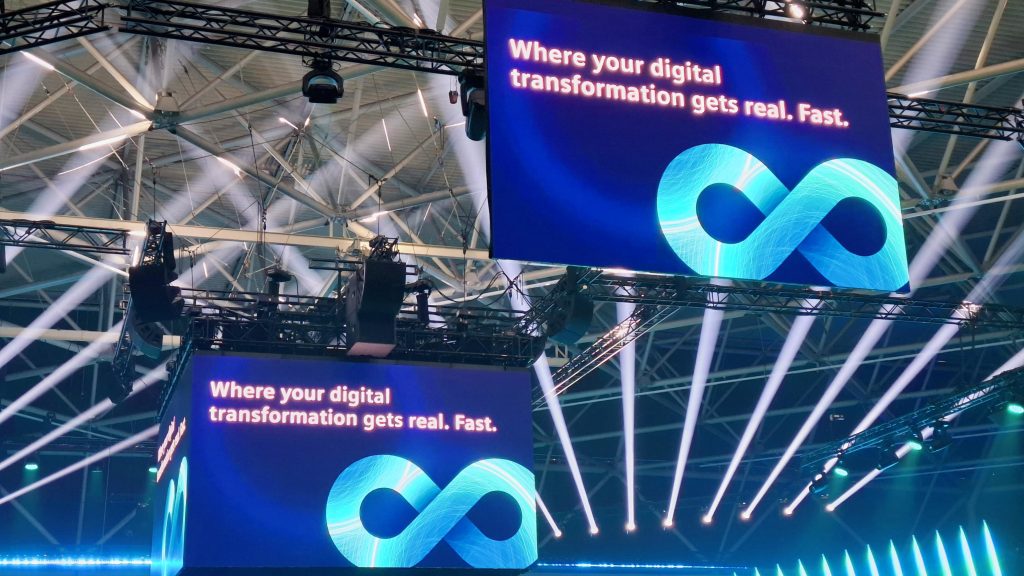
The narrative around digital logistics has undergone a seismic shift in 2026. No longer confined to IT department roadmaps or operational efficiency initiatives, digital logistics has ascended to boardroom-level strategic priority—driven by converging pressures that make traditional supply chain models untenable. Realize LIVE Americas 2026, hosted by Siemens Digital Industries Software in Detroit from June 1-4, crystallizes this transformation. The event’s scale—3,000+ attendees across 450+ sessions with 90% satisfaction—reflects not mere industry interest, but existential urgency. Organizations today navigate a perfect storm: customer expectations for same-day delivery in an era of fragmented distribution networks, sustainability mandates requiring granular carbon tracking across multi-tier supplier ecosystems, and geopolitical volatility demanding real-time rerouting capabilities. The traditional sequential model—design product, optimize manufacturing, then figure out logistics—has collapsed under the weight of these simultaneous demands. Digital logistics, powered by AI and digital twins, offers not incremental improvement but fundamental rearchitecture: embedding logistics intelligence into product design, manufacturing planning, and customer engagement from day one.
This strategic elevation is validated by hard economic realities. McKinsey’s latest Global Supply Chain Survey reveals that companies with mature digital logistics capabilities achieve 22% lower total landed cost per unit, 37% faster time-to-recovery after major disruptions, and 41% higher on-time-in-full (OTIF) rates compared to peers relying on legacy systems. Crucially, these gains are not linear—they exhibit strong network effects: every additional tier of supplier integrated into a shared digital logistics layer amplifies visibility, reduces forecasting error propagation, and enables collaborative risk mitigation. For example, when a Tier 2 foundry in Monterrey experiences unplanned downtime, a digitally connected Tier 1 automotive supplier can instantly reroute casting orders to a pre-qualified alternate facility in Tennessee—not through manual email chains and phone calls, but via automated constraint-aware rescheduling triggered by live sensor data and contractual SLA parameters embedded in the digital twin. Such responsiveness transforms resilience from a reactive insurance policy into a proactive competitive advantage. Moreover, digital logistics directly addresses the growing tension between cost and sustainability. Traditional trade-off models—e.g., choosing cheaper ocean freight over air while accepting higher inventory carrying costs—are being replaced by multi-objective optimization engines that simultaneously minimize carbon footprint, total cost of ownership, and service level risk. This is not theoretical: Siemens Mobility North America’s integration of logistics and manufacturing planning for its new U.S. train production facility demonstrates how early-stage logistics design—factoring in rail corridor capacity, union labor rules, and regional energy grid decarbonization timelines—can reduce lifecycle emissions by 18% before the first weld is made.
The implications extend far beyond operational KPIs. Digital logistics reshapes corporate governance, capital allocation, and investor relations. Publicly traded manufacturers now face SEC-mandated climate disclosures requiring Scope 3 emissions data from upstream logistics partners—a task impossible without standardized digital twin interfaces and API-based data sharing. Similarly, credit rating agencies like Moody’s have begun incorporating supply chain digital maturity scores into sovereign and corporate bond assessments, recognizing that a company’s ability to model, simulate, and adapt to disruption is a stronger predictor of long-term solvency than traditional financial ratios alone. Thus, Realize LIVE Americas 2026 serves as both a technical showcase and a strategic inflection point: the moment when digital logistics transitions from ‘nice-to-have innovation’ to ‘non-negotiable infrastructure’—as essential to modern industry as electricity grids were to the Second Industrial Revolution.

Shift-Left Planning: When Logistics Design Begins at Product Concept Stage
The ‘shift-left’ paradigm in supply chain management represents one of the most consequential—and underappreciated—evolutions in industrial engineering practice. Historically, logistics considerations entered the product development lifecycle only after engineering sign-off, during late-stage manufacturing ramp-up or distribution planning. This sequential approach created systemic friction: products designed for optimal assembly line throughput often proved logistically unviable—exceeding dimensional constraints of existing railcars, requiring specialized handling equipment unavailable at key ports, or generating packaging waste incompatible with regional recycling mandates. The shift-left movement reverses this sequence, embedding logistics intelligence—capacity constraints, modal availability, customs clearance complexity, last-mile delivery economics—into the earliest stages of product architecture, bill-of-materials selection, and process planning. At Realize LIVE Americas 2026, Siemens demonstrates how Digital Twin technology operationalizes this philosophy by enabling concurrent engineering across physical and logistical domains. A digital twin of a new locomotive isn’t just a 3D CAD model—it’s a dynamic, physics-accurate simulation environment that incorporates real-world logistics variables: the maximum axle load permitted on specific state highways, the thermal expansion coefficients of composite materials during cross-country rail transport in summer heat, and the craning capacity of Class I railroad yards along the proposed delivery route. Engineers can run thousands of ‘what-if’ scenarios before committing to tooling—asking questions like, ‘What if we relocate the battery module 15 cm forward? How does that impact weight distribution across bogies and subsequent rail certification requirements?’ or ‘If we switch from steel to aluminum chassis panels, how does that alter shipping container density and associated ocean freight cost per unit?’
This capability fundamentally alters value engineering economics. Traditionally, cost reduction efforts focused narrowly on material substitution or machining cycle time—often overlooking downstream logistics penalties. But with shift-left digital twins, engineers see the full cost cascade: a $2.30/kg aluminum alloy may save $18/unit in weight-driven fuel efficiency, yet increase outbound logistics cost by $42/unit due to reduced stacking density and higher damage rates during transit. Such insights enable truly holistic trade-off analysis. More profoundly, shift-left planning transforms supplier collaboration. Instead of issuing rigid RFQs based on static specifications, OEMs share read-only digital twin access with strategic suppliers during concept phase—allowing them to co-simulate logistics feasibility, propose alternative packaging solutions, and identify potential bottlenecks in global distribution networks. This collaborative simulation environment fosters trust and reduces adversarial contracting, as risks are identified and mitigated collectively rather than allocated post-failure. Boeing’s recent adoption of this approach for its 777X wing assembly program—where Japanese, German, and U.S. suppliers jointly modeled air cargo logistics constraints for oversized components—resulted in a 31% reduction in expedited freight spend and eliminated two critical path delays during initial production ramp. These outcomes underscore that shift-left isn’t merely about speed; it’s about designing resilience into the product’s DNA, ensuring that manufacturability, serviceability, and distributability are inseparable attributes—not sequential handoffs.
The strategic ramifications of shift-left extend into intellectual property and competitive moats. Companies mastering this discipline develop proprietary logistics knowledge graphs—structured repositories of real-world transportation physics, regulatory constraints, and carrier performance histories—that become embedded in their digital twin platforms. These knowledge graphs are far more defensible than generic software licenses; they represent decades of accumulated operational wisdom codified into reusable, scalable assets. For instance, a Tier 1 automotive supplier’s digital twin doesn’t just know that a particular engine block requires temperature-controlled transport—it knows the precise refrigeration setpoints validated across 12,000+ shipments, the failure modes of specific trailer refrigeration units in desert conditions, and the contractual penalties negotiated with carriers for temperature excursions exceeding 2°C for >15 minutes. This depth of contextual intelligence creates significant barriers to entry for competitors attempting digital transformation without equivalent domain investment. Furthermore, shift-left planning enables radical business model innovation. Siemens Mobility’s U.S. production investments aren’t just about building trains—they’re about creating modular, logistics-optimized product platforms where components can be assembled regionally using standardized digital twin interfaces, allowing rapid response to state-level infrastructure funding cycles. This transforms supply chains from fixed-cost assets into agile, demand-responsive ecosystems—where logistics capability becomes a core product feature, not a supporting function.
AI-Enabled Supply Chains: From Reactive Dashboards to Prescriptive Autonomy
Artificial intelligence in supply chains has moved decisively beyond the hype cycle of ‘predictive analytics’ dashboards displaying historical KPIs. The next frontier—demonstrated extensively at Realize LIVE Americas 2026—is prescriptive autonomy: AI systems that don’t just forecast demand or flag inventory shortages, but autonomously generate, evaluate, and execute optimized operational decisions within defined business rules and risk tolerances. This evolution rests on three foundational shifts: first, the transition from siloed AI models (e.g., a separate demand forecasting algorithm, a separate inventory optimizer, a separate routing engine) to unified AI orchestration layers that understand interdependencies; second, the integration of unstructured data sources—satellite imagery of port congestion, social media sentiment around raw material shortages, weather radar feeds—alongside structured ERP and IoT sensor streams; and third, the embedding of explainable AI (XAI) frameworks that translate complex neural network outputs into auditable, human-understandable rationale. Siemens’ implementation showcases this maturity: its AI supply chain platform doesn’t merely predict a 12% demand spike for rail signaling components in Q3—it correlates that prediction with real-time AIS vessel tracking showing delayed shipments from German suppliers, analyzes regional labor strike probabilities using NLP on local union bulletin boards, and simulates 47 alternative responses—recommending a specific combination of safety stock increases, expedited air freight allocations, and temporary subcontractor engagement that maximizes OTIF while staying within 92% of the approved quarterly logistics budget envelope.
This level of contextual intelligence fundamentally redefines the role of supply chain professionals. Rather than spending 60% of their time reconciling disparate system outputs and manually overriding algorithms, planners become ‘decision architects’—defining strategic guardrails, calibrating risk preferences (e.g., ‘prioritize carbon reduction over 2% cost increase’), and interpreting edge-case scenarios where AI recommendations require human judgment. The economic impact is substantial: IDC estimates that AI-enabled autonomous supply chains reduce planning cycle times by 78%, cut forecast error by 44%, and improve working capital efficiency by 29%—but these metrics mask deeper transformations. Consider inventory optimization: legacy systems treat safety stock as a static buffer against uncertainty. Modern AI systems dynamically adjust safety stock levels in real time based on 37 simultaneous variables—including supplier reliability scores updated hourly, real-time traffic congestion indices affecting last-mile delivery, and even predictive maintenance alerts from warehouse conveyor systems indicating potential throughput degradation. This transforms inventory from a liability to a strategic lever: holding slightly higher stock of critical components during hurricane season isn’t ‘waste’—it’s a calculated hedge against regional distribution paralysis. Similarly, production scheduling AI no longer optimizes for machine utilization alone; it balances energy cost (shifting high-power processes to off-peak hours), labor availability (accounting for union contract stipulations on overtime), and carbon intensity of the local grid (prioritizing renewable-heavy periods)—achieving 15–22% reductions in scope 2 emissions without sacrificing output.
The most transformative application lies in logistics execution autonomy. Traditional TMS platforms require manual intervention for exception management—rerouting shipments around accidents, negotiating spot market rates during capacity crunches, or resolving customs documentation errors. Next-generation AI systems handle these autonomously: when a major highway closure occurs, the system doesn’t just suggest alternatives—it automatically rebooks trailers with pre-vetted carriers, recalculates landed cost including fuel surcharges and detention fees, updates all stakeholders via API integrations, and adjusts downstream warehouse receiving schedules—all within 90 seconds. This isn’t science fiction: Maersk’s recent pilot with Siemens’ AI logistics engine demonstrated 94% autonomous resolution of mid-journey exceptions, reducing average incident resolution time from 17.3 hours to 4.2 minutes. Critically, these systems learn from each resolution, continuously refining their decision models. However, this autonomy demands rigorous governance. The conference highlights emerging best practices: ‘human-in-the-loop’ validation for high-value shipments, immutable audit trails for all AI-generated decisions, and regular bias testing against historical shipment data to prevent algorithmic discrimination against certain carrier types or geographic regions. As AI moves from advisory to executive, the supply chain function evolves from operational support to strategic command center—where data scientists, logistics engineers, and business strategists collaborate to define the enterprise’s adaptive operating system.

Customer-Centric Integration: When Logistics Becomes a Product Differentiator
The most compelling demonstration of digital logistics maturity at Realize LIVE Americas 2026 comes not from abstract technology demos, but from Siemens Mobility North America’s concrete U.S. production strategy—where logistics integration isn’t a back-office initiative but a front-line competitive weapon. In an era where customers increasingly evaluate industrial suppliers not just on product specs and price, but on delivery certainty, sustainability credentials, and service lifecycle transparency, logistics capability has become a primary differentiator. Siemens Mobility’s approach exemplifies this: rather than treating its new U.S.-based train manufacturing facility as an isolated production node, it designed the entire ecosystem—including component suppliers, railcar leasing partners, and maintenance depots—as a digitally synchronized network. This means that when a transit authority places an order for 50 commuter trains, the system doesn’t just schedule production—it simultaneously reserves dedicated railcar capacity on specific Class I networks, coordinates with regional power utilities to ensure charging infrastructure readiness for battery-electric variants, and integrates with municipal permitting databases to pre-validate station platform modifications required for train deployment. This level of anticipatory integration transforms lead times from unpredictable variables into guaranteed commitments: Siemens now offers binding 14-month delivery windows for custom-configured trains—compared to the industry standard of 22–30 months—with contractual penalties for failure. Such confidence is only possible because logistics constraints are baked into the product configuration engine itself; selecting a specific braking system isn’t just an engineering choice—it automatically triggers validation against the target city’s winter road salting protocols and corresponding maintenance schedule adjustments.
This customer-centric integration extends deeply into aftermarket services. Traditional spare parts logistics operate on reactive models: failures trigger emergency shipments, often resulting in costly air freight and extended equipment downtime. Siemens Mobility’s digital twin platform flips this model by integrating real-time train telemetry (vibration signatures, brake pad wear algorithms, battery degradation curves) with predictive maintenance AI and dynamic parts logistics optimization. When the system predicts a traction motor failure in 12 days with 87% confidence, it doesn’t just alert maintenance crews—it automatically initiates a multi-modal logistics sequence: reserving warehouse space for the replacement motor, booking bonded freight to clear customs (if imported), coordinating with local rail authorities for track access permits, and even scheduling technician training modules based on the specific motor revision level. This transforms maintenance from a cost center into a revenue stream: Siemens offers ‘uptime-as-a-service’ contracts where customers pay per hour of operational availability, shifting risk to the supplier and incentivizing maximum system reliability. The economic calculus is stark: for a $1.2 billion metro fleet, reducing unscheduled downtime by 3.8 hours per train per year generates $47 million in annual customer value—directly attributable to integrated logistics intelligence. Furthermore, this model creates powerful lock-in effects: once a transit authority’s maintenance workflows, spare parts catalogs, and technician certifications are deeply integrated into Siemens’ digital logistics ecosystem, switching suppliers involves not just product requalification, but complete logistics infrastructure reengineering.
The broader industry implication is profound: logistics is evolving from a ‘support function’ to a ‘value creation layer’. Companies that master customer-centric integration don’t just ship products—they deliver outcomes. A wind turbine manufacturer doesn’t sell blades; it sells ‘megawatt-hours delivered to grid’ backed by guaranteed logistics for blade transport, on-site crane coordination, and decommissioning logistics. An aerospace supplier doesn’t sell landing gear; it sells ‘aircraft availability’ supported by predictive spares deployment and certified repair logistics. This shift forces fundamental rethinking of business models, pricing strategies, and partnership structures. It also creates new competitive vulnerabilities: companies with fragmented logistics capabilities—where sales promises exceed operational reality—face increasing reputational risk as customers gain real-time visibility into delivery performance via shared digital twin dashboards. Realize LIVE Americas 2026 thus serves as a clarion call: the next wave of industrial competition won’t be won on factory floor efficiency alone, but on the seamless, intelligent orchestration of everything that happens between the factory gate and the customer’s operational success.
Resilience Reimagined: From Risk Mitigation to Adaptive Capacity Building
Traditional supply chain resilience frameworks—centered on dual-sourcing, safety stock buffers, and contingency planning—have proven inadequate against the scale and velocity of modern disruptions. The pandemic, Suez Canal blockage, and Taiwan Strait tensions revealed that resilience isn’t about avoiding shocks, but about accelerating adaptation. Realize LIVE Americas 2026 positions digital twins and AI not as risk detection tools, but as adaptive capacity builders—systems that continuously expand an organization’s operational envelope in real time. This paradigm shift rests on three pillars: dynamic topology mapping, constraint-aware scenario synthesis, and autonomous resource reallocation. Unlike static risk maps listing ‘high-risk countries’, digital twins maintain living topology models that update hourly—tracking not just geopolitical events, but granular operational realities: the number of available dockworkers at Shanghai Port (validated via facial recognition attendance systems), the real-time water level in Panama Canal locks, or the current vaccination rate among truck drivers in key Mexican border states. Siemens’ platform synthesizes these inputs into ‘resilience heatmaps’ that don’t just highlight vulnerabilities, but quantify adaptive capacity: ‘This Tier 2 supplier in Vietnam has 72% capacity utilization and 14 days of raw material inventory—enabling rapid ramp-up if Chinese suppliers face lockdowns.’
This capability transforms crisis response from reactive firefighting to proactive capacity activation. During the 2025 Texas winter storm, Siemens Mobility’s digital twin automatically identified underutilized cold-storage facilities within 200 miles of its Dallas assembly plant, rerouted incoming component shipments to those facilities, and coordinated with local utility providers to secure backup power—all before the storm hit. This wasn’t pre-scripted contingency planning; it was emergent adaptation enabled by real-time constraint modeling. The economic impact is measurable: companies with mature adaptive capacity systems achieve 3.2x faster recovery from major disruptions and 41% lower average cost of disruption response (per MIT Center for Transportation & Logistics). More importantly, adaptive capacity builds strategic optionality. By maintaining real-time visibility into latent capacity across their extended network—idle warehouse space, underutilized railcar fleets, surplus skilled labor in specific regions—companies can convert disruption into opportunity: offering accelerated delivery to competitors’ stranded customers, capturing premium pricing during capacity crunches, or acquiring distressed suppliers at favorable valuations. This reframes resilience as a source of alpha generation, not just beta protection.
The institutional implications are equally significant. Adaptive capacity requires breaking down functional silos that historically impeded cross-domain response. Finance departments must move beyond quarterly budget cycles to enable real-time capital allocation for emergency logistics; HR must develop rapid-skilling pathways for logistics technicians; legal teams must pre-negotiate modular contract clauses for surge capacity. Realize LIVE Americas 2026 features workshops on ‘resilience governance frameworks’—structures that embed adaptive capacity metrics into executive compensation, board reporting, and investor communications. For example, Siemens Mobility now reports ‘adaptive capacity index’ alongside traditional financial KPIs—a composite score measuring real-time visibility into network slack, speed of scenario evaluation, and breadth of pre-qualified alternative resources. This transparency signals to investors that resilience is not a cost center, but a quantifiable, investable capability. As climate change accelerates disruption frequency, the ability to build and deploy adaptive capacity will separate industry leaders from laggards—not through superior forecasting, but through superior learning velocity and execution agility.

Implementation Realities: Beyond Technology to Organizational Transformation
Despite the compelling demonstrations at Realize LIVE Americas 2026, successful implementation of AI-driven digital twins remains less about technical capability and more about organizational readiness. Industry surveys consistently show that 68% of digital supply chain initiatives fail to achieve ROI—not due to flawed technology, but because of misaligned incentives, skill gaps, and resistance to process redesign. The conference dedicates significant attention to these ‘soft’ challenges, recognizing that deploying a digital twin is akin to installing a new central nervous system: it requires rewiring decision-making pathways across the enterprise. Key implementation barriers include data sovereignty concerns—particularly among Tier 2 and 3 suppliers reluctant to share real-time production data with OEMs; legacy system integration debt, where ERP, MES, and PLM systems use incompatible data models requiring expensive middleware; and the ‘last-mile’ problem of translating AI insights into actionable frontline behavior. Siemens’ case studies emphasize that technical integration must be preceded by governance integration: establishing cross-functional teams with authority to override departmental silos, creating shared KPIs that align procurement, logistics, and manufacturing objectives, and implementing change management programs that treat supply chain digitization as cultural transformation—not IT project.
One of the most critical success factors is leadership alignment. Realize LIVE features CEO roundtables where executives discuss how they’ve restructured incentive compensation to reward cross-functional resilience outcomes rather than departmental cost savings. For instance, a major automotive OEM now ties 30% of plant manager bonuses to ‘end-to-end delivery reliability’—measured from raw material order placement to finished vehicle delivery—forcing collaboration between procurement, logistics, and production teams. Similarly, procurement leaders are evaluated on ‘total landed cost per unit’ rather than ‘material cost variance’, incentivizing them to engage logistics partners early in supplier selection. These structural changes create the necessary conditions for technology to deliver value. Another underappreciated reality is the talent transformation required. While data scientists are essential, the most impactful roles are ‘supply chain translators’—professionals fluent in both domain logistics and AI system design who can articulate business constraints in algorithmic terms. Siemens reports that 72% of its successful digital twin implementations involved dedicated translator roles embedded in business units—not centralized IT departments. This reflects a broader industry trend: the most valuable supply chain talent will be hybrid professionals who understand tariff classifications, railcar loading physics, and gradient descent algorithms in equal measure.
Finally, implementation success hinges on pragmatic sequencing. The conference advocates a ‘capability ladder’ approach: start with high-visibility, high-impact use cases that deliver quick wins and build credibility—such as AI-powered demand sensing for critical components—before scaling to enterprise-wide digital twin integration. Crucially, these pilots must be designed with interoperability in mind: using open standards like ISO 20022 for financial data, GS1 for item identification, and the newly ratified ISO/IEC 30141 for digital twin metadata. This prevents vendor lock-in and ensures that investments remain valuable as technology evolves. Realize LIVE Americas 2026 thus serves not just as a technology showcase, but as a masterclass in industrial transformation—demonstrating that the greatest barrier to digital supply chains isn’t silicon or software, but the human systems that must evolve alongside them. As one keynote speaker aptly stated: ‘You can buy the world’s most advanced AI platform, but if your procurement team still negotiates contracts based on 2018 freight rates, you’ve bought a very expensive calculator.’
Source: blogs.sw.siemens.com