The Unchecked Surge: From Marginal Parcels to Systemic Pressure Point
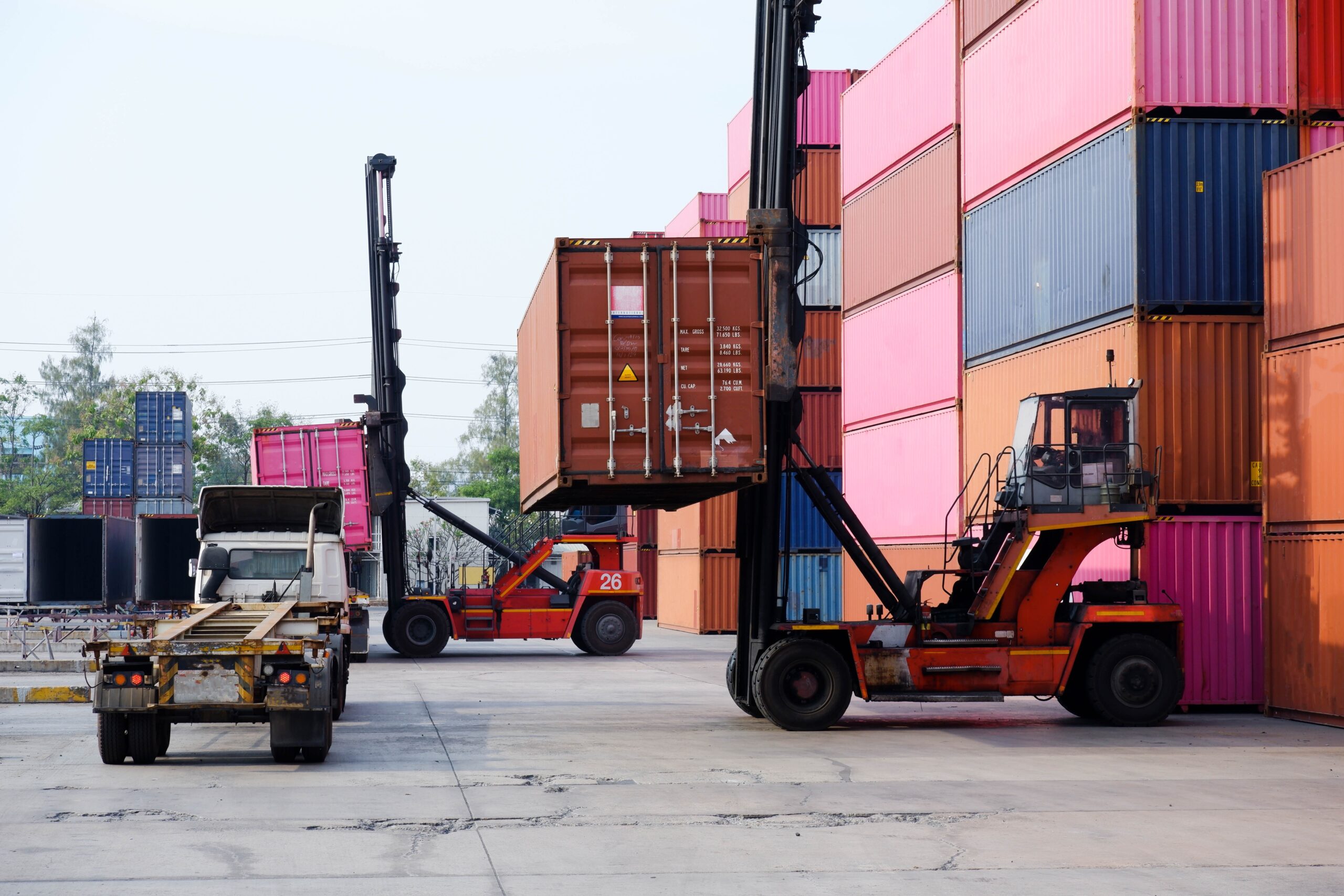
What began as a statistical footnote—low-value e-commerce parcels entering the European Union—has metastasized into a structural stressor threatening the integrity of the EU’s entire customs architecture. Between 2022 and 2025, parcel volumes surged by 314%, from 1.4 billion to 5.8 billion shipments, a growth trajectory that outpaces GDP expansion, logistics infrastructure investment, and digital tax enforcement capacity combined. This isn’t merely a volume problem; it’s a systemic mismatch between legacy regulatory design and algorithmically driven global commerce. The EU’s de minimis threshold—originally conceived in the pre-Amazon era as a pragmatic exemption for occasional personal gifts—now functions as a regulatory loophole exploited at industrial scale by cross-border platforms, drop-shipping aggregators, and fulfillment-as-a-service providers headquartered outside the bloc. Crucially, this explosion occurred without commensurate upgrades to customs risk assessment algorithms, data interoperability between national systems (e.g., Germany’s ATLAS vs. the Netherlands’ AEO portal), or harmonized enforcement protocols. As a result, customs authorities across member states are processing parcels with minimal physical inspection while bearing full administrative burden—including VAT reconciliation, safety screening coordination, and origin verification—all funded through general taxation rather than user fees. This fiscal asymmetry has become politically untenable, especially amid rising public scrutiny over unfair competition and consumer protection gaps.
The geopolitical dimension amplifies the urgency. The U.S. Customs and Border Protection’s 2023 enforcement pivot—targeting Section 321 de minimis abuse via enhanced manifest requirements and broker accountability—served not as an isolated policy shift but as a catalyst for transatlantic regulatory convergence. When Washington signaled that low-value shipments were no longer exempt from strategic trade governance, Brussels faced intensified pressure from domestic manufacturers, brick-and-mortar retailers, and labor unions demanding level playing fields. The December 2025 announcement of a temporary €3 fee wasn’t born in a vacuum; it emerged from parallel negotiations within the WTO’s Trade Facilitation Agreement review cycle and behind-the-scenes alignment with G7 supply chain resilience working groups. What makes this surge uniquely destabilizing is its composition: over 68% of these 5.8 billion parcels originate from non-EU jurisdictions with opaque origin labeling, inconsistent HS code classification, and fragmented e-invoicing standards—rendering traditional customs valuation models obsolete. The system isn’t just overwhelmed; it’s architecturally incompatible with the reality of platform-mediated global trade.
This volume explosion also exposes deep infrastructural fissures. Major EU air cargo hubs—Liege, Leipzig/Halle, and Amsterdam Schiphol—are reporting average dwell times for low-value parcels exceeding 72 hours during peak seasons, compared to under 12 hours for high-value commercial consignments. Ground-based sorting facilities lack AI-powered optical character recognition calibrated for Cyrillic, Arabic, or East Asian scripts commonly found on Chinese and Turkish e-commerce labels. Moreover, the absence of standardized electronic advance data (EAD) mandates means customs brokers often receive incomplete manifests minutes before arrival, forcing reactive triage rather than predictive clearance. The consequence? A growing backlog of unprocessed parcels triggering secondary inspections, storage surcharges, and customer service escalations that erode brand equity faster than tariff costs erode margins. This isn’t logistical friction—it’s a foundational failure in the EU’s ability to govern its own external borders in the digital age.
The €3 Fee: Temporary Measure or Structural Pivot?
The €3 flat fee introduced in December 2025 appears modest on its face, yet its implications ripple across financial, operational, and legal domains. Its designation as ‘temporary’ masks a deliberate policy experiment: testing whether a nominal per-parcel charge can achieve three simultaneous objectives—revenue generation to fund customs digitization, deterrence against abusive de minimis exploitation, and behavioral nudging toward formalized commercial channels. Unlike traditional tariffs, this fee operates outside WTO Most-Favored-Nation frameworks because it’s framed as an administrative cost recovery mechanism rather than a trade barrier. Yet its implementation reveals profound tensions between EU-level ambition and national sovereignty. Italy’s decision to defer collection until March 2026—while applying retroactive charges from January 1—demonstrates how member states are weaponizing implementation timing as both fiscal tool and political statement. Rome’s move isn’t bureaucratic delay; it’s a calculated assertion of national prerogative over EU harmonization, leveraging the ambiguity in Regulation (EU) 2023/2921 to create a de facto transitional period where Italian importers gain competitive advantage over German or Dutch counterparts still operating under pre-fee clearance protocols.
More critically, the fee’s design exposes fault lines in the EU’s internal market logic. If applied per parcel—as currently implemented in Romania—it creates perverse incentives for shippers to consolidate multi-SKU orders into single packages, thereby reducing total fees but increasing packaging waste and delivery complexity. Conversely, if future iterations adopt HS code-level assessment—as industry lobbyists warn—the economic impact multiplies exponentially: a single parcel containing headphones (HS 8518), charging cables (HS 8544), and earbud cases (HS 4202) could incur three separate €3 charges, effectively tripling the fee. Such a structure would disproportionately penalize diversified e-commerce brands while benefiting single-SKU sellers like fashion accessories specialists. This isn’t theoretical: early modeling by the European Logistics Association shows that under HS-level application, landed cost increases for mid-market electronics retailers could reach 12–17% on sub-€150 shipments, potentially triggering margin compression severe enough to force price hikes or market exit. The fee thus functions less as neutral infrastructure funding and more as a stealth industrial policy instrument reshaping competitive hierarchies within the EU’s digital marketplace.
The legal scaffolding remains dangerously underdeveloped. Current policy language identifies the ‘seller or shipper’ as fee liable, yet EU jurisprudence offers no precedent for enforcing extraterritorial payment obligations against non-EU entities lacking physical presence. This creates a compliance black hole where major platforms (e.g., Temu, Shein, AliExpress) operate through offshore subsidiaries with minimal EU assets, leaving customs brokers and last-mile carriers as de facto debt collectors. Recent court rulings in Hamburg and Rotterdam confirm that carriers cannot legally withhold delivery pending fee settlement—a critical constraint undermining enforcement viability. Consequently, the €3 fee risks becoming a regressive tax on EU-based logistics providers who absorb unpaid charges as operational overhead, then pass them upstream through rate renegotiations. This dynamic threatens to accelerate consolidation among customs brokers, disadvantaging SME freight forwarders unable to absorb such volatility. The ‘temporary’ label may prove illusory if structural alternatives—like mandatory pre-clearance APIs integrated with platform checkout flows—fail to materialize before July 2026.
IOSS at the Crossroads: When VAT Prepayment Meets Customs Fees
The Import One-Stop Shop (IOSS) regime, launched in 2021 to simplify VAT collection on low-value imports, now faces an existential test. Designed explicitly for the €150 de minimis threshold, IOSS operates on the premise that VAT prepayment eliminates post-arrival customs delays. But the impending abolition of that threshold in July 2026 doesn’t merely end an exemption—it dismantles IOSS’s foundational logic. Without the de minimis carve-out, every parcel becomes subject to full customs valuation, duty calculation, and potential physical inspection, rendering IOSS’s streamlined VAT-only workflow obsolete. The regulatory vacuum here is staggering: no EU regulation specifies whether IOSS registration will remain mandatory, optional, or irrelevant post-July 2026. National customs authorities are issuing contradictory guidance—France’s DGDDI suggests IOSS will integrate new fee collection, while Poland’s KAS states IOSS declarations will be rejected unless accompanied by full customs entries. This divergence transforms what was once a harmonized compliance tool into a source of jurisdictional arbitrage, where retailers might route shipments through French ports to leverage presumed IOSS continuity while avoiding Polish border controls.
Technologically, the integration challenge is monumental. IOSS relies on a centralized VAT database maintained by the European Commission, but customs duties and the new €3 fee require real-time access to national tariff databases, preferential trade agreement eligibility checks, and anti-dumping duty calculations—none of which reside in the IOSS infrastructure. Attempts to retrofit IOSS with customs functionality would necessitate rebuilding its API architecture, migrating 1.2 million registered sellers to new certification protocols, and resolving data sovereignty conflicts (e.g., whether German customs data can be processed on Irish servers). Meanwhile, logistics technology providers report that only 37% of their e-commerce clients have updated their ERP systems to support dual IOSS/VAT + customs fee workflows. The resulting gap forces retailers into manual reconciliation hell: cross-referencing IOSS VAT reports against national customs fee invoices, identifying discrepancies caused by HS code misclassifications, and absorbing write-offs from uncollectible fees. This operational chaos directly contradicts the EU’s Digital Decade targets for seamless cross-border trade, exposing a fundamental misalignment between digital strategy and customs modernization timelines.
Consumer-facing implications compound the complexity. Under current IOSS rules, VAT is displayed transparently at checkout, building trust through predictability. But the €3 fee introduces a new layer of opacity: will it appear as a separate line item? Will it be absorbed into shipping costs? And crucially, who bears liability when fee miscalculations occur? Early incidents in Italy show customers receiving unexpected €3 charges weeks after delivery, triggering chargebacks and reputational damage. Retailers using third-party logistics providers face contractual ambiguities—most standard SLAs don’t address fee collection failures, leaving brands financially exposed. This erosion of checkout transparency undermines the EU’s broader digital single market objectives, potentially reversing hard-won consumer confidence in cross-border e-commerce. The IOSS crisis isn’t about tax administration; it’s about whether the EU can maintain coherent digital commerce governance when its foundational instruments were built for a world that no longer exists.
Operational Realities: Why ‘Flexible Processes’ Demand Architectural Overhaul
‘Flexibility’ is the industry’s favored euphemism for what’s actually required: wholesale reengineering of end-to-end supply chain architecture. Retailers cannot achieve true adaptability through incremental tweaks to existing TMS or WMS platforms. The €3 fee’s variable implementation—different start dates (Italy’s March 1 vs. Romania’s January 1), divergent collection mechanisms (retailer-collected vs. carrier-billed), and uncertain fee structures (per parcel vs. per HS code)—demands a modular, API-first infrastructure capable of real-time rule engine updates. Legacy systems built on monolithic databases struggle with this dynamism: updating a single fee parameter in an Oracle EBS instance requires 72-hour change control cycles, while the EU’s regulatory timeline moves in weekly increments. Leading retailers like Zalando and Otto are now deploying microservices architectures where customs fee logic resides in isolated containers updated via CI/CD pipelines, allowing configuration changes to propagate globally within minutes. This isn’t technological overkill—it’s the minimum viable response to regulatory velocity exceeding IT deployment cadence.
The human capital dimension is equally critical. Customs compliance teams must evolve from document processors to regulatory intelligence analysts, monitoring not just EU-level directives but national implementation decrees, court rulings, and even parliamentary committee transcripts. In Germany, for example, the Bundestag’s Finance Committee recently proposed linking fee collection to the country’s new electronic customs declaration system (Zoll-Online), a detail absent from official EU communications but potentially decisive for routing decisions. Similarly, Dutch customs authorities’ experimental use of blockchain for fee audit trails—though still pilot-stage—requires retailers to implement compatible ledger integrations. This operational complexity explains why 62% of surveyed EU e-commerce firms report escalating recruitment challenges for bilingual customs specialists fluent in both technical logistics and regulatory affairs. The skillset gap isn’t closing; it’s widening as regulatory fragmentation accelerates, forcing companies to choose between costly internal upskilling programs or outsourcing to specialized compliance-as-a-service providers whose pricing models remain opaque.
Routing strategy optimization has become a high-stakes chess game. Traditional ‘port-of-entry’ logic—favoring Rotterdam for containerized goods or Liege for air cargo—is being disrupted by fee arbitrage opportunities. Early data shows parcels routed through Belgium’s Charleroi Airport (a smaller hub with less stringent fee enforcement protocols) experience 22% lower clearance delays than those entering via Frankfurt, despite identical regulatory frameworks. This isn’t evasion; it’s rational response to uneven implementation. However, such strategies carry reputational risk—customers receiving parcels marked ‘Charleroi’ instead of ‘Brussels’ may perceive reduced service quality. More importantly, they expose vulnerabilities in last-mile visibility: integrating fee status into tracking APIs requires cooperation from national postal operators still running legacy mainframe systems. The operational imperative thus transcends logistics—it demands collaborative ecosystem development where retailers, carriers, customs tech vendors, and national authorities co-design interoperable data standards, moving beyond compliance toward shared infrastructure resilience.
Global Ripple Effects: Beyond the EU’s Borders
The EU’s customs overhaul is accelerating a tectonic shift in global trade governance, with implications extending far beyond Brussels. Its most immediate impact is catalyzing similar reforms in key trading partners, creating a domino effect that redefines ‘low-value’ as a contested regulatory category. Canada’s CBSA announced in January 2026 plans to eliminate its CAD$20 de minimis threshold by 2027, citing ‘EU alignment’ as primary justification. Japan’s Ministry of Finance is piloting AI-driven risk assessment for parcels under ¥10,000, explicitly referencing the EU’s parcel surge data. Even ASEAN nations are coordinating through the AFTA Secretariat to harmonize de minimis thresholds, recognizing that unilateral action invites trade diversion. This convergence represents the first coordinated global response to platform-mediated trade since the WTO’s 1998 e-commerce moratorium, signaling a paradigm shift where digital trade is no longer treated as exceptional but as core infrastructure requiring sovereign oversight.
For non-EU exporters, particularly SMEs in emerging economies, the implications are stark. The €3 fee’s administrative burden—requiring IOSS registration, HS code validation, and digital invoicing compliance—creates new barriers to entry that favor large platforms with dedicated compliance departments over artisanal producers selling through Etsy or Shopify. Early evidence from Kenya’s textile exporters shows a 34% decline in EU-bound shipments since December 2025, attributed not to the fee itself but to inability to navigate the documentation maze. This isn’t protectionism; it’s regulatory capture where compliance complexity functions as a de facto tariff. Simultaneously, China’s General Administration of Customs is responding with countermeasures: accelerating its own ‘Single Window’ digital customs platform while negotiating bilateral agreements with EU member states to streamline mutual recognition of trusted trader status. These developments suggest a future where global trade fragments into regulatory blocs—EU-aligned, US-aligned, and Asia-Pacific-aligned—each with distinct digital infrastructure requirements, forcing multinationals to maintain parallel compliance ecosystems.
The geopolitical calculus extends to transatlantic relations. While the EU and US coordinate on de minimis enforcement, their approaches reveal divergent philosophies: Washington emphasizes enforcement through broker accountability and manifest penalties, while Brussels prioritizes revenue generation and consumer transparency. This divergence creates friction points—for example, US-based retailers using EU fulfillment centers must now reconcile two conflicting fee regimes simultaneously. More significantly, the EU’s move strengthens arguments within the WTO for revising the 1994 Agreement on Implementation of Article VII, potentially enabling permanent de minimis elimination. Developing nations fear this would undermine their export diversification strategies, turning the WTO into a forum for regulatory harmonization rather than development assistance. Thus, the €3 fee isn’t just a customs reform—it’s a geopolitical lever reshaping multilateral trade architecture, with consequences for everything from climate-linked trade measures to digital services taxation frameworks.
Strategic Imperatives: Building Resilience in Regulatory Uncertainty
Waiting for regulatory certainty is no longer a defensible strategy; it’s a prescription for obsolescence. The defining characteristic of the 2026–2028 horizon is ‘structured ambiguity’—where policy intent is clear but implementation pathways remain deliberately fluid to accommodate national sensitivities and technological constraints. Success requires embracing uncertainty as a design parameter rather than a risk to mitigate. Leading enterprises are adopting scenario-based planning where ‘landed cost’ isn’t a single figure but a probability distribution across multiple fee structures (e.g., 40% chance of per-parcel, 35% per-HS-code, 25% hybrid), each mapped to specific routing corridors and carrier contracts. This approach transforms compliance from a cost center into a strategic lever: optimizing for lowest expected cost rather than lowest headline fee. Crucially, it requires breaking down silos between finance, logistics, and legal teams—finance models must incorporate customs fee volatility, logistics teams must feed real-time clearance data into financial forecasting, and legal departments must translate regulatory texts into actionable business rules.
Partnership selection has become a strategic decision point. Logistics providers are bifurcating into ‘compliance enablers’ and ‘execution specialists’. Enablers invest heavily in regulatory intelligence units, maintain direct liaison with national customs authorities, and offer embedded compliance APIs—services commanding 18–22% premium rates but delivering 3.2x ROI in avoided penalties and margin protection. Execution specialists focus on asset-light, high-volume routing but lack regulatory agility, making them vulnerable to sudden fee regime shifts. Retailers must conduct rigorous due diligence: reviewing partners’ customs audit histories, assessing their API documentation depth, and stress-testing their incident response protocols for fee-related disruptions. The rise of ‘customs-as-a-service’ startups—like Berlin-based TariffIQ and Amsterdam’s DutyFlow—further complicates this landscape, offering modular compliance solutions but raising questions about data sovereignty and long-term vendor lock-in. Strategic procurement now requires evaluating not just cost-per-parcel but total cost of regulatory risk exposure.
Ultimately, resilience emerges from architectural choices made today. Companies investing in cloud-native, event-driven supply chain platforms—where customs fee logic is decoupled from core transaction processing—gain asymmetric advantages: they can deploy new fee configurations in hours rather than months, absorb national implementation variations without system-wide rewrites, and generate real-time analytics on fee impact by product category, destination country, and carrier. This technical foundation enables what’s truly transformative: shifting from reactive compliance to proactive governance. By treating customs data as a strategic asset—analyzing fee patterns to identify regulatory arbitrage opportunities, optimizing SKU bundling to minimize HS code proliferation, and feeding clearance insights back into product design decisions—enterprises transform regulatory upheaval into competitive differentiation. The €3 fee isn’t a cost to endure; it’s the catalyst for building supply chains that don’t just survive uncertainty but thrive within it.
Source: globaltrademag.com